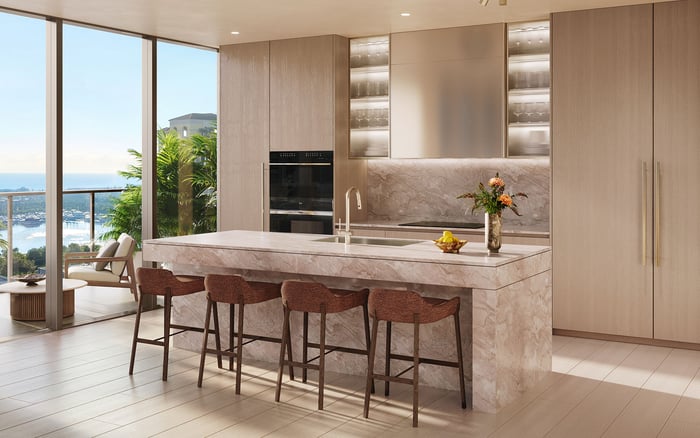
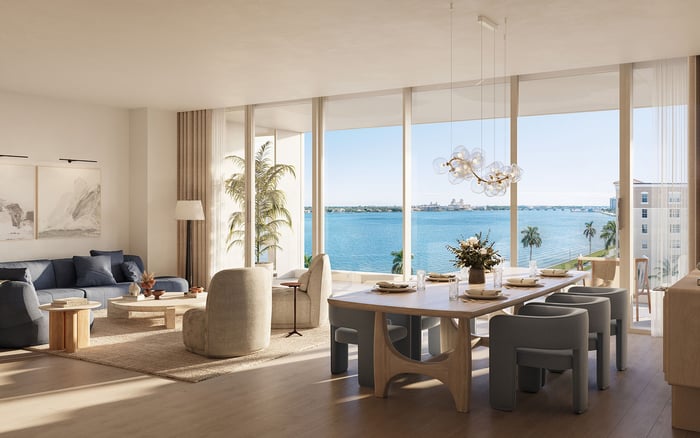
A discreet buyer’s framework for comparing three West Palm Beach residences through the operating questions that matter after closing: service, privacy, and recurring ownership cost.
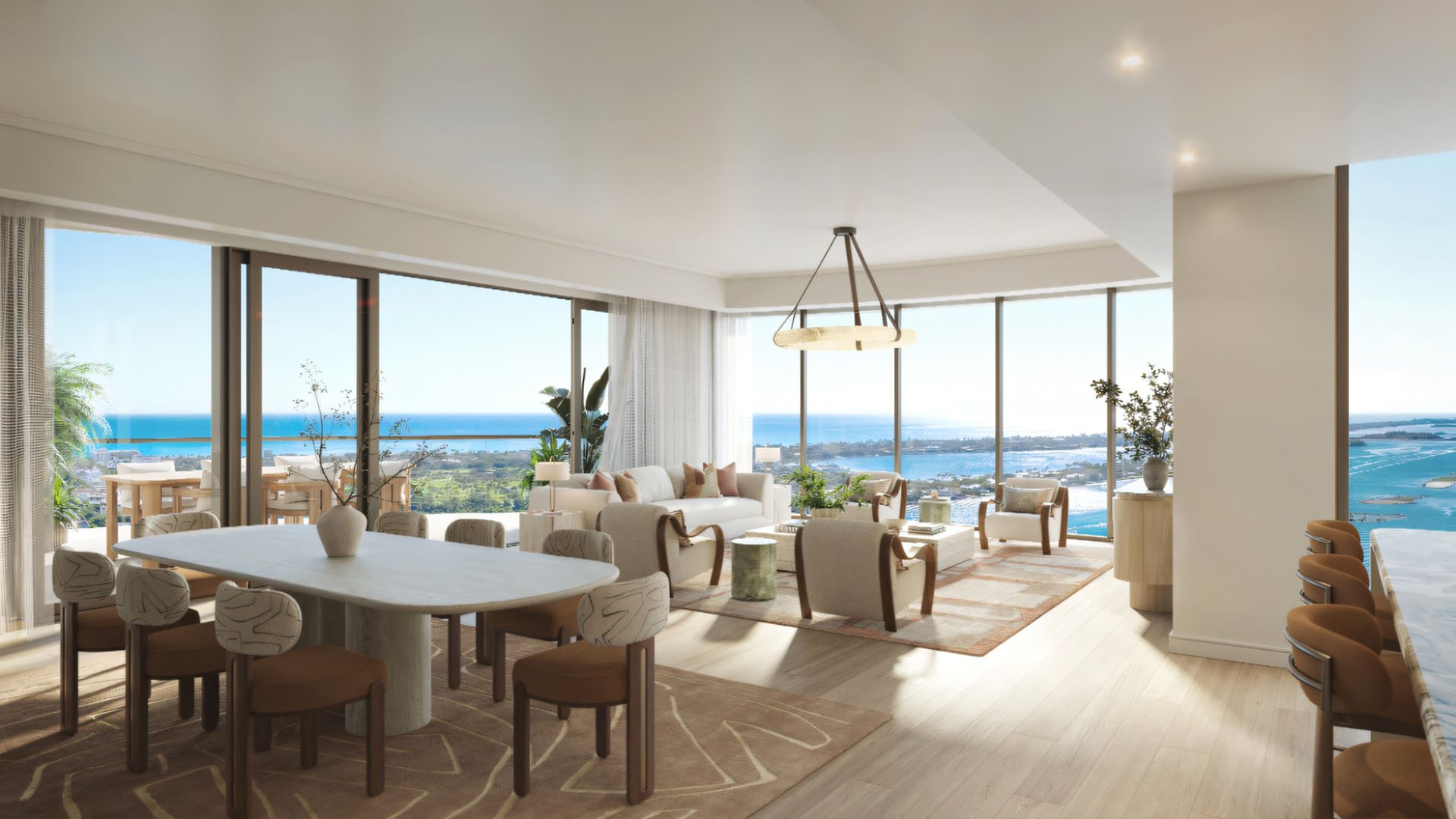
Along South Flagler Drive, the most consequential luxury-condominium decisions are rarely resolved by dramatic views or polished interiors alone. Sophisticated buyers also want to understand how a residence will function after closing: who delivers service, how consistently it is delivered, whether privacy endures in daily life, and what the operating model may mean for recurring costs.
That framework is especially useful when considering Forté on Flagler West Palm Beach, Maison D'Or South Flagler, and Edgeworth West Palm Beach. These projects should not be treated as interchangeable. Each warrants the same disciplined questions, asked in the same order, so that distinctions in the ownership experience emerge clearly.
For buyers navigating West Palm Beach and the broader Palm Beach market, this is the difference between selecting an impressive residence and choosing a building that suits one’s life.
Service is easy to describe and harder to measure. At Forté, the anticipated level and consistency of resident service form part of the ownership proposition. Maison D'Or calls for a similar examination of service intensity and the building’s operating model.
The most useful inquiry begins with routine moments. How are arrivals managed? What happens when several residents request assistance at once? Which functions are included in normal operations, and which may involve separate charges or outside providers? Buyers should also ask how service standards are documented and supervised rather than relying solely on the atmosphere of a presentation.
Consistency matters because staffing, management, and resident expectations are interdependent. A highly attentive model may feel effortless when properly supported, but it also carries an economic dimension. The relevant question is not whether more service is inherently better. It is whether the service model matches the owner’s habits-and whether its cost is transparent enough to assess.
Privacy in a luxury condominium extends beyond the residence. It is experienced through arrivals, elevators, common spaces, guest procedures, deliveries, staff interactions, and the frequency with which residents cross paths.
Forté buyers assess how building scale and operations may shape day-to-day privacy. Prospective Maison D'Or owners likewise look beyond luxury positioning to the practical privacy the development can provide. The same lens belongs in any evaluation of Edgeworth: not assumptions based on a name or presentation, but direct questions about circulation and operating protocols.
A buyer may prefer discreet recognition and attentive staff-or a more autonomous experience with fewer interactions. Neither preference is universal. Privacy should therefore be defined personally before it is compared architecturally. For one household, it may mean controlled guest access. For another, it may mean an arrival sequence that minimizes exposure. A waterfront setting can be compelling, but it does not replace this operational analysis.
Recurring costs deserve to be examined as a system rather than reduced to a single headline number. Forté buyers consider long-term ownership expenses and the predictability of annual carrying costs. At Maison D'Or, association economics are similarly relevant to the recurring cost of ownership.
A prudent review considers what the association is designed to fund, how service intensity shapes operations, and how the building’s financial responsibilities are allocated. Buyers should request current, transaction-specific documents and confirm the expenses applicable to the residence under consideration. Figures can vary by residence and timing, making broad estimates less useful than current written information.
Predictability can matter as much as absolute cost. An owner may accept a more intensive operating model when its scope is understood and aligned with personal use. Conversely, a seemingly restrained structure may warrant closer scrutiny if important services or obligations fall outside the regular budget. This is where pricing-and-trends analysis must give way to residence-level diligence.
Begin with a written matrix organized around service, privacy, and cost. Under service, record what is included, when it is available, and how it is managed. Under privacy, trace the resident journey from arrival to the front door, accounting for visitors and deliveries. Under cost, distinguish recurring association obligations from optional or individually billed expenses.
Then test the matrix against actual use. A primary resident may place greater value on daily consistency. A second-home owner may focus on oversight during absences and ease of arrival. A household that entertains frequently may scrutinize guest handling, while another may prioritize minimal interaction.
Building scale, service intensity, and association economics should not be considered in isolation. They are interrelated at Forté, and the same framework applies to Maison D'Or. Applying it consistently to Edgeworth creates a fair comparison without presuming that all three offer the same model.
This approach belongs in serious buyer’s guides because it shifts attention from visible luxury to durable ownership quality. The best choice is the residence whose operations feel proportionate, intelligible, and compatible with the buyer’s expectations.
Request the most current governing, budgetary, and service materials relevant to the residence. Clarify which personnel and functions are association-supported, which are optional, and which depend on third parties. Review how guests, vendors, and deliveries move through the property. Confirm the expenses attributable to the specific home and the period covered by each figure.
Equally important, compare answers across the three properties using identical language. Uniform questions make nuanced distinctions easier to identify. When an answer is verbal, request written confirmation where appropriate. Precision at this stage preserves discretion later.
What is the central comparison among these three projects? The most useful shared framework is service, practical privacy, and recurring ownership cost.
Why look beyond views and interior finishes? Those features shape first impressions, while building operations define daily ownership after closing.
What should buyers ask about service at Forté? Ask about the expected service level, its consistency, what is included, and how it is managed.
How should Maison D'Or buyers assess service? Evaluate service intensity alongside the building’s broader operating model.
What does practical privacy include? It encompasses arrivals, circulation, elevators, guests, deliveries, common spaces, and staff interactions.
Does luxury positioning guarantee privacy? No. Buyers should examine how privacy is delivered through the building’s physical and operating systems.
Why is building scale relevant? Scale can interact with circulation, service intensity, staffing, and the frequency of resident encounters.
How should ownership cost be compared? Review current residence-specific obligations, included services, optional expenses, and budgetary documents.
Are general carrying-cost estimates sufficient? No. Costs can vary by residence and transaction timing, making current written information more useful.
What is the best final decision rule? Choose the operating model that aligns most closely with your habits, privacy expectations, and cost preferences.
For a confidential assessment and a building-by-building shortlist, connect with MILLION.
If branded residences are on your mind — as a home or as an allocation — we would be glad to share what we are seeing, privately.
Begin a quiet conversation