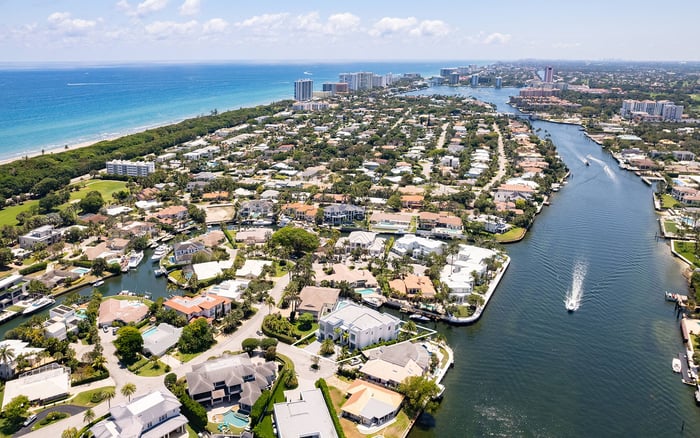
For French and European buyers, Boca Raton waterfront ownership requires a different insurance mindset: assemble homeowners, flood, wind, liability, and excess coverage before contract deadlines, not after closing.
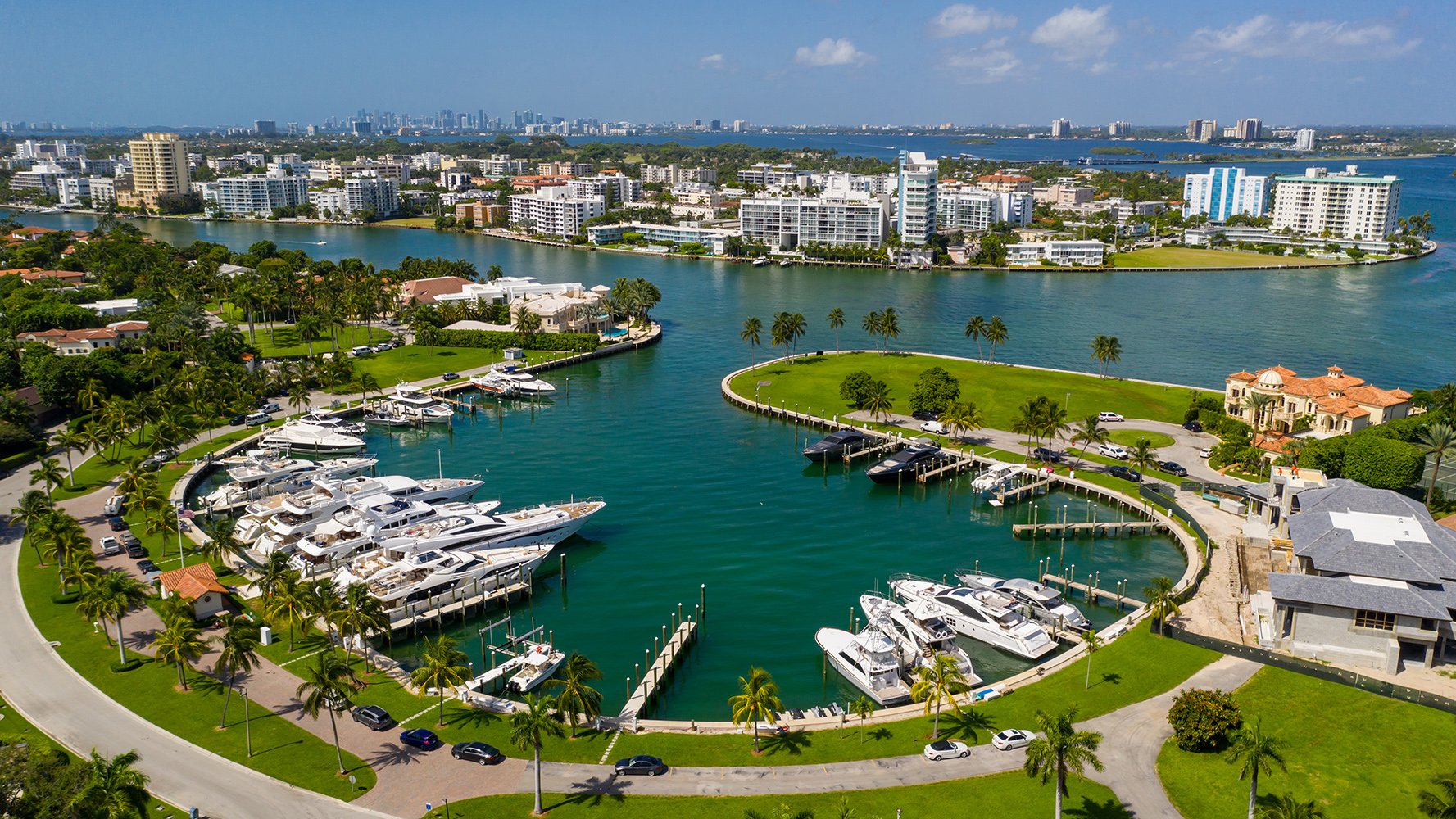
For a Paris buyer considering Boca Raton, the shift is not only architectural, climatic, or cultural. It is also actuarial. France’s natural-catastrophe framework is a legally defined compensation regime supported by insurers and public-sector reinsurance. Florida’s coastal market works differently: coverage is assembled in layers, reviewed by lenders, tested by underwriting, and shaped parcel by parcel.
That difference matters most at the water’s edge. A Boca Raton estate with a pool, dock, guest arrivals, staff access, art, vehicles, and marine exposure cannot be understood through a single “home insurance” conversation. Before the inspection period expires, the buyer’s advisory circle should include a qualified insurance broker, real estate counsel, lender, inspector, and, where appropriate, a risk consultant.
This is the practical foundation for MILLION Buyer's Guides: treat insurance not as an administrative closing item, but as part of the acquisition strategy. In Boca Raton, waterfront ownership rewards preparation.
Florida homeowners coverage is usually only one component. A careful buyer should expect to review homeowners insurance, separate flood coverage, wind or hurricane deductibles, personal liability, watercraft exposure, and umbrella or excess liability. Each responds to a different category of loss, and each may carry exclusions, limits, and deductibles that become meaningful only when read together.
The most common misconception is flood. Standard homeowners insurance generally does not cover flood damage, including rising water or storm surge. Waterfront buyers should analyze flood insurance separately rather than assume a hurricane-related loss will be handled under one policy.
This distinction is especially relevant for buyers comparing a full-service condominium lifestyle at The Residences at Mandarin Oriental Boca Raton with a private single-family estate on a canal or the Intracoastal. The building structure, association obligations, personal property, liability, and flood exposure may be allocated very differently.
Before signing without contingencies, buyers should confirm the property’s flood-zone designation and review local parcel-level flood information. Flood risk can vary significantly by parcel, even within the same luxury neighborhood. A residence on one side of a waterway may underwrite differently from another nearby property because of elevation, construction, openings, enclosure use, or prior improvements.
If a property sits in a Special Flood Hazard Area and the buyer uses a federally regulated or insured lender, flood insurance is generally required for the loan. Cash buyers should not treat that threshold as irrelevant. Lender requirements are only one measure; estate planning, family office governance, resale expectations, and personal risk tolerance may all support broader protection.
An Elevation Certificate is often central to the conversation because it documents building characteristics, including elevation and flood-zone information. It may influence flood-insurance rating and underwriting. For high-value properties, the certificate should be reviewed early, ideally alongside surveys, permit history, roof documentation, and any prior mitigation reports.
Federal residential flood policies carry coverage limits. For a multimillion-dollar waterfront estate, those limits may sit well below the replacement-cost and contents exposure that matters to the owner. Private or excess flood insurance may be necessary to close the gap, especially when the residence includes high-end finishes, wine storage, specialty systems, designer millwork, or significant personal property.
This is where the conversation becomes bespoke. A buyer of a newly delivered residence at Alina Residences Boca Raton may ask different questions than the buyer of a deepwater home with a dock and direct boating needs. The former may focus on association master coverage, unit-owner responsibilities, and contents. The latter may need to study site elevation, seawall condition, access, liability, and marine-related exposures.
No serious adviser should treat a generic waterfront premium as guidance. Pricing can depend on elevation, roof age, construction, claims history, carrier appetite, deductible structure, flood zone, and the exact scope of coverage requested.
Florida’s hurricane season officially runs from June 1 through November 30, and hurricane exposure is a central underwriting issue. Windstorm coverage, hurricane deductibles, and mitigation credits should be reviewed before a buyer assumes the carrying cost of ownership.
Wind mitigation matters because qualifying construction features can reduce windstorm insurance premiums through required mitigation discounts. Underwriting-relevant features may include roof shape, roof-deck attachment, secondary water resistance, opening protection, and roof-to-wall connections. A beautiful roof is not the same as a well-documented roof.
Florida also has a homeowner program that can offer eligible owners free wind-mitigation inspections and, subject to program rules and funding, matching grants for hurricane-strengthening improvements. For luxury owners, the grant may be less important than the discipline of documenting the home’s protective features.
At boutique new-construction addresses such as Glass House Boca Raton, buyers should still request a clear explanation of building systems, glazing, association coverage, deductibles, and unit-owner responsibilities. Newness is helpful; documentation is what underwriters and owners rely on.
Waterfront living expands liability. Pools, docks, guests, household staff, drivers, events, boats, jet skis, pets, and visiting family all create exposure. Umbrella insurance can provide additional liability protection above underlying homeowners, auto, or watercraft limits.
For Estates & Single-Family ownership, this is not a theoretical concern. A boat slip, marina access, or frequent guest use can change the risk profile. Buyers should coordinate personal liability, watercraft liability, workers’ compensation questions for staff, and any entity ownership structure with counsel and insurance professionals.
Condominium buyers are not exempt. A residence at Mr. C Residences Boca Raton may reduce certain maintenance burdens, but it does not eliminate the need to understand personal contents, loss assessment, additional living expense, personal liability, and umbrella coverage.
Florida has a state-created insurer of last resort for situations where private coverage is unavailable or unaffordable. Some coastal buyers may encounter it during the quoting process. That is not automatically a reason to abandon a property, but it is a reason to examine coverage conditions, deductibles, and renewal risk with care.
Certain policyholders may also face specific flood-insurance requirements, reinforcing the need to coordinate homeowners, wind, and flood coverage rather than treating them as separate files. The key question is not simply, “Can I obtain insurance?” It is, “Does the insurance structure fit the property, the financing, the ownership vehicle, and the family’s tolerance for retained risk?”
Boca Raton also provides local hurricane-preparedness resources, a reminder that ownership requires operational planning as well as insurance planning. A disciplined owner keeps policy files, vendor contacts, hurricane plans, digital inventories, and post-storm access protocols ready before the season begins.
Before closing on Boca Raton waterfront property, request quotes early, confirm flood-zone status, obtain or update the Elevation Certificate, review wind-mitigation documentation, understand hurricane deductibles, analyze flood limits, and discuss private or excess flood capacity. If financing is involved, assume the lender will review insurance before closing, especially where flood coverage is required.
Also review exclusions, deductibles, and limits across all policies. The expensive mistake is assuming that “hurricane coverage” is a single answer. In practice, wind, rain intrusion, storm surge, rising water, mold, ordinance or law, contents, temporary housing, and liability may be treated differently.
The most elegant acquisitions are the ones that survive scrutiny. In Boca Raton, insurance planning is not a concession to risk. It is part of owning well.
Do French buyers need to rethink catastrophe insurance in Florida? Yes. Florida’s coastal insurance market is more fragmented, so buyers typically assemble several policies instead of relying on one centralized catastrophe framework.
Does homeowners insurance usually cover flood damage? No. Standard homeowners insurance generally excludes flood damage, so waterfront buyers should evaluate separate flood coverage.
When is flood insurance required by a lender? If the property is in a Special Flood Hazard Area and the loan is from a federally regulated or insured lender, flood insurance is generally required.
Why is an Elevation Certificate important? It documents elevation and flood-zone information that can affect flood-insurance rating and underwriting.
Are federal flood policy limits enough for luxury estates? Often they may be insufficient for multimillion-dollar waterfront homes, making private or excess flood coverage worth exploring.
What wind features matter to insurers? Roof shape, roof-deck attachment, secondary water resistance, opening protection, and roof-to-wall connections can all matter.
Can wind mitigation reduce premiums? Qualifying mitigation features can reduce windstorm premiums through required mitigation discounts.
What is the role of an umbrella policy? It can add liability protection above homeowners, auto, or watercraft limits, which is important for estates with guests, pools, docks, and staff.
Should cash buyers still study flood risk? Yes. Even without lender requirements, flood exposure affects asset protection, resale confidence, and long-term ownership planning.
When should insurance planning begin? Ideally before the buyer’s due-diligence deadlines, so coverage, exclusions, deductibles, and lender requirements are clear before closing.
For a tailored shortlist and next-step guidance, connect with MILLION.
If branded residences are on your mind — as a home or as an allocation — we would be glad to share what we are seeing, privately.
Begin a quiet conversation