Palm Beach and Naples are both thriving at the top end, but they reward different buyer profiles. Here is a buyer-oriented, fact-grounded guide to the signals, submarkets, and lifestyle levers that matter most when deploying capital on Florida’s west and east coasts.
At the top of Florida’s luxury residential ladder, Palm Beach and Naples can appear similar at first glance. Both deliver coastal privacy, steady wealth inflows, and a buyer class that often prefers discretion to spectacle. The difference is how each market creates confidence for an owner.
Palm Beach trades on scarcity and global signaling. Ownership reads as a credential, reinforced by an architectural identity curated over a century and protected by tight supply. Naples trades on livability and repeatability. It supports a broader luxury ecosystem that can flex from a seasonal pied-à-terre to a full-time family base, often centered on club life and Golf.
For buyers considering Palm Beach, West Palm Beach, or Naples, the decision is rarely about which market is “better.” It is about which market’s mechanics match how you will use the home: a second home that must be low-friction, a primary residence that has to function year-round, a legacy asset that prioritizes long-duration prestige, or a flexible retreat that values easy access and predictable enjoyment.
Both coasts can be exceptional deployments of capital. The “right” choice is the one that aligns your lifestyle routine with the market’s structure, because in luxury real estate, satisfaction is often decided long after the closing, not at the offer stage.
Palm Beach remains one of the clearest case studies in wealth concentration in the U.S. Fortune reported 58 billionaires living in Palm Beach in 2025, with a combined net worth of about $494.7B. That density influences everything: the psychology of pricing, the pace of private deals, and the baseline expectation that exceptional assets will command exceptional terms.
Headline transactions also shape the island’s narrative. Fortune noted that Ken Griffin bought roughly 20 acres in Palm Beach in 2023, and that he may build a home reportedly costing $150M to $400M. Most purchasers are not operating at that tier, but visibility at the very top matters. It reinforces Palm Beach as a global trophy zone where scarcity and status are part of the value proposition.
Demand at the ultra-high end remains material. Realtor.com reported Palm Beach was projected to post about 426 ultra-luxury transactions over $10M in 2025, near record levels. Equally important for strategic buyers is what Realtor.com reported about the way these homes trade: 51.3% of Palm Beach deals were all-cash. A cash-heavy market is often less reactive to rate swings, which can reduce the likelihood of forced selling and keep negotiations anchored to lifestyle value rather than monthly payment math.
In practice, this is why Palm Beach can feel “tight” even when macro sentiment softens. When inventory is limited and the buyer pool is financially unlevered, price discovery tends to happen on terms set by uniqueness and irreproducible attributes: frontage, privacy, walkability to the island’s cultural core, and the discretion that comes with a market accustomed to quiet, high-value transactions.
For a buyer, the takeaway is straightforward. Palm Beach rarely rewards indecision. If a property is truly singular, the market can re-price quickly because the competition set is global and the inventory set is finite.
Naples is different by design. It reads as a more liquid luxury environment, with clearly defined micro-neighborhoods and a lifestyle architecture built around clubs, boating access, and a polished, walkable social core.
Realtor.com’s November 2025 luxury report highlighted Naples as a faster-selling luxury market versus peers, with homes selling 23.5% faster year over year. For buyers who value optionality, that metric is more than a headline. Velocity is a proxy for the depth of qualified demand, and it can reduce the risk of holding an asset that takes a full season or more to move when plans change.
Activity metrics support the idea that Naples has breadth. Realtor.com’s Naples luxury summary for November 2025 reported closed sales of 502 (up 9.8% year over year), pending sales of 856 (up 16.9% year over year), and a median closed price of $546,950 (down 4.9% year over year). A softer median does not automatically imply weakness at the top. The same reporting noted that 118 properties sold for $1M+ in that month, with the month’s top sale at $35M in Port Royal.
The buyer-oriented conclusion is not that Naples is “cheaper.” It is that Naples offers more lanes. You can buy into established ultra-luxury waterfront enclaves where the ceiling is defined by location and access, or you can position into club-oriented communities where daily life and resale demand are supported by a large year-round base. In a market with this range, your underwriting can be more precise: you can choose to optimize for boating, for membership life, for walkability, or for a combination.
If Palm Beach is a market of compressed supply, Naples is a market of structured choice. That distinction matters in 2026 if you want both lifestyle satisfaction and a clear plan for liquidity.
Luxury buyers often say they are buying “the home.” In reality, they are buying a routine. In Palm Beach and Naples, routine is shaped by a few lifestyle anchors that are difficult to replicate elsewhere.
Palm Beach’s lifestyle is famously compact and curated. Worth Avenue remains the emblem of the island’s retail culture, and the club ecosystem is defined by long-established institutions, including the Everglades Club, founded in 1919. The architecture itself is part of the experience. The Preservation Foundation of Palm Beach documents the lasting influence of Addison Mizner on the island’s identity, and that imprint still informs what looks and feels “right” in the local context.
The result is a market where the setting is inseparable from the asset. Design continuity, streetscape discipline, and proximity to the island’s cultural cores are not just preferences. They are pricing components.
Naples has a different social rhythm. It is more distributed, but it still has a strong center. Fifth Avenue South is positioned as a dining and walkable town-center experience, and the private-club ecosystem is a defining asset class of its own. Clubs such as Bay Colony Golf Club and Pelican Marsh Golf Club reinforce a key truth about Naples: the membership lifestyle can matter as much as square footage, particularly for seasonal owners who want a built-in community.
Even weather patterns can influence how an owner uses a property. BestPlaces climate data shows Naples at roughly 264 sunny days per year versus West Palm Beach at about 238. That delta can affect outdoor living, winter hosting, and how often the home is enjoyed without planning around the forecast.
When buyers are choosing between these markets, the most expensive mistake is usually misreading lifestyle fit. A home can be objectively “better” and still be the wrong match if the daily experience does not align with how you actually live.
In Palm Beach, premium value often concentrates around singular attributes: proximity to the island’s cultural cores, the “quiet side” versus the “social side,” and the rare combinations of privacy and access that are difficult to duplicate. At the highest end, intangibles carry real weight, which is one reason cash-heavy demand can keep pricing resilient.
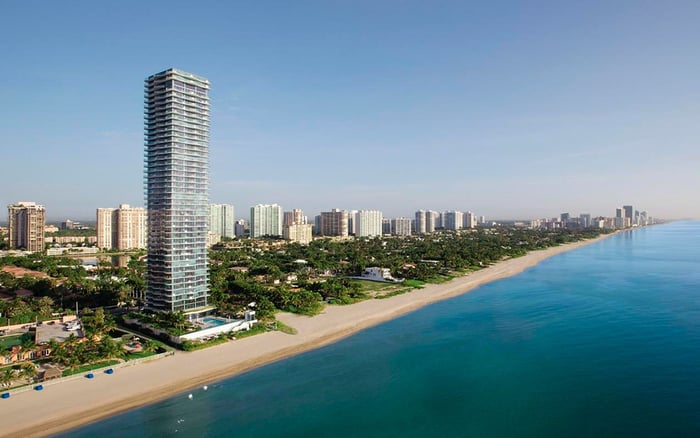
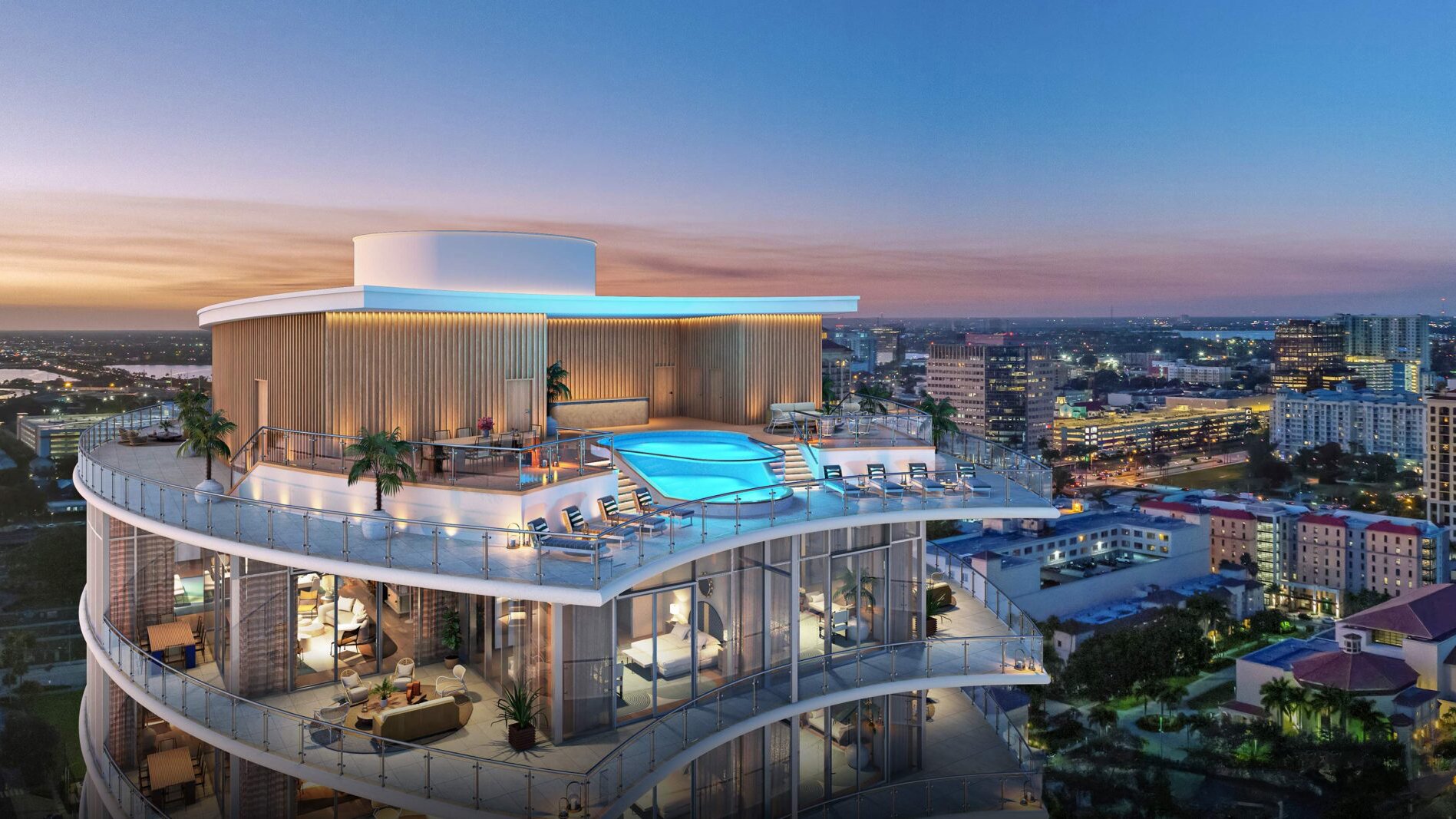
Across the bridge, West Palm Beach has emerged as a different luxury proposition: more contemporary, more vertical, and increasingly driven by amenity-forward new construction. South Florida Agent Magazine reported that West Palm Beach saw about 187.3% luxury home price growth over a 10-year period (through October 2025), cited as the fastest among major U.S. metros. For buyers who want to participate in momentum while retaining Palm Beach adjacency, that is a signal worth taking seriously.
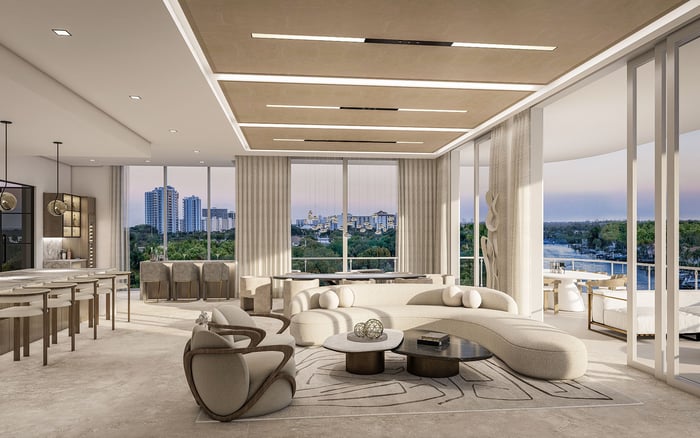
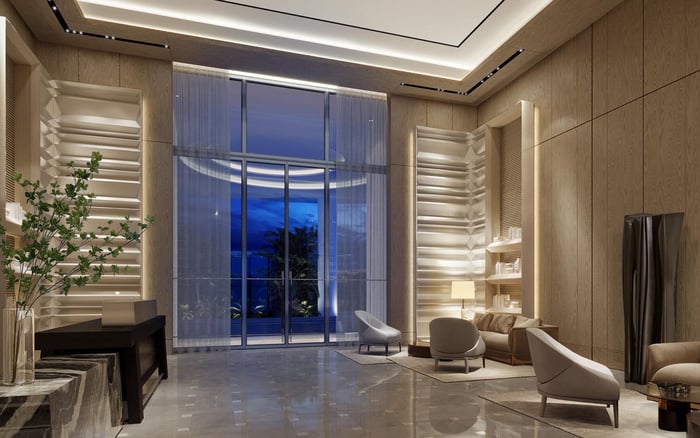
Newer product can also reduce operational friction for seasonal owners. Developments like Mr. C Residences West Palm Beach speak to a buyer who wants hospitality DNA and a lock-and-leave lifestyle, while The Ritz-Carlton Residences® West Palm Beach appeals to those prioritizing service culture and brand assurance.
This bridge-market dynamic is a real lever in 2026. Palm Beach scarcity can be a feature, but it can also narrow choices. West Palm Beach expands the inventory set without asking you to leave the Palm Beach orbit.
Naples is best understood as a series of “search markets” that behave differently. Port Royal is widely recognized as an apex waterfront enclave, and Realtor.com maintains it as a dedicated market page, reflecting its stature. Aqualane Shores is another recognizable canal-and-gulf-access neighborhood with its own market identity.
For buyers, the advantage of Naples’ micro-market clarity is precision. You can underwrite to a neighborhood’s boating access, club proximity, or walkability, and those attributes tend to translate cleanly into buyer demand at resale. In other words, Naples makes it easier to match your lifestyle thesis to a defined buyer pool, because each micro-market has a recognizable identity.
High-end buyers rarely need a refresher on “market basics.” What matters is selecting metrics that match your strategy, then interpreting them through a luxury lens.
Cash share and financing sensitivity. Palm Beach’s reported 51.3% all-cash share is more than a fun statistic. It is a proxy for how the market behaves when rates move. Higher cash share usually means fewer price capitulations and less transactional volatility.
Ultra-luxury deal depth. Palm Beach’s projected 426 sales over $10M in 2025, near record levels, is a concrete indicator of how many buyers are willing to transact at trophy levels in a single year.
Velocity. Naples’ “23.5% faster” selling pace year over year is a practical guide for liquidity. If you are choosing between two homes you love equally, the one in the market with stronger velocity can provide peace of mind.
The top-of-market tail. Naples posting a $35M top sale in Port Royal in November 2025 reinforces that the high end remains capable of clearing, even when median pricing softens.
Policy and tax clarity. Florida’s widely cited draw includes the lack of a state income tax, a shared motivator for relocations and part-time residency planning. For many households, the tax profile is not the only reason to buy, but it can be the reason to buy now instead of later.
The goal is not to predict every short-term fluctuation. The goal is to choose a market whose structural signals match your tolerance for illiquidity, your need for privacy, and your expectations for the ownership experience.
New luxury supply is not just about newer finishes. It often represents a re-bundling of lifestyle: wellness programming, resident services, and security systems that align with how modern high-net-worth households travel and live.
In West Palm Beach, new condominium inventory can function as a bridge between Palm Beach’s scarcity and a more contemporary, high-service model. Alba West Palm Beach is an example of the newer waterfront-led conversation in the area, while Forté on Flagler West Palm Beach speaks to buyers who want a Flagler Drive address and a more intimate luxury tower experience.
This is also where the second-home lens becomes decisive. A seasonal owner may prioritize ownership simplicity and predictable service delivery. A full-time resident might care more about privacy, storage, and daily convenience. In either case, new construction can deliver a level of predictability that is harder to source in older stock, particularly when renovation timelines and labor costs are uncertain.
In Palm Beach itself, scarcity often shifts attention toward what is already there. Across the bridge, new development can expand your choices without forcing a compromise on service standards.
Palm Beach tends to reward the buyer who values cultural cachet, architectural continuity, and high-scarcity assets. It suits households who want the island’s social choreography and who understand that the market’s “tightness” is part of its long-term appeal.
Naples tends to reward the buyer who values ease, variety, and a strong club ecosystem. If your version of luxury includes morning tennis, afternoon boating, and dinner within a walkable district, Naples’ breadth can be hard to match.
A practical way to decide is to answer three questions honestly:
Neither answer is “more luxury.” They are simply different flavors of certainty. The sharper your personal definition of certainty, the easier it becomes to choose the coast that will feel correct five years after purchase, not just on closing day.
Is Palm Beach still primarily a cash-driven market? Palm Beach has been reported as heavily cash-oriented, with 51.3% of deals all-cash, which can reduce sensitivity to mortgage-rate swings.
Does Naples’ median price softness mean the luxury tier is weakening? Not necessarily. Even with a lower median reported in November 2025, Realtor.com noted 118 properties sold for $1M+ that month and a $35M top sale in Port Royal.
Why is West Palm Beach increasingly part of the Palm Beach luxury conversation? Luxury pricing growth in West Palm Beach has been reported as exceptionally strong over the past decade, and newer condo inventory offers a high-service, lock-and-leave option.
What is the simplest lifestyle difference between the markets? Palm Beach is compact and highly curated around its historic identity, while Naples is broader and often organized around clubs, boating access, and Golf-forward communities.
For discreet guidance on opportunities across these two markets, connect with MILLION Luxury.
If branded residences are on your mind — as a home or as an allocation — we would be glad to share what we are seeing, privately.
Begin a quiet conversation