A buyer-focused guide to terrace residences in Palm Beach Gardens, weighing outdoor kitchens, plunge pools, privacy, materials, service access, and maintenance obligations for luxury owners.
In Palm Beach Gardens, the most coveted terraces are not decorative appendages. They are outdoor rooms shaped for morning coffee, long lunches, shaded reading, quiet dinners, and the simple ritual of watching light move across water, golf, garden, or city views. For luxury buyers, the question is no longer whether outdoor space matters. It is whether that space has been planned with the same discipline as the interiors.
A generous terrace can make an apartment or residence feel closer to a private villa, particularly when it includes a true outdoor kitchen, a plunge pool, or both. Yet the elements that create resort-style ease also bring practical obligations. Heat, humidity, wind, rain, salt air, drainage, surfaces, appliances, and service access all matter. The best terrace residences pair indulgence with operational calm.
That is why projects such as The Ritz-Carlton Residences® Palm Beach Gardens belong in this conversation. Buyers drawn to terrace-centric living are often seeking privacy, hospitality-level convenience, and a home that works as confidently for seasonal stays as it does for full-time use.
An outdoor kitchen should feel simple: grill, refrigeration, counter space, storage, and a place to serve. In practice, it is one of the most technical parts of terrace ownership. A strong layout begins with wind behavior and ventilation. Smoke should not drift into living rooms, primary suites, or neighboring terraces. Cooking zones should sit apart from lounge furniture and soft goods, while still remaining close enough to the dining area to feel natural.
Materials carry equal weight. Cabinetry, countertops, hardware, and appliance finishes need to tolerate exposure. Buyers should look closely at how surfaces meet walls, how water drains away, and whether cabinetry has proper weather protection. A beautiful terrace that demands constant touch-ups can quickly become a source of frustration, especially for owners who travel frequently.
Shade is not an afterthought. Covered areas, deep overhangs, screens, umbrellas, and landscaping can determine whether a terrace is comfortable at midday or only pleasant in the early morning and evening. Lighting deserves the same scrutiny. The most refined terraces avoid glare, using layered illumination for cooking, dining, circulation, and atmosphere.
In nearby West Palm Beach, residences such as Alba West Palm Beach reflect the broader regional appetite for homes that connect indoor elegance with outdoor ease. For Palm Beach Gardens buyers, the lesson is clear: the kitchen outdoors should be specified as carefully as the kitchen indoors.
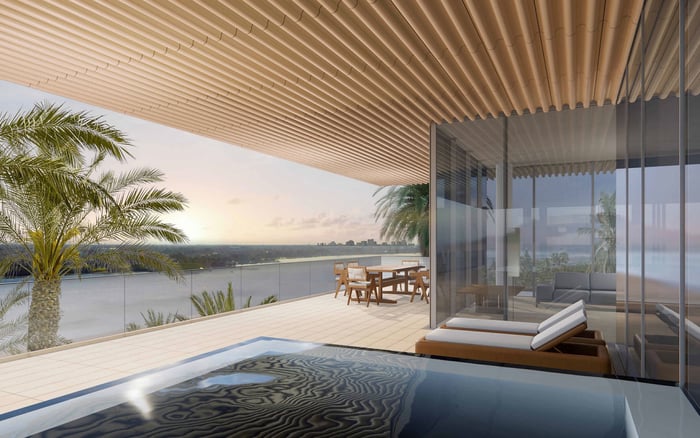
A plunge pool can define a terrace. It offers privacy, visual calm, and an immediate resort sensibility without the scale of a traditional swimming pool. For owners who entertain, it becomes a focal point. For owners who prefer solitude, it creates a quiet retreat that feels removed from the building around it.
The tradeoff is complexity. Water is heavy, mechanical systems require thoughtful placement, and service access should be convenient without compromising privacy. Buyers should ask how equipment is reached, how often routine care is expected, and whether pool professionals can service the area without passing through primary living spaces. The answers shape both daily comfort and long-term satisfaction.
A plunge pool also changes how a terrace is furnished. Seating, dining, planters, and circulation need to be arranged so the pool feels integrated rather than imposed. Slip-resistant surfaces, safe transitions, and sensible lighting around the waterline are essential to performance. The most successful designs make the pool feel inevitable, not ornamental.
Luxury buyers often focus first on the beauty of the terrace and second on the maintenance model. During diligence, that order should be reversed. A terrace with cooking, refrigeration, planted areas, upholstery, glass railings, stone, drains, and a plunge pool is a living system. It will age well only if someone is accountable for it.
The first question is ownership rhythm. A full-time resident may notice small issues early. A seasonal owner needs a more structured maintenance plan. A lock-and-leave buyer should understand who checks drains before storms, who protects cushions, who inspects appliances, and who monitors water quality if a plunge pool is present.
The second question is exposure. Terraces facing stronger sun, heavier wind, or more direct weather may require more frequent cleaning and faster replacement cycles for certain finishes. Even the finest outdoor materials need care. Durability should not be mistaken for immunity.
The third question is building coordination. In a well-run condominium or branded residence, exterior service rules, contractor access, permitted work hours, water management, and appearance standards can all influence what an owner may do. The more elaborate the terrace, the more important it is to understand the building’s operating culture before closing.
This is where the regional comparison becomes useful. In West Palm Beach, Forté on Flagler West Palm Beach and The Ritz-Carlton Residences® West Palm Beach sit within a market where buyers increasingly evaluate lifestyle services, waterfront orientation, and outdoor usability together. Palm Beach Gardens follows the same logic, with its own quieter, garden-oriented character.
The finest terrace is not always the largest. It is the one that fits the owner’s habits. A buyer who hosts long dinners needs shade, serving space, and acoustic comfort. A wellness-focused owner may prioritize a plunge pool, morning sun, and room for loungers. A frequent traveler may prefer a cleaner layout with fewer elements to maintain.
Privacy should be tested from multiple angles. Can neighboring residences look into the pool? Is the outdoor kitchen visible from adjacent terraces? Does the furniture plan create a sense of enclosure without blocking views? In luxury real estate, privacy is not only about distance. It is about sightlines, sound, and the feeling of ease.
Buyer shorthand often sits at the intersection of Palm Beach, terrace, pool, new construction, second-home, and waterview priorities. Those labels can be useful, but they are no substitute for walking the space, studying the plan, and understanding how the terrace will behave on an ordinary Tuesday.
Before making a decision, buyers should review the terrace as both an amenity and an asset. Confirm what is included, what is owner-maintained, and what falls under building oversight. Ask about outdoor appliance specifications, pool equipment access, drainage, waterproofing responsibilities, allowable furnishings, planting rules, and any restrictions on cooking or alterations.
It is also wise to consider resale. A well-designed terrace with a restrained palette, durable materials, flexible seating areas, and manageable maintenance will appeal to a broader future audience than one that is overly customized. The goal is not to minimize pleasure. It is to create pleasure that remains elegant over time.
Palm Beach Gardens buyers are often sophisticated enough to see beyond surface glamour. They understand that true luxury is not merely having an outdoor kitchen or plunge pool. It is having those features work quietly, reliably, and beautifully within the daily life of the home.
Are outdoor kitchens worth it in Palm Beach Gardens? They can be, especially for buyers who entertain or dine outdoors often. The value depends on layout, ventilation, durability, and maintenance planning.
What should I check before buying a terrace with a plunge pool? Review service access, equipment placement, water care responsibilities, privacy, drainage, and how the pool affects furniture layout.
Is a larger terrace always better? Not necessarily. A smaller terrace with shade, privacy, storage, and strong circulation may live better than a larger but exposed space.
Do outdoor kitchens require special materials? Yes. Materials should be appropriate for outdoor exposure, moisture, heat, and regular cleaning. Finishes should be selected for longevity, not appearance alone.
How important is shade on a luxury terrace? Very important. Shade often determines whether the terrace can be used comfortably through more of the day.
Can a plunge pool make maintenance more complicated? Yes. Water quality, equipment access, surfaces, and service scheduling all add responsibility compared with a terrace without a pool.
What questions should seasonal owners ask? They should ask who monitors drains, cushions, appliances, plantings, and pool systems when the residence is unoccupied.
Should buyers prioritize views or privacy? The strongest terraces offer both, but privacy often has the greater effect on daily comfort. Sightlines should be tested carefully.
Are terrace rules different in condominium residences? They can be. Buyers should review building guidelines for cooking, furnishings, alterations, contractors, and maintenance access.
What defines a truly successful terrace residence? It combines beauty, function, privacy, durability, and a maintenance plan that matches the owner’s lifestyle.
For a tailored shortlist and next-step guidance, connect with MILLION.
If branded residences are on your mind — as a home or as an allocation — we would be glad to share what we are seeing, privately.
Begin a quiet conversation