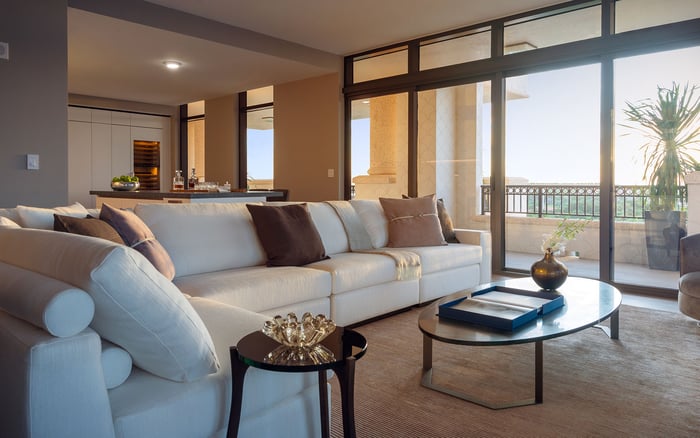
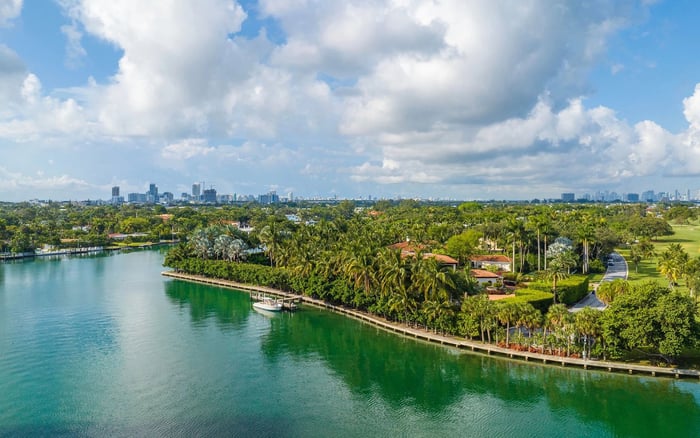
A collector-focused guide to evaluating privacy, display space, natural light, environmental systems, art logistics, and due diligence at Fisher Island’s sister Palazzo buildings.
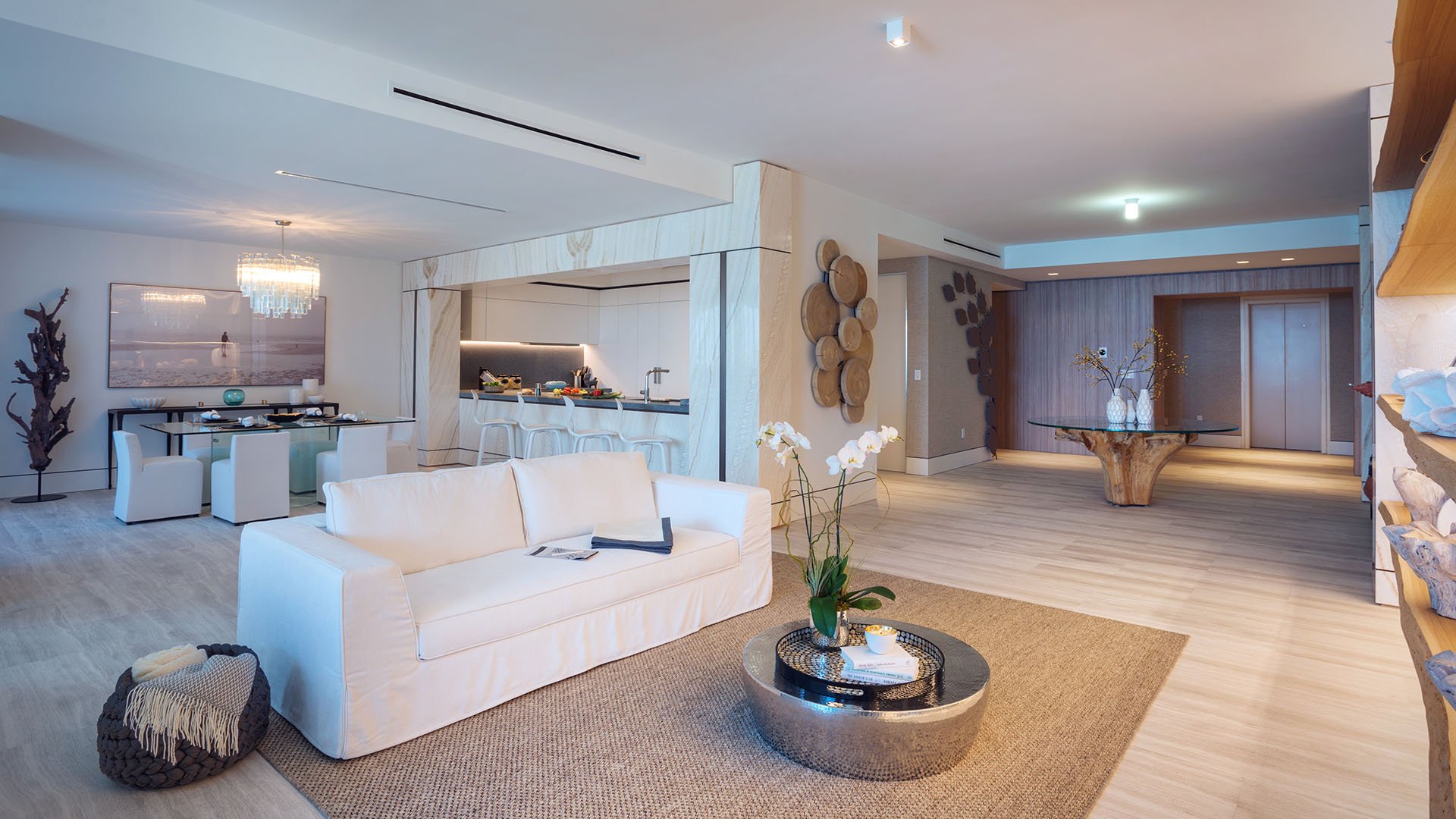
For a serious collector, a home is never merely a backdrop. Proportion, light, circulation, privacy, mechanical stability, and delivery access all determine whether important works can be displayed and cared for properly. On Fisher Island, Palazzo del Sol and its sister development, Palazzo della Luna offer a compelling premise: expansive, view-oriented residences in a controlled island environment, with the potential for highly individualized interiors.
That promise demands disciplined evaluation. Luxury finishes and concierge-level service may support gracious living, but they do not automatically provide museum-level conservation conditions. The collector’s task is to determine how precisely each residence can be adapted to the requirements of the works it will hold.
Palazzo del Sol is conceived around privacy, generous residential scale, and elevated service. Its architect-driven design and substantial interior volumes can accommodate customized layouts, long sightlines, and meaningful expanses of wall. For collectors, that flexibility allows rooms to be organized around specific works rather than forcing a collection into a standardized plan.
The residence should nevertheless be assessed as a sequence of distinct display conditions. A large salon may suit major paintings, while a protected interior passage may be better suited to light-sensitive photography or works on paper. Sculpture calls for a separate analysis of floor loading, circulation, viewing distance, and secure placement. Furniture, lighting, and art should therefore be planned as a single composition.
Palazzo della Luna likewise offers expansive residential spaces and broad wall areas suited to private collections. Its bespoke potential enables an owner and design team to shape a program around collection categories, whether the priority is painting, photography, sculpture, mixed media, or rotating installations.
Here, design and architecture become curatorial decisions. Walls may require reinforcement. Lighting should serve individual works without introducing glare. Millwork can conceal equipment or create protected display zones, while room divisions can establish more intimate viewing conditions within an otherwise expansive plan. The objective is not to make the home resemble a gallery, but to create a residence in which art, daily life, and views remain in balance.
The prominent views and extensive glazing associated with both buildings are central to their appeal. They also require careful planning. Direct sun, reflected brightness, heat gain, and shifting daylight can influence where sensitive works belong and how comfortably paintings can be viewed.
A collector should map daylight conditions throughout the residence before finalizing placement. Glazing specifications, automated shades, blackout capability, and supplemental lighting all warrant close review. Window walls can frame art beautifully when placement is deliberate, but the most visually dramatic position is not always the safest. Works with vulnerable pigments, paper, textiles, or photographic materials may require more protected locations and guidance from a qualified conservator.
Environmental stability matters more than broad claims of sophisticated residential technology. Buyers should evaluate HVAC zoning, humidity management, temperature consistency, glazing, automated shading, and backup power against the requirements of their own collections. A system designed for residential comfort may not maintain the narrower conditions certain materials demand.
Security warrants the same work-by-work scrutiny. Controlled island access, building privacy, and residential services can provide a strong foundation, but collectors should assess in-residence alarms, monitoring, storage, staff protocols, and emergency response with a security consultant and insurance adviser. Current condominium documents, insurance terms, mechanical specifications, and hurricane procedures should be reviewed before closing.
Monumental works present practical questions that should be resolved before acquisition or relocation. Buyers at both Palazzos should confirm loading procedures, elevator dimensions and capacities, corridor turns, ceiling clearances, doorway widths, staging areas, and approved installation practices. The critical measurement is not simply the artwork’s size, but the dimensions of its protective crate and handling equipment.
Fisher Island adds another layer of coordination. Crates, installers, conservators, riggers, and other specialist vendors may require advance access planning. Buyers should obtain current vendor rules and understand how deliveries are scheduled, supervised, and moved through common areas. Privacy is part of the lifestyle appeal, but controlled access also means an improvised delivery plan is unlikely to suffice for valuable or oversized work.
Collectors choosing between the two Palazzos may also wish to consider how other island residences align with their collection strategy. The Residences at Six Fisher Island and The Links Estates at Fisher Island can form part of a broader property tour, allowing buyers to compare residential formats within the same island setting.
The meaningful comparison is not simply which property feels most impressive, but which residence offers the right wall geometry, protected zones, service circulation, environmental adaptability, and delivery path for the collection at hand. An owner who rotates contemporary paintings has different requirements from one installing large sculpture or preserving works on paper.
Before committing, buyers should commission coordinated reviews by their interior architect, conservator, security consultant, insurance adviser, and relevant art handlers. Floor plans should be tested against actual artwork and crate dimensions. Mechanical and shading systems should be evaluated under realistic conditions, and proposed alterations checked against current condominium requirements.
The strongest outcome is a residence planned from the collection outward. At Palazzo del Sol and Palazzo della Luna, generous space, privacy, service, and customization potential offer an attractive starting point. Expert verification transforms that potential into a credible long-term environment for art.
Are Palazzo del Sol and Palazzo della Luna related developments? Yes. Palazzo della Luna is the sister condominium development to Palazzo del Sol on Fisher Island.
Can the residences accommodate substantial art displays? Their generous interior volumes and wall expanses can support significant displays, subject to detailed planning and physical verification.
Is the natural light suitable for every type of artwork? Not necessarily. Extensive glazing makes shade control, careful placement, and conservation review particularly important.
Do the buildings provide museum-level climate control? Buyers should not assume so. HVAC zoning, humidity control, glazing, shading, and backup power should be independently assessed.
What access dimensions should a collector verify? Confirm loading areas, elevators, corridors, turns, doorways, ceiling heights, and the dimensions of fully packed crates.
Does Fisher Island access affect art deliveries? Yes. Art handlers, crates, installers, and specialist vendors should be coordinated well in advance.
Can interiors be planned around particular works? Both developments support individualized interior schemes, allowing rooms and display conditions to be tailored to a collection.
What documents should buyers review before closing? Review current condominium rules, insurance terms, mechanical specifications, vendor-access policies, and hurricane procedures.
Which specialists should participate in due diligence? Consider an interior architect, qualified conservator, security consultant, insurance adviser, and experienced art handler.
What is the central buying question for a collector? Determine whether the residence can safely receive, display, protect, and maintain the collection over time.
For a tailored shortlist and next-step guidance, connect with MILLION.
If branded residences are on your mind — as a home or as an allocation — we would be glad to share what we are seeing, privately.
Begin a quiet conversation