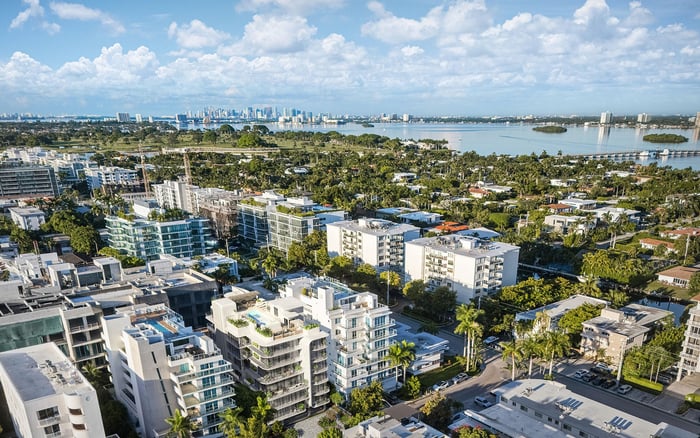
A disciplined framework for assessing potential structural work, reserve funding, construction disruption, and contract protections before pricing a La Maré residence.

A prospective purchase at La Maré Bay Harbor Islands calls for technical, financial, and contractual diligence. No project-specific evidence supplied for this review establishes that La Maré currently has pending concrete, waterproofing, or façade work. Buyers should confirm current conditions through association records, property disclosures, engineering documents, permits, owner notices, and the contract package.
A documented and funded repair program presents a different risk profile from a general concern, an early recommendation, or an unscoped condition. The offer should reflect verified information while accounting for unresolved questions through appropriate review rights.
Request any available inspection reports, engineering evaluations, repair recommendations, maintenance records, and follow-up scopes. Obtain complete documents and attachments rather than relying on summaries.
For any property, the inquiry should focus on the building's own records and current condition. Apply that same discipline when comparing Onda Bay Harbor and Alana Bay Harbor Islands without assuming that one building's documents describe another.
If concrete, waterproofing, or façade work is mentioned, request the available engineering assessment, repair scope, contractor proposals, construction agreement, permits, schedule, and contingency details. Board minutes and owner notices may provide additional context about decisions, contemplated assessments, delays, disputes, or changes.
Review any reserve study alongside current reserve balances, planned contributions, budgets, year-end financial statements, association financing, insurance materials, claims, and open legal matters disclosed in the transaction materials. The goal is to determine whether a potential obligation has been identified, scoped, priced, approved, funded, contracted, permitted, and scheduled.
An offer analysis can begin with the residence's value absent the identified issue, then consider unpaid approved assessments, an allowance for unresolved or unfunded work, and a separate adjustment for anticipated disruption. This is a decision framework rather than an appraisal formula.
When work has been documented, evaluate the unit's stated allocation, payment schedule, available funding, project contingency, and remaining uncertainty. When a concern has not been fully evaluated, priced, or funded, stronger review, cancellation, or renegotiation provisions may be appropriate.
Potential façade or waterproofing work can affect the ownership experience through noise, scaffolding, contractor access, balcony limitations, or interrupted views. Buyers should ask which areas may be affected, how access would be managed, and what schedule has been provided.
This issue may matter differently to a full-time resident, a seasonal owner, or a buyer planning a future resale. Buyers also evaluating The Well Bay Harbor Islands should conduct an independent, document-led review for that property.
The contract review should address available inspection and reserve materials, engineering scopes, proposals, construction agreements, permits, financial statements, assessments, insurance information, disclosed disputes, and the unit's current balances. Qualified counsel can advise how responsibility for approved or newly adopted assessments should be allocated and whether material new information permits cancellation or renegotiation.
The objective is not automatically to reject a residence because work is discussed. It is to distinguish a defined and funded plan from open-ended exposure, then reflect that distinction in price, timing, escrow terms, and contractual rights.
Is pending work at La Maré confirmed? No project-specific evidence supplied for this review confirms current concrete, waterproofing, or façade work. Buyers should verify the current status through property and association records.
Should a buyer rely on an inspection summary? A buyer should request the complete available report, including attachments and recommendations, before evaluating its significance.
Why review reserve information? Reserve documents can help a buyer compare planned funding with the costs and timing described in the available project records.
Which construction documents should a buyer request? Relevant materials may include engineering scopes, contractor proposals, signed agreements, permits, schedules, contingencies, changes, and payment obligations.
How should an approved assessment be handled? The contract should clearly allocate responsibility, and the buyer should confirm the unit's stated balance and payment schedule.
What if potential repairs have not been priced? The buyer may consider a conservative allowance and preserve appropriate rights to cancel or renegotiate after document review.
Can disruption influence an offer separately from repair costs? Yes. Anticipated noise, access limitations, scaffolding, balcony restrictions, or view interruptions can be evaluated separately from direct financial obligations.
Should buyers review newer buildings carefully? Yes. Due diligence should remain property-specific and can include available inspections, maintenance records, punch lists, and follow-up scopes.
What can reduce uncertainty for a buyer? Complete engineering, financial, contractual, permitting, and scheduling records can provide a clearer basis for evaluating the transaction.
Who should review the contract protections? Qualified legal and property professionals can help evaluate assessment responsibility, document-review periods, escrow terms, and cancellation or renegotiation rights.
For a discreet conversation and a curated building-by-building shortlist, connect with MILLION.
If branded residences are on your mind — as a home or as an allocation — we would be glad to share what we are seeing, privately.
Begin a quiet conversation