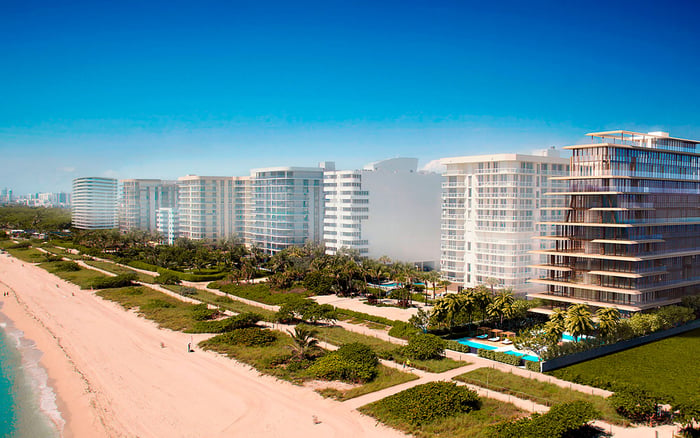
Eighty Seven Park pairs limited residential density with resort-caliber operations. Buyers should verify current budgets, ownership percentages, reserves and insurance rather than treating online fee estimates or unit count as reliable measures of carrying cost.
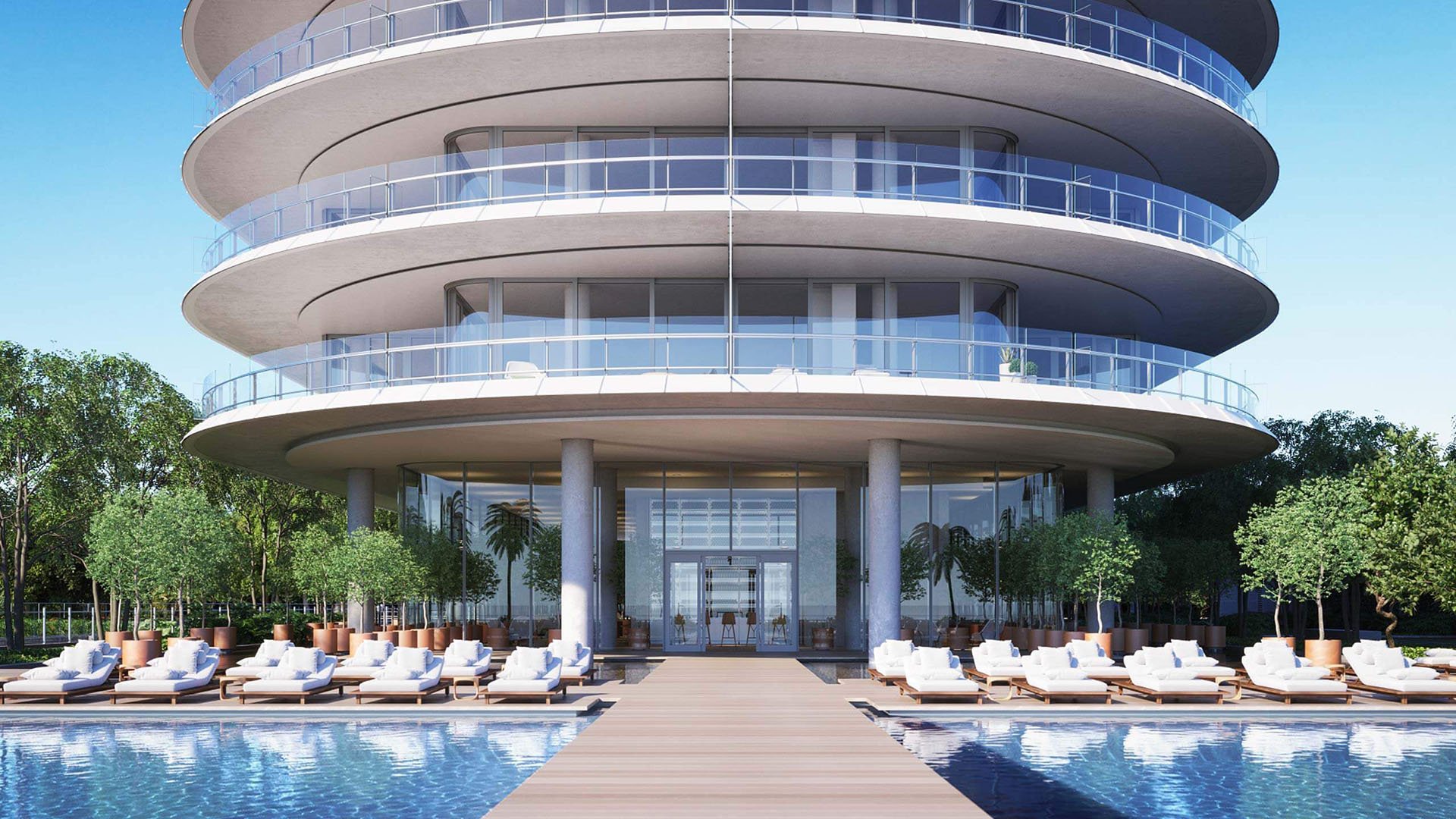
At Eighty Seven Park Surfside, exclusivity is central to the proposition. Completed around 2019 at 8701 Collins Avenue, the Renzo Piano Building Workshop design pairs expansive residences with a distinctly private atmosphere. Yet low density should not be mistaken for low overhead. In a building that operates more like an intimate resort than a conventional condominium, fewer owners may share the cost of a substantial fixed operating platform.
That distinction belongs at the center of ownership due diligence. A buyer is not simply acquiring square footage and an oceanfront address, but also a proportionate obligation to support staffing, security, management, pools, wellness facilities, landscaping and common areas. Boutique living can be exceptionally refined, but that refinement has an operating structure.
Exclusivity can be a cost driver rather than a guarantee of lower expenses.
The stated scale of the building varies. Available figures range from 57 apartments across 18 floors to 65 condominiums, while another count identifies 70 residences across 20 stories. This is not a detail to resolve through marketing language. Buyers should reconcile the discrepancy against the declaration of condominium and current association records.
The operative question is not merely how many physical homes exist, but how expenses are legally allocated among units and which ownership interests participate in particular costs. A building can feel sparsely occupied while its budget remains shaped by round-the-clock service, sophisticated systems and coastal maintenance. The current governing documents establish the basis for understanding that allocation.
The practical rule is simple: verify the denominator. The number of owners sharing an expense can matter as much as the expense itself, especially in a low-density oceanfront property.
Public maintenance estimates vary sharply, from approximately $1.70 to $3.60 per square foot per month. Those figures may reflect different dates, inclusions or calculation methods. Neither should replace the latest adopted budget, a current unit-specific estoppel and a clear explanation of what the quoted fee includes.
Unit-level figures underscore the need for residence-specific analysis. Unit 606 carries a monthly HOA fee of $5,903, while Unit 904 carries a monthly association fee of $5,368. These amounts should not be generalized across the building. Residence size, ownership allocation, timing and the treatment of particular charges can produce different outcomes.
This is especially relevant because homes range from approximately 1,400 to 7,000 square feet, with one- to five-bedroom configurations. Large floor plans can magnify monthly obligations when costs are allocated by square footage or percentage interest. Resale buyers should therefore underwrite the actual unit, not a building-wide average.
Unit 904 holds a 0.9837% undivided interest in the common elements. That percentage offers a more useful due-diligence clue than the simple statement that the property is low density. It illustrates how an owner's share of recurring charges or assessments may be tied to the condominium's formal allocation schedule.
A buyer should request the complete schedule of unit ownership percentages and compare the target residence with relevant alternatives. The review should confirm how regular assessments, reserves and any special assessments are apportioned. It should also establish whether every operating category follows the same formula.
This framework applies beyond one address. Nearby Arte Surfside and Fendi Château Residences Surfside may appeal to buyers seeking boutique coastal ownership, but meaningful comparisons require more than a residence count. Each property's documents, service model and cost allocation demand separate review.
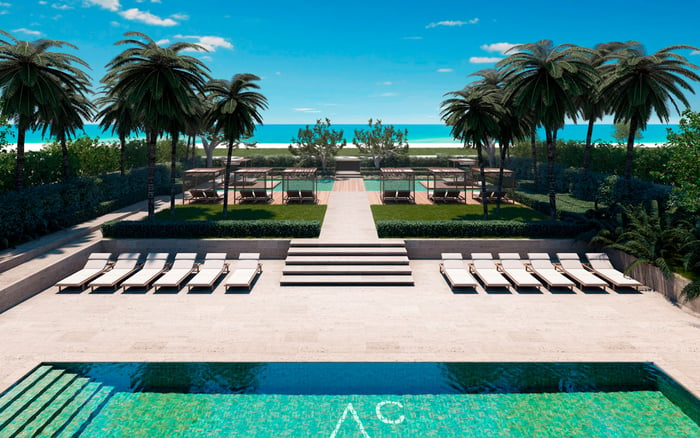
Eighty Seven Park's amenity program includes concierge service, two pools, a full-service spa, an ocean-view gym and a wine bar. Additional elements include poolside cabanas, a salon, curated art and botanical landscaping. The service offering extends to butler service, 24-hour concierge, security, resident-programming support and pool-and-beach service.
Each element may enhance daily life, yet each can carry labor, management, upkeep or replacement costs. Some expenses remain relatively fixed whether shared by dozens of residences or a much larger ownership base. The more revealing comparison metric is service density: the number of residences supporting each staffed amenity and operational layer.
That perspective is valuable when considering other Surfside choices. The Surf Club Four Seasons Surfside presents its own hospitality-oriented context, while Ocean House Surfside offers another point of reference within the local luxury market. The purpose is not to assume that one model costs more, but to compare actual budgets, inclusions and service intensity on equivalent terms.
The most useful review begins with the current adopted budget and recent audited financial statements. These documents show how revenue and expenses are organized, where material costs sit and whether actual performance has tracked prior expectations. Buyers should then examine the reserve study, reserve balances and the association's approach to funding future obligations.
Insurance declarations deserve equally close attention. The review should clarify association coverage, deductibles and the boundaries between building insurance and the owner's policy. Board minutes can add context around contemplated work, recurring operational issues, insurance discussions and potential assessments. A special-assessment history can help establish whether significant needs have been addressed through reserves or additional owner contributions.
Finally, obtain a unit-specific estoppel and verify the residence's ownership percentage directly against the declaration and association schedule. The estoppel should be read alongside-not instead of-the larger financial package. Contract timing should allow qualified legal, financial and insurance advisers to review these materials before the buyer's diligence rights expire.
Association dues are only one line in the ownership budget. In-unit electricity, contents insurance and property taxes generally fall outside the HOA charge and should be modeled separately. Buyers should also preserve an allowance for possible assessments rather than assume the recurring fee captures every future obligation.
The resulting analysis should distinguish recurring association dues, personal utilities, unit insurance, taxes and potential capital calls. It should also test the effect of fee increases rather than rely on a single current month. This creates a more credible view of annual ownership and makes comparisons between properties genuinely useful.
Low density remains one of Eighty Seven Park's defining luxuries. It simply does not constitute proof of low operating cost. The informed buyer values privacy and service while verifying precisely how that experience is funded.
For discreet guidance on South Florida luxury condominium ownership, connect with MILLION.
If branded residences are on your mind — as a home or as an allocation — we would be glad to share what we are seeing, privately.
Begin a quiet conversationFixed expenses such as staffing, security, management and amenity upkeep are shared among fewer owners. A small residence count can therefore increase each owner's share.
Published totals vary from 57 to 70 residences. Buyers should verify the controlling count through the declaration and current association records.
They are preliminary leads because published figures vary from about $1.70 to $3.60 per square foot monthly. The current budget and unit-specific estoppel are more relevant.
Residence size, percentage ownership, timing and allocation methods can affect the charge. Buyers should analyze the specific unit rather than apply a building average.
It indicates the unit's ownership share in condominium common elements and may influence recurring charges or assessments. The declaration establishes the applicable allocation.
Request the current budget, recent audited financials, reserve study, reserve balances and special-assessment history. Review them with the unit-specific estoppel.
Minutes can reveal contemplated work, recurring operating issues, insurance discussions and potential assessments. They add context that a current fee figure cannot provide.
In-unit electricity, contents insurance and property taxes are generally separate. Buyers should also account for possible special assessments.
Service density considers how many residences support each staffed amenity or operational layer. It offers a more useful comparison than total unit count alone.
The program includes concierge service, two pools, a spa, ocean-view gym, wine bar, cabanas, salon and landscaping, along with other staffed services.