
At 2200 Brickell, privacy-minded buyers should distinguish the owner of record from development identities, entity filings and building-facing information. A disciplined review starts with the specific residence and treats discretion as something to confirm, not assume.
For a privacy-minded buyer, the essential question at 2200 Brickell is not simply whether the address feels discreet. It is which information identifies the legal owner, which connects that owner to other parties, and which details might surface in everyday building operations. These are distinct inquiries, each requiring its own confirmation.
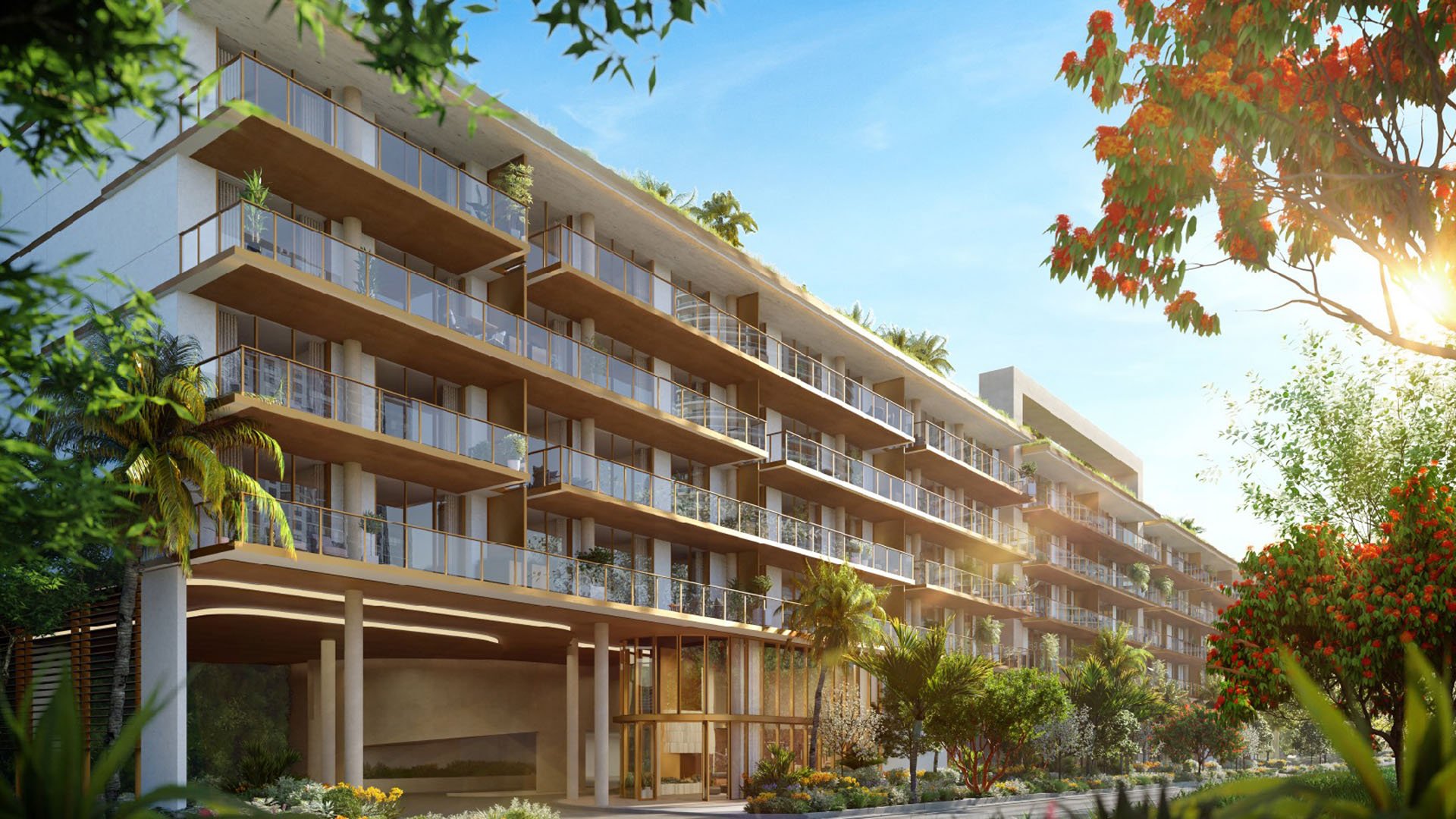
Located at 2200 Brickell Avenue, Miami, FL 33129, the project is marketed as 105 residences across five stories. That scale is a useful starting point for understanding the development. It does not establish anonymity, a particular directory policy or how visible an individual purchaser’s identity may be.
Separate the review into three layers: property records, legal-entity information and building-facing information. A conclusion drawn from one layer should not carry into another without supporting documentation. A quiet residential setting and a low-profile ownership structure are not interchangeable assurances.
The publicly identified development partners are Aria Development Group, Largo and Place Projects, with Revuelta Architecture International as architect and ODA as interior designer. These names identify the development and design team, not the eventual owner of a particular residence.
The community’s identified builder is 2200 Brickell Holdings, LLC. That legal-entity name is distinct from the development partners’ marketing names. Its appearance in a community description does not establish that it owns a particular unit today or reveal who ultimately holds an economic interest in that unit.
For a buyer also considering Una Residences Brickell, the useful comparison is not which name sounds more private. It is whether the same questions about title, entity identity and operational discretion have been answered for each proposed purchase. A privacy assumption at one address should not carry over to another.
The county’s official property search supports searches by address, owner name, folio and subdivision name. It provides ownership and sales information, along with key property characteristics, making it a stronger starting point for an ownership check than project branding or listing language.
Begin with the address, then narrow the inquiry to the intended residence. The county’s mapping tool includes a function for double-clicking a condominium complex to list individual property owners. That capability does not confirm that every 2200 Brickell residence is already individually indexed. Check what the search actually returns for the unit in question.
The street address has been associated with folio 01-4139-001-0820 and the legal description BRICKELLS FLAGLER PB 5-44 LOT 69 & 70 BLK 56. Treat those details as a site-level reference, not a verified folio for an individual condominium residence. Substituting the site record for a unit record can leave the central ownership question unanswered.
For transaction diligence, ask counsel or the title professional to reconcile the intended unit, its legal description, the ownership information and the relevant recorded instruments. The goal is an unambiguous match between the residence being purchased and the documents supporting the transaction-not a collection of loosely related search results.
An LLC name is a reason to examine the legal identity more closely, not a conclusion about privacy. For 2200 Brickell Holdings, LLC, the builder designation alone does not establish managers, members, a registered agent or beneficial owners. Nor should that name stand in for the identity of an eventual unit-owning entity.
If an entity appears in the ownership documentation, ask counsel to obtain the relevant corporate-registry filings and explain precisely what each entry establishes. Distinguish any listed capacity from property ownership or ultimate economic interest. Do not infer a complete ownership chain from a name match.
The review should also distinguish the entity’s identity from the authority of the person signing for it. Ask which documents support the proposed transaction and what remains to be confirmed before commitment. Entity ownership is not a guarantee of anonymity, and a company name alone does not resolve the buyer’s privacy objectives.
Individual listing details illustrate why careful interpretation matters. For Unit 416, a disclosure identifies an ownership interest held by the listing agent. That disclosure is meaningful, but it does not establish the complete ownership chain or identify every party with an interest.
Unit 220, identified as MLS A12037558, has been listed with 2200 Brickell as its subdivision and 2026 as its year built. Those fields are not proof of a recorded transfer. On their own, they should not establish completion, occupancy or the availability of every unit’s county record.
For Unit 513, unavailable listing tax history does not establish the residence’s assessment or tax status. A blank field remains an unanswered question until checked against appropriate documentation. Neither an affirmative listing field nor an absence of information supports a broader ownership conclusion on its own.
Building directories belong in a separate conversation from title. A lobby label, intercom entry or resident-facing name should not be treated as proof of legal ownership. Nor should a preferred display name be assumed to change what an ownership search will show.
Before committing, request written answers about whether a directory exists, what names it displays, whether an alternative label is permitted and who can view the information. Ask separately about package handling, parking records, visitor access and management’s disclosure requirements. These are questions to confirm, not established features or policies of 2200 Brickell.
For a buyer comparing The Residences at 1428 Brickell, using the same written questionnaire can make the review more consistent. The comparison should not imply that the buildings share directory practices, internal record access or disclosure standards. Do not assume that management knows every beneficial owner or that outsiders can access internal association files.
Before moving forward, assemble a unit-specific ownership review, an entity review where relevant and written answers about building-facing information. Ask your advisers to identify any mismatch between the proposed seller, the property description and the supporting documents. Address operational privacy alongside that work, not as a substitute for title diligence.
The objective is clarity: what is public, what an entity filing establishes and what the building asks residents to disclose. At 2200 Brickell, discretion deserves the same documentary attention as ownership itself.
For a considered perspective on South Florida residences and buyer priorities, explore MILLION.
If branded residences are on your mind — as a home or as an allocation — we would be glad to share what we are seeing, privately.
Begin a quiet conversation2200 Brickell is located at 2200 Brickell Avenue, Miami, FL 33129, in Miami’s Brickell neighborhood.
No. The project is marketed as 105 residences across five stories, but those figures describe scale rather than an anonymity guarantee.
Begin with Miami-Dade’s official property search, which supports address, owner name, folio and subdivision searches. Narrow the results to the specific residence.
It is a site-level reference associated with the street address, not a verified individual-unit folio. It should not be substituted for a verified unit folio.
No. Its identification as the community builder does not establish current ownership of a particular residence or identify its beneficial owners.
Entity ownership should not be treated as an anonymity guarantee. Ask counsel to distinguish what the ownership documents and corporate filings actually establish.
It establishes that the listing agent disclosed an ownership interest in the property. It does not establish the complete ownership chain.
No. The listed year built of 2026 is a listing field, not proof of a recorded transfer, completion or occupancy.
No. Unavailable tax history in a listing does not establish the unit’s assessment or tax status.
Request written confirmation of whether a directory exists, what it displays, who can view it and whether alternative labels are permitted. Do not assume these policies at 2200 Brickell.

.jpg&width=700&height=438&fit=cover)