Miami Open offers a practical test of waterfront ownership: whether the residence, yacht berth, crew arrangements, provisioning plan, and stadium transfers work together without compromising the day.
A morning aboard, an afternoon of tennis, and an unhurried return home make an appealing Miami itinerary. For a buyer, that day also tests how well a residence works. The question is not simply whether the apartment overlooks the water, but whether the yacht, crew, supplies, and car can move independently without the owner coordinating every handoff.
The Miami Open’s relocation from Crandon Park on Key Biscayne to Hard Rock Stadium in Miami Gardens changed the geography of tournament attendance. Island causeway access gave way to stadium-bound road planning. For waterfront buyers, the practical response is to assess nautical access and tennis transfers separately, then determine whether they fit comfortably into the same day.
This is a framework for evaluating ownership, not evidence that the tournament has changed property prices or buyer demand. Its value lies in making everyday logistical questions harder to overlook.
A berth well suited to a vessel does not automatically simplify an evening at Hard Rock Stadium. The stadium is approximately 18 miles from South Beach and 16 miles from downtown, with estimated, traffic-dependent journeys of 40-75 minutes. These are planning ranges, not official tournament forecasts or promises for a particular residence.
The return deserves equal attention. Estimated rideshare waits after night sessions can reach 20-40 minutes. A buyer should examine pickup arrangements, driver staging, and a contingency plan rather than assume departure begins when the final point is played.
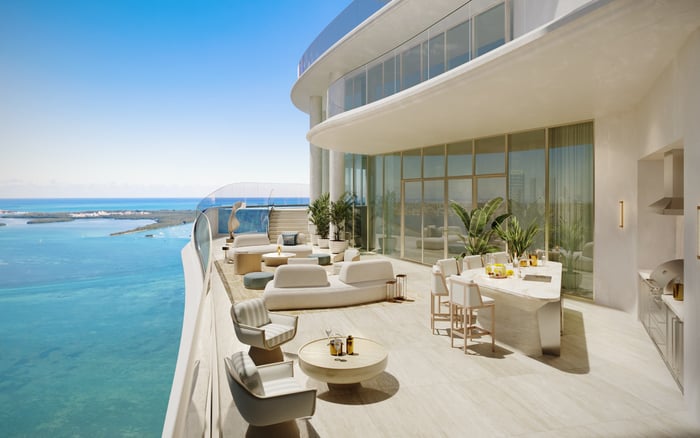
When considering Una Residences Brickell, treat the Brickell residence-to-berth trip and the stadium transfer as distinct exercises. Confirm where a car can collect guests, where it may wait, and which alternative road routes are practical. None of these arrangements should be inferred from a waterfront address.
The yacht should define the berth search, not the other way around. Begin with draft, length, air draft, and maneuvering requirements, then examine the actual route from the proposed slip to the intended cruising grounds. A dock’s appeal from a terrace reveals little about its suitability for a particular boat.
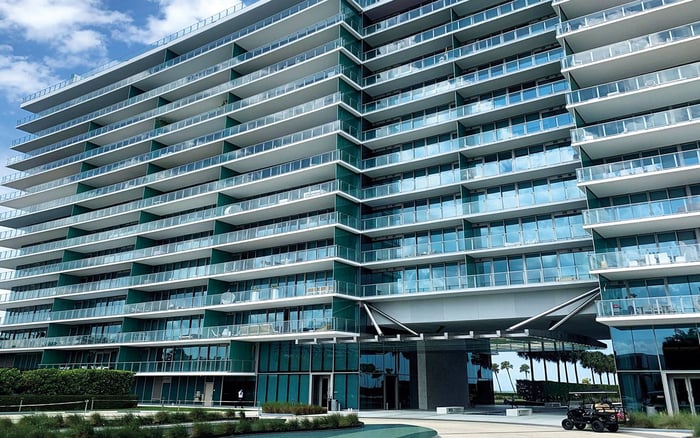
On Key Biscayne, many residential docks suit center consoles and sport boats, while larger yachts frequently berth off-island because of draft, length, and turning-room requirements. A buyer considering Oceana Key Biscayne should evaluate the residence and intended berth independently, without assuming that an island home resolves yacht accommodation.
Bridge clearance also requires route-specific scrutiny. Fixed bridges along the Rickenbacker Causeway corridor can be relevant, but the question is whether the vessel’s actual passage encounters them. Have the captain check air draft against the bridges on that route, alongside channel depth and marina approach requirements.
“No-bridge to bay” has a narrower meaning than its sales appeal might suggest: reaching Biscayne Bay without passing beneath a bridge. It removes a vertical-clearance constraint, not idle-speed restrictions, no-wake zones, traffic, or distance. Nor does it guarantee a short passage to the ocean. Two miles on a chart can take more than 20 minutes under constrained conditions, so measure the usable boating window rather than the straight-line distance.
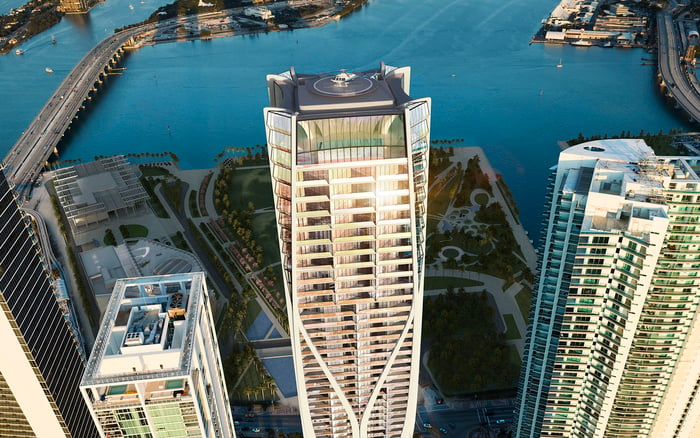
Downtown Miami offers a concrete reference point in Miamarina at Bayside, at 401 Biscayne Boulevard. For a buyer considering Aston Martin Residences Downtown Miami, that address can anchor a practical comparison of residence-to-marina and marina-to-stadium journeys. It does not establish a berth entitlement or service relationship with the residence.
Miamarina’s listed daily hours are 7 a.m.-5:30 p.m. Before planning an evening return, clarify which activities those hours govern and what arrangements apply outside them. Listed hours alone do not settle questions about late arrivals, supplier access, or crew movements.
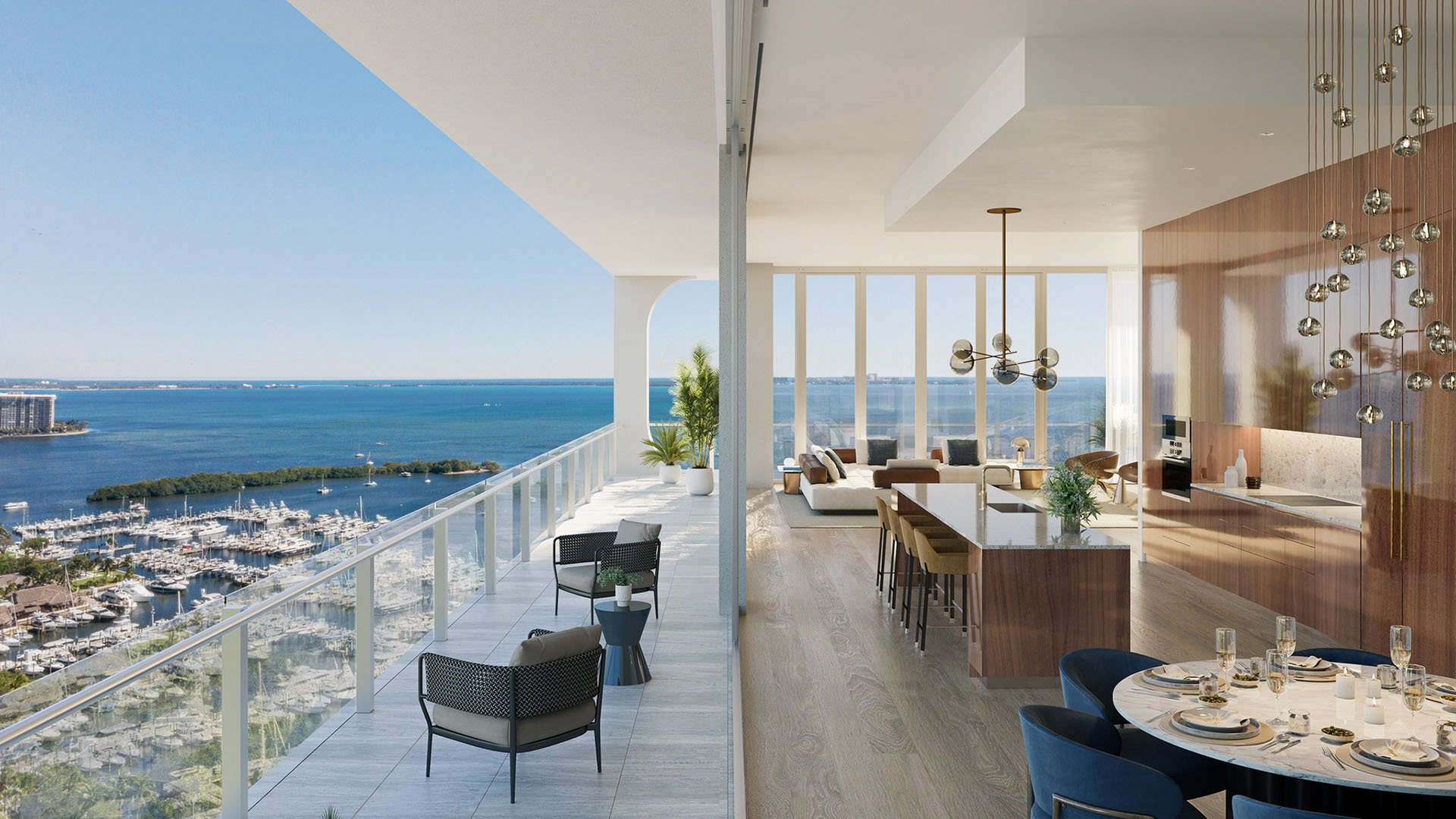
In Coconut Grove, Dinner Key Marina sits on Biscayne Bay’s western shore. A residence search that includes Park Grove Coconut Grove can use Dinner Key as a separate boating reference, without assuming berth availability or vessel compatibility based on the property.
Weekend and holiday congestion warrants attention, and visiting owners should confirm transient-slip availability rather than expect space on arrival. Direct bay-facing departures still require verification of channel depth, draft, and approach conditions. The neighborhood choice should follow the complete itinerary, not a simple comparison of waterfront views.
Crew access is not the same as owner access. During a property visit, trace the crew’s arrival from the street or parking area to the vessel. Ask where vehicles may remain, how equipment reaches the dock, and whether loading access conflicts with guest arrivals. These are arrangements to verify, not amenities to presume.
Then test the schedule. Can the crew prepare the yacht while the household leaves for tennis? Who receives a supplier if the captain is occupied? Where does the driver wait if passengers are delayed? A clear division of responsibilities is more useful than a general assurance that everything can be arranged.
Road access deserves a backup plan as well. Historical festival closures along South Bayshore Drive illustrate how a waterfront destination can face a separate land-access interruption. They are not Miami Open closures. The practical lesson is to check current restrictions and alternative approaches for the intended day.
Yacht provisioning delivery is available to Miami marinas and private docks, offering an alternative to household supply runs. Availability, however, does not establish permission to enter a specific property or marina, nor does it guarantee a convenient receiving window.
Before selecting a residence-and-berth combination, confirm supplier registration, loading access, delivery cutoffs, receiving responsibility, and applicable service hours. Ask where chilled provisions can be held and who completes the handoff to the crew. These are operational questions for the relevant managers and suppliers, not assumed building services.
Work backward from departure to schedule provisioning. Ideally, receiving and stowing supplies should not compete with boarding guests or meeting a stadium transfer. The objective is a day that works without the owner’s repeated intervention.
Before committing, rehearse the intended sequence: crew arrival, provisioning, boarding, return to the berth, departure for tennis, and late-night arrival home. Test road journeys at relevant times where possible, and have the captain assess the nautical route separately.
The strongest ownership arrangement is not necessarily the one with the shortest distance on a map. It is the one whose access rules, vessel requirements, and service windows fit the household’s routine. Miami Open makes those relationships visible; the same discipline can improve the rest of the season.
For a considered approach to South Florida waterfront ownership, explore MILLION.
If branded residences are on your mind — as a home or as an allocation — we would be glad to share what we are seeing, privately.
Begin a quiet conversationA tournament itinerary tests whether boating, crew arrivals, deliveries, and stadium transfers can work together. It is a practical ownership exercise, not evidence of a tournament-driven price premium.
The tournament relocated from Crandon Park on Key Biscayne to Hard Rock Stadium in Miami Gardens. Attendance now requires planning stadium-bound road journeys rather than travel to the former island venue.
Indicative commercial estimates suggest traffic-dependent journeys of 40–75 minutes from downtown or South Beach. These are planning ranges, not official forecasts or residence-specific guarantees.
No. It means the route to Biscayne Bay passes beneath no bridges, but distance, slow-speed restrictions, and traffic can still affect passage time.
Not necessarily. Many residential docks suit center consoles and sport boats, while larger yachts frequently berth off-island because of draft, length, and turning-room requirements.
Have the captain compare the vessel’s air draft with bridges on the actual intended route. Channel depth and marina approach requirements also need separate review.
Its address at 401 Biscayne Boulevard provides a specific location for comparing residence, marina, and stadium journeys. Its listed hours also prompt questions about after-hours access and services.
No. Confirm transient-slip availability and vessel suitability in advance, and account for possible weekend and holiday congestion.
Confirm crew parking, loading access, equipment movement, and applicable access hours. Also establish who receives deliveries when the captain or owner is unavailable.
Provisioning delivery to Miami marinas and private docks is available. Confirm the specific location’s supplier permissions, receiving arrangements, and delivery windows before relying on it.