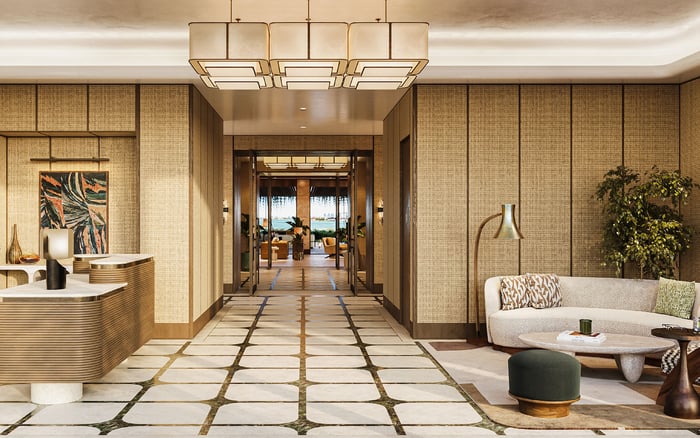
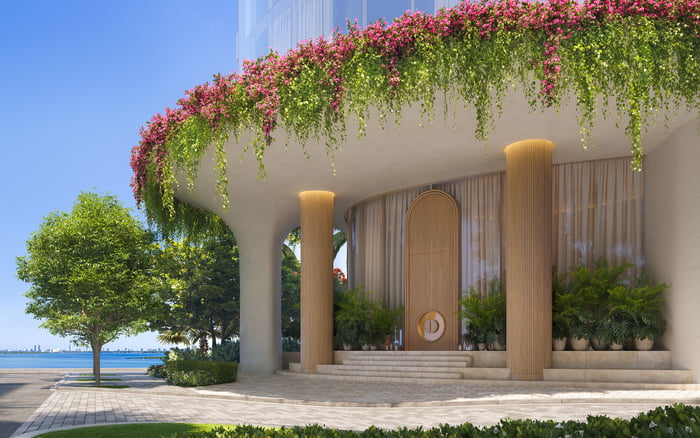
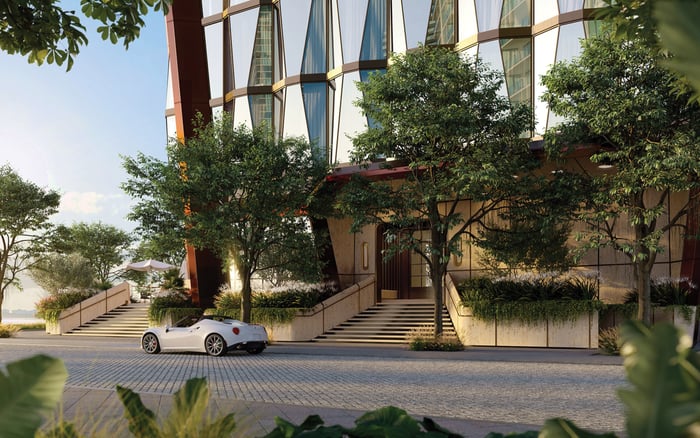
At EDITION Edgewater, advertised wine cooling and vehicle charging are the starting point, not confirmation of capacity for a collector’s custom installation. Buyers should document electrical allowances, installation approvals, parking access, and final specifications before committing to upgrades.
For a buyer with a significant art collection, carefully selected wines, and an electric vehicle, ownership involves more than choosing a floor plan. It means confirming that the residence and building can support the intended daily experience. At EDITION Edgewater, that distinction belongs in the conversation before an offer becomes a binding commitment.
Planned at 2121 N. Bayshore Drive in Miami’s Edgewater neighborhood, the project is described as a 55-story tower with 185 residences and approximately 45,000 square feet of indoor and outdoor amenities. Residence sizes range from approximately 1,952 to 3,815 square feet, with one- through four-bedroom layouts. Ceiling heights of 10 to 14 feet and semi-private elevators opening to private residential foyers establish an appealing architectural setting.
Those qualities do not establish the electrical allowance for a buyer’s installation. Residence-specific service amperage, panel ratings, spare breaker capacity, feeder capacity, and maximum permitted connected load remain undisclosed. This is a documentation question, not evidence of inadequate capacity.
Start with a written equipment brief rather than a general request for extra power. Identify proposed art-lighting fixtures and controls, additional wine refrigeration, motorized shades, and any other owner-installed equipment. Ask the design team to distinguish essential installations from optional additions so the developer can respond to a defined scope.
Before signing a contract, request the unit load schedule, panel amperage, spare capacity, and dedicated-circuit plan. Have an electrical engineer evaluate whether the proposed equipment fits the documented allowance. The review should address the complete installation, not merely the presence of an unused breaker position on a drawing.
Separate technical feasibility from permission. Ask which changes require developer or condominium approval, who may perform the work, and whether installation can occur before delivery or only after ownership. A Florida condominium attorney can help determine how important approvals and specifications should be reflected in the transaction documents.
Buyers also considering Aria Reserve Miami should apply the same questions to each candidate residence. Compare documented capacity and permitted scope rather than assuming that similarly positioned homes offer identical upgrade rights.
Described residence features include floor-to-ceiling windows and expansive terraces overlooking Biscayne Bay, the Miami Beach skyline, and the Atlantic Ocean. For an art-focused interior, consider glazing, artwork placement, fixture locations, and shade design together. A compelling wall composition needs an equally considered lighting and daylight plan.
A dedicated art-lighting package or circuit allowance is not established. Request junction-box locations, fixture-load limits, dimming compatibility, and lighting-control wiring before specifying equipment. Ask which ceiling or wall penetrations are permitted and whether the intended installation changes any approved finish detail.
Pre-wiring for custom window treatments is advertised, but motor locations, control protocols, circuit allocation, and separate blackout and solar-shading zones are not specified. Treat pre-wiring as the start of coordination, not confirmation that a chosen shade system will be supported without additional work.
For a buyer weighing Villa Miami alongside EDITION, an artwork-placement plan provides a consistent framework for evaluating both residences. Ask each team to address the actual collection and proposed controls without presuming that either project includes a particular lighting solution.
Kitchen specifications include Sub-Zero and Wolf panel-ready appliances, designer cabinetry, a five-burner gas cooktop, and an undercounter wine cooler. The cooler is a meaningful inclusion, but it does not establish a dedicated wine-room specification, whole-room humidity control, insulated cellar construction, or wine-storage backup power.
Obtain the cooler’s model and cut sheet before deciding how it fits the collection. Review electrical demand, ventilation clearances, heat output, and noise rating with the appropriate design professionals. Address these details alongside cabinet dimensions and finish selections rather than deferring them until installation.
If the collection calls for larger refrigeration or a dedicated wine room, request written confirmation that the proposed arrangement is permitted. Ask the engineer to assess the electrical requirements and the design team to identify the space and installation conditions. Do not infer permission for expanded storage from the included cooler.
Owner storage is also described, but electrical outlets, temperature control, water protection, and suitability for wine equipment are not established. A storage allocation is not a wine-storage solution until those conditions and the permitted use are documented.
Electric-vehicle charging stations are listed as a building amenity. Dedicated parking and an additional valet option are also described, but a charger-equipped assigned space for every residence is not confirmed. For an owner who expects dependable charging, access arrangements deserve as much attention as the hardware.
Request the charger and parking allocation plan, including charger count, output, connector types, load management, and reservation rules. Ask how charging is billed, whether access depends on valet arrangements, and who pays for installation, maintenance, or future infrastructure work. Address expansion capacity separately from the initial amenity offering.
Whether charging operates on normal power, emergency or standby power, or a managed charging network is not established. Obtain written outage provisions rather than assuming continued service. These questions concern building infrastructure and operating rules, not merely the residence’s electrical panel.
Marketing specifications may change before delivery. Keep a record of final selections, approved upgrade scope, responsible parties, and costs. Ask how changes to the residence or shared infrastructure would affect the proposed installation, and have the relevant professionals review updated plans where appropriate.
Before ownership, reconcile the agreed equipment brief with current plans, specifications, condominium documents, and the purchase contract. At delivery, request confirmation of the installed equipment and applicable operating instructions. Any unresolved requirement should remain an explicit question rather than quietly becoming an assumed inclusion.
Apply the same discipline when considering The Residences at 1428 Brickell as an alternative: ask for residence-specific answers rather than transferring expectations from one project to another. At EDITION, the decisive distinction is between advertised features and documented support for the owner’s intended use. Art, wine, and vehicle charging should each have a clear technical and contractual path from offer to ownership.
For a discreet assessment of how a residence fits your collection and daily routines, connect with MILLION.
If branded residences are on your mind — as a home or as an allocation — we would be glad to share what we are seeing, privately.
Begin a quiet conversationThe project is planned at 2121 N. Bayshore Drive in Miami’s Edgewater neighborhood.
The described specifications do not disclose residence-specific service amperage, panel ratings, spare breaker capacity, feeder capacity, or maximum permitted connected load.
Request the unit load schedule, panel amperage, spare capacity, dedicated-circuit plan, and written approval requirements for owner upgrades.
The described features do not establish a dedicated art-lighting package or circuit allowance. Buyers should confirm fixture limits, junction-box locations, controls, and permitted penetrations.
No particular system compatibility is established. Motor locations, control protocols, circuit allocation, and separate blackout and solar-shading zones require confirmation.
An undercounter wine cooler is listed. Buyers should obtain its model and cut sheet to review electrical demand, ventilation, heat output, and noise.
The listed cooler does not establish dedicated wine-room construction, whole-room humidity control, or wine-storage backup power.
Electrical outlets, temperature control, water protection, and suitability for wine equipment are not established in the described features.
A charger-equipped assigned space for every residence is not confirmed. Buyers should obtain the charging and parking allocation plan and applicable access rules.
The described features do not establish whether charging uses normal, emergency, or standby power. Request written outage provisions and charging-network details.