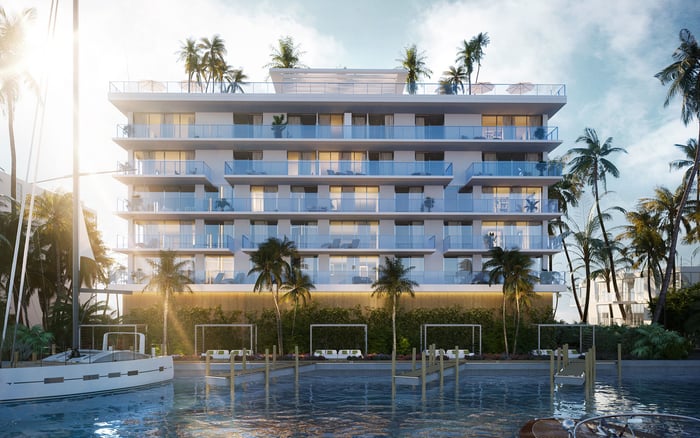
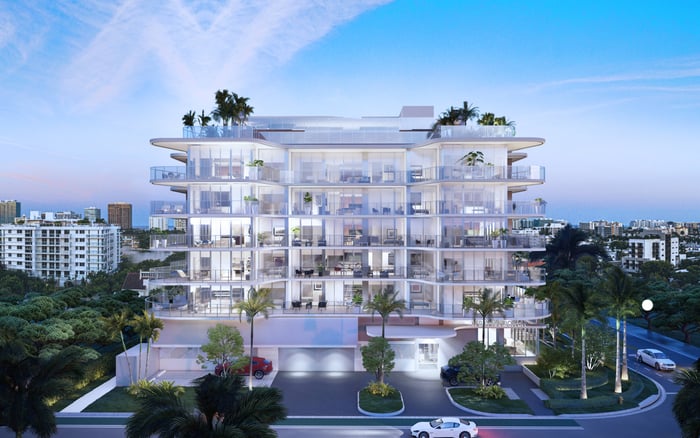
At Alana and Origin Bay Harbor Islands, advertised association fees are starting points, not proof of predictable ownership costs. Buyers should examine reserve funding, capital plans, insurance coverage, and operating timelines before comparing the two.
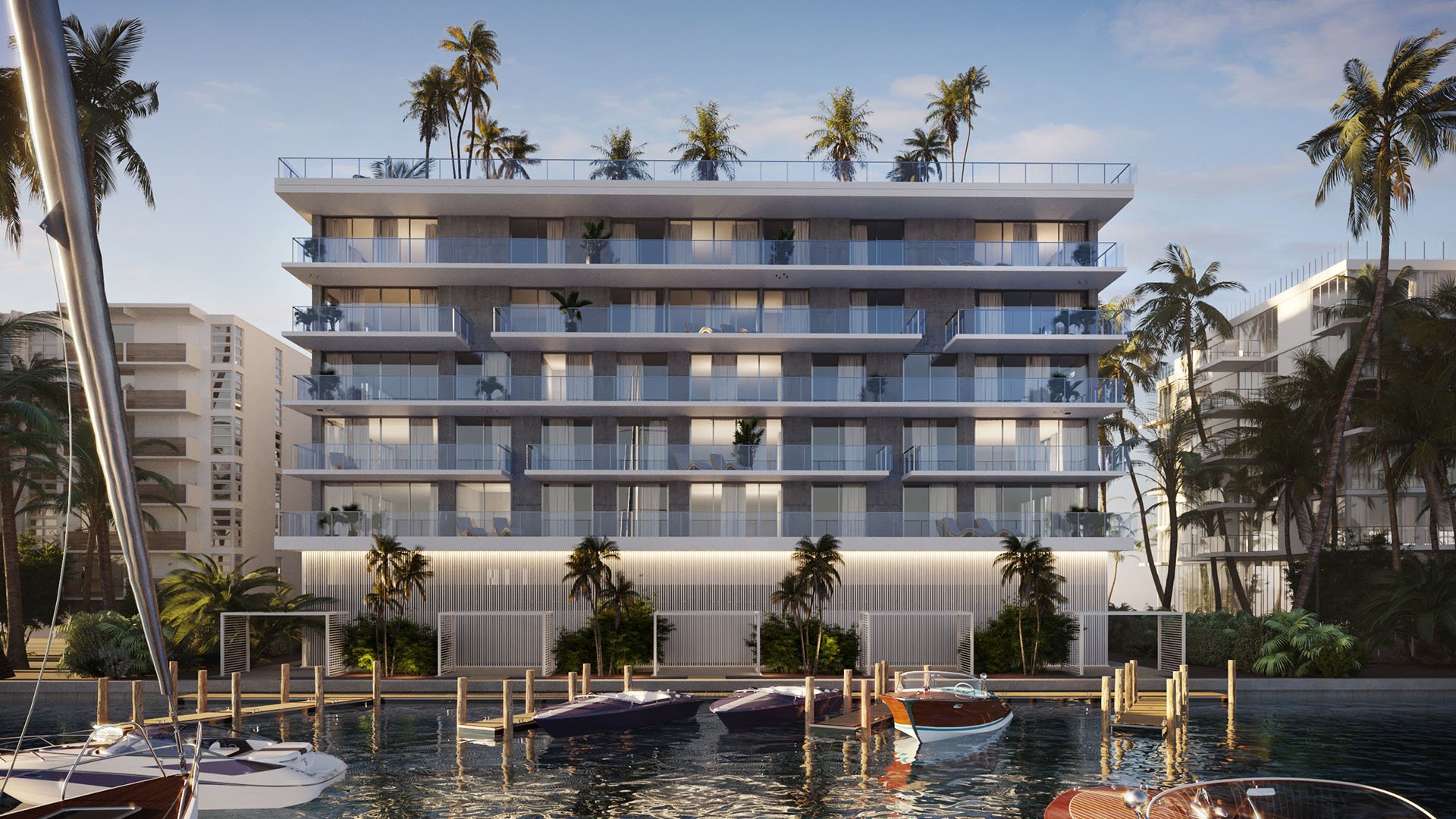
For a luxury condominium buyer, a monthly association fee is more than a carrying cost. It reveals how a building plans to maintain common property, fund future work, and protect the ownership experience. The meaningful question is not which residence has the lower advertised charge, but which budget can be understood and tested.
That distinction matters when comparing Alana Bay Harbor Islands with Origin Bay Harbor Islands. Alana is a seven-story condominium of approximately 30 residences at 9901 West Bay Harbor Drive. Origin Residences by Artefacto is a 27-residence development at 9760 West Bay Harbor Drive.
Boutique scale alone does not establish reserve strength or fee stability. The available figures establish neither association’s current reserve balances, contribution schedule, approved capital plan, nor pending assessments. A responsible comparison starts with documents, not a ranking of financial quality.
Alana’s estimated association fee is $1.07 per square foot, including reserves. Treat this as a development estimate, not confirmation of the current adopted budget. Before using it, establish the billing period, applicable area measurement, and whether the association has adopted a different charge.
Unit-specific advertisements offer additional reference points. Unit 403 has an advertised monthly HOA fee of $1,800, with community fees also advertised as starting at $1,800 monthly. Unit 503 shows $2,200 monthly but also has an “N/A” HOA field. That inconsistency calls for written confirmation of the charge for the residence being purchased.
Coverage deserves equal scrutiny. Alana’s advertised community-level fee inclusions list common-area maintenance, hot water, insurance, trash, and water. Unit 503’s advertised inclusions instead list cable TV, hot water, internet, trash, and water. Neither description should be treated as an exhaustive, reconciled schedule of services.
Request the unit’s current charge, its allocation under the governing documents, and a written explanation of included services. An insurance inclusion, for example, does not replace a review of the actual policy declarations and deductibles. The fee alone does not explain the coverage.
Origin’s Unit 401 has an advertised association fee of $3,800 monthly. This is a charge for one residence, not a building-wide schedule. It establishes neither what another unit pays nor how much of the charge supports reserves rather than operations.
Unit 401 is also advertised with no special assessment. Treat that as a point to confirm, not an association-wide assurance. Request written assessment confirmation identifying approved charges, any remaining installments attributable to the residence, and proposals still under discussion. Review meeting minutes alongside the response.
Nor should $3,800 be compared directly with Alana’s $1.07-per-square-foot estimate. A valid comparison requires matching area measurements, billing periods, unit allocations, and service coverage. Even the two advertised monthly amounts need that reconciliation before they can inform a purchasing decision. A larger charge is not, by itself, evidence of stronger reserves.
The phrase “including reserves” identifies an intended budget component. It does not establish that accumulated funds match future obligations. Buyers should examine how much is held, how much is scheduled for contribution, and how both amounts relate to the association’s reserve recommendations.
Request the adopted budget, financial statements, reserve study, and reserve schedule. Read them together: the budget shows planned contributions, the financial statements show the financial position, and the study and schedule provide a basis for evaluating anticipated expenditure. Ask the association to explain any gap between recommended funding and adopted contributions.
For buyers also considering Onda Bay Harbor, the same questions belong in the comparison. This is a consistent diligence standard, not a claim that the buildings share reserve conditions or operating costs.
A useful review separates operating expenses from reserve contributions and one-time charges. It also establishes whether quoted balances are current and whether funds are already committed to approved work. Without those distinctions, a reassuring reserve total can be misleading.
Roofs, waterproofing, elevators, façades, pools, seawalls, and insurance deductibles are appropriate subjects for buyer diligence. None is documented as a pending project at either Alana or Origin in the available information. Questions about these items should not imply a defect, an imminent replacement, or an assessment.
For each applicable component, establish whether work is under evaluation, formally approved, contracted, or completed. Then identify the anticipated cost, funding source, and timing. These distinctions separate a planning discussion from an obligation that may affect ownership expenses.
Request 12-24 months of meeting minutes and review them alongside the capital plan and financial statements. The objective is to trace decisions in sequence: what was discussed, what was authorized, and how the association intends to pay. Written assessment confirmation remains essential even when an advertisement leaves the field blank or states that no assessment exists.
Alana’s timeline includes an earlier estimated delivery of Q4 2024 and a separate description of completion in 2025. The historical estimate is not proof of actual completion. Buyers should establish the relevant operating dates through property documentation.
Origin’s chronology requires particular care. Its estimated delivery is listed as 2027, while Unit 401’s listed year built is 2020. Those conflicting dates cannot be reconciled by choosing whichever seems more plausible.
Verify completion, certificate of occupancy, turnover, and warranty status before treating Origin’s advertised charge as a stabilized operating cost. Ask which budget period the figure represents and whether it reflects projected or actual operations. Timeline clarity is part of financial diligence, not a separate administrative detail.
A Bay Harbor Islands listing sample dated October 12, 2026 places the monthly median at $1,800 across 143 retained condominium listings after exclusions and trimming. This offers market context, not a budget benchmark for either property. The figures are advertised listing fees, not verified association payments.
The same sample shows higher median charges for post-2005 buildings than for older buildings. It establishes neither reserve adequacy nor future assessment exposure. Neither a market median nor a building’s age can substitute for its own financial documents.
For a buyer weighing Bay Harbor Islands alongside Bal Harbour, the decision framework remains the same: confirm the unit charge, reconcile coverage, understand reserves, and identify approved obligations. The available figures do not support a reliable five-year ownership-cost forecast or a conclusion that either Alana or Origin has stronger reserve discipline.
For a discreet approach to your South Florida residential search, explore MILLION.
If branded residences are on your mind — as a home or as an allocation — we would be glad to share what we are seeing, privately.
Begin a quiet conversationA development estimate quotes $1.07 per square foot, including reserves. It does not establish the current adopted budget or the charge for a specific residence.
Unit 403 advertises $1,800 monthly, while Unit 503 displays $2,200 monthly alongside an inconsistent “N/A” HOA field. Confirm the applicable charge with the association.
Unit 401 advertises $3,800 monthly in association fees. That amount should not be generalized to other residences.
No; a meaningful comparison requires matching area measurements, billing periods, unit allocations, and included services.
No; adequacy requires reviewing current balances, contribution schedules, reserve recommendations, and anticipated obligations.
Unit 401’s advertisement indicates no special assessment, but that does not establish association-wide status. Obtain written confirmation and review meeting minutes.
Request the adopted budget, financial statements, reserve study and schedule, insurance declarations and deductibles, and written assessment confirmation. Review 12–24 months of meeting minutes as well.
The available information does not establish an approved capital plan at either association. Roofs, waterproofing, elevators, façades, pools, and seawalls are diligence topics, not confirmed pending projects.
Its project information estimates delivery in 2027, while Unit 401’s information records 2020 as the year built. Verify completion, certificate of occupancy, turnover, and warranty status through documentation.
The available figures do not support one for either building. Buyers need confirmed budgets, reserve schedules, insurance details, and approved obligations before evaluating future costs.