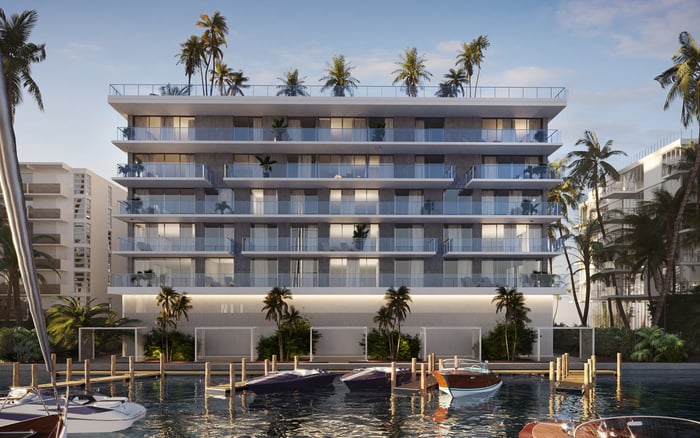
A buyer-focused comparison of two boutique Bay Harbor Islands new-construction residences, examining how Origin and Alma differ in customization, amenities, marina experience, and likely resale appeal for true end-users.
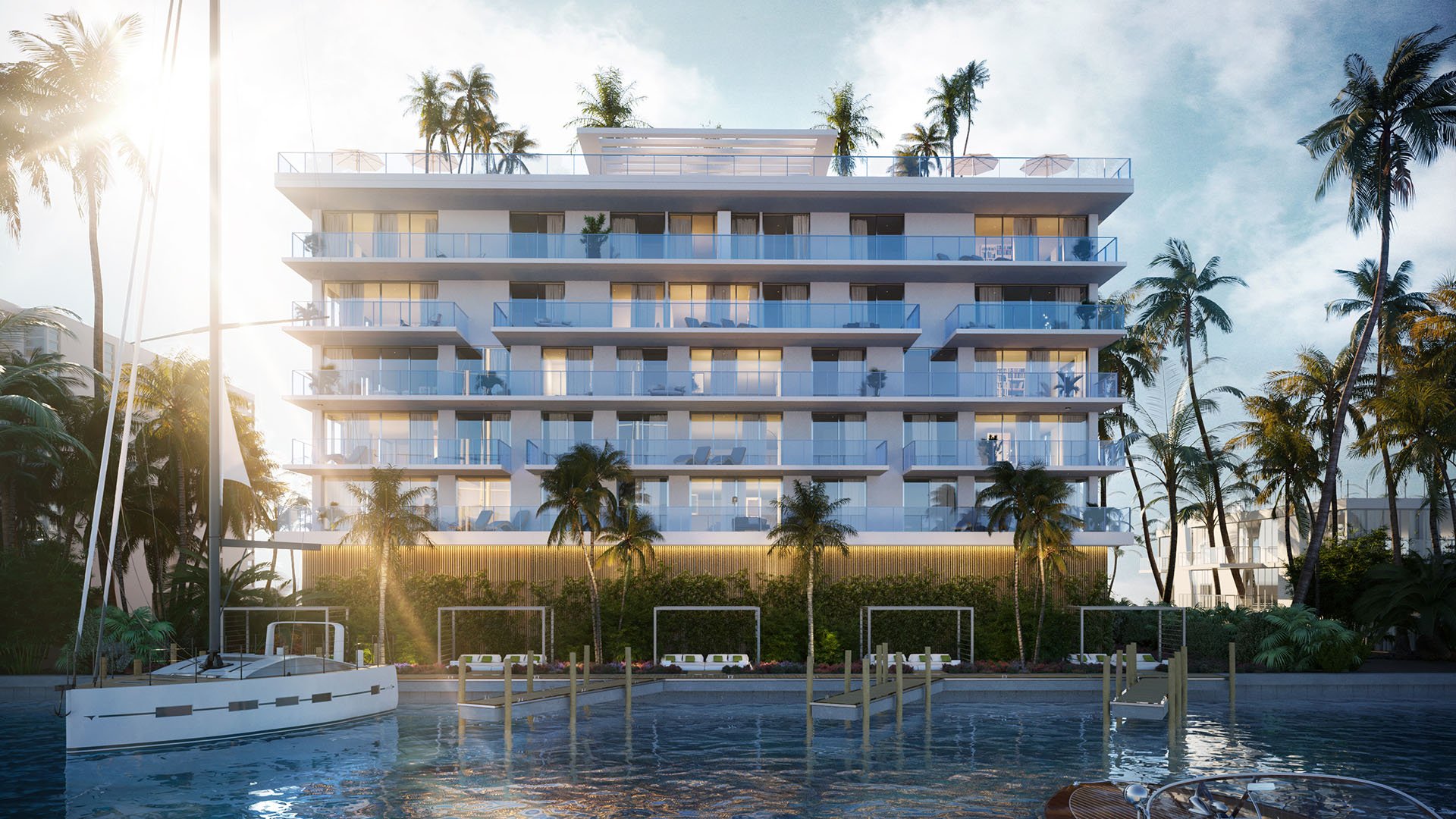
For the luxury buyer who intends to actually live in the residence, boutique new construction in Bay Harbor Islands is more nuanced than a simple side-by-side comparison of finishes, views, or amenity decks. The more relevant question is often about process: how much do you want defined for you, and how much do you want to shape yourself?
That is where Origin Bay Harbor Islands and Alma Bay Harbor Islands begin to diverge. Both occupy the premium end of Bay Harbor new-construction living. Both are boutique in scale, offering a lower-density experience than a larger tower and a more intimate residential rhythm. But for the end-user, the distinction is less about whether either project is luxurious and more about which kind of luxury experience feels right from contract to move-in.
In practical terms, Origin reads as the more curated finished-product purchase. Alma reads as the more bespoke, consultation-heavy purchase. That may sound subtle on paper, but in daily life it can mean the difference between stepping into a polished home that has largely been envisioned for you and participating in a process that asks for your taste, your decisions, and your patience.
Origin is best understood as a streamlined luxury choice for buyers who value contemporary design, open layouts, indoor-outdoor living, and a purchase path that feels more standardized. It is likely to appeal to the buyer who wants clarity. That includes the primary resident who prefers a fixed aesthetic, the second-home owner who values predictability, and even the resale-minded purchaser who sees merit in broadly marketable finishes.
Alma, by contrast, is more naturally aligned with the end-user who wants authorship. Its positioning emphasizes personalization, deeper input on finishes and materials, and the possibility of meaningful layout adjustments. For a buyer planning a long-term residence, that can be enormously appealing. The home begins to feel less like a selection from a menu and more like a tailored composition.
This distinction also places both projects within a wider South Florida pattern. Across the region, boutique residences such as La Maré Bay Harbor Islands and Onda Bay Harbor have helped define a market where intimacy and design identity matter as much as scale. Within that conversation, Origin and Alma represent two different interpretations of what boutique new construction should deliver to a resident rather than to a purely financial buyer.
Origin’s design profile is contemporary and minimalist. That usually translates into a more resolved visual identity from the outset: cleaner lines, open-plan living, and an indoor-outdoor sensibility well suited to South Florida. For many buyers, especially those balancing elegance with convenience, that is a compelling proposition. Decisions are narrowed, the aesthetic is coherent, and the end result tends to feel immediately legible.
Alma approaches design from the opposite direction. Instead of asking the buyer to enter an already completed visual world, it invites greater participation in creating one. Materials, finish selections, and even some layout modifications become part of the appeal. This is not merely a design preference. It is a lifestyle preference. Some residents want the confidence of a fully curated environment; others want the satisfaction of shaping the details that define daily life.
For a primary resident in Bay Harbor, that difference can influence everything from how a kitchen functions to how a waterfront-facing entertaining space feels at night. Origin may reduce decision fatigue. Alma may produce a stronger emotional attachment.
One of the clearest distinctions for end-users is the buying journey itself.
Origin appears to follow a more standard luxury developer-to-buyer cycle with a fixed delivery mindset and more limited customization. That does not make it less elevated. If anything, it can make the purchase feel more composed. Buyers who are managing family schedules, relocation timing, or a broader portfolio often appreciate a clearer path from reservation to completion.
Alma is more white-glove and consultation-heavy. It asks more of the buyer at the front end because it gives more back in influence. For some households, that level of collaboration is a major advantage. For others, especially those who do not want to spend months refining details, it can feel like unnecessary complexity.
This is where end-users should be honest with themselves. Do you want your home to arrive with tasteful certainty, or do you want a hand in shaping it? In Bay Harbor Islands, the right answer is often less about status and more about temperament.
Waterfront access matters in this market, but not every waterfront proposition is experienced in the same way.
Origin is more likely to suit buyers who prefer a standardized approach to dock or marina allocation. That aligns with its overall philosophy: polished, organized, and easier to understand. Its amenities also appear closer to traditional luxury condo programming, with concierge support and fitness-oriented shared spaces that fit comfortably within a familiar high-end residential framework.
Alma’s appeal is more individualized. Its marina or dock arrangements are framed with greater flexibility, including the possibility of negotiating preferences around slip use. The same tailored thinking extends to amenities, where lifestyle coordination and concierge-style service appear to matter more than a uniform resort template.
For boat-oriented buyers, or for those who place real value on a household-specific service model, Alma may feel more aligned. For buyers who want an elegant package without extensive negotiation, Origin may feel more efficient. Nearby projects such as The Well Bay Harbor Islands and Bay Harbor Towers underscore how varied the Bay Harbor Islands lifestyle spectrum has become, even within a relatively intimate submarket.
There is also a more strategic dimension to this comparison, particularly for buyers who plan to live in the home now but still care about future liquidity.
Origin’s curated finish approach may support broader resale appeal over time. Contemporary, standardized luxury tends to suit a wider pool of future buyers because it asks less of the next owner’s imagination and less of their renovation budget. In a premium market, neutrality can be an asset.
Alma’s strength is also its caveat. A highly personalized home can be deeply satisfying for the resident who created it, but more taste-specific in a future transaction. That does not weaken Alma’s position. It simply means the purchaser should be more explicitly end-user-minded. If the goal is to create a residence that feels truly singular, Alma offers a persuasive path. If the goal is to balance enjoyment today with broad optionality tomorrow, Origin may hold the advantage.
Public pricing transparency remains limited, so the cleaner conclusion is this: both projects sit in the premium luxury band for Bay Harbor Islands rather than any entry-level tier. For serious buyers, that means the decision should not be reduced to headline pricing alone. It should be framed around the value delivered through process, personalization, and ease of ownership.
In other words, the real comparison is not just what you buy. It is how you buy, how much of yourself you want embedded in the residence, and how you expect the home to serve you over time as a second home or primary base.
For the buyer seeking confidence, efficiency, and a polished contemporary result, Origin is the clearer fit. For the buyer who wants a closer working relationship, more customization, and the possibility of a home that feels distinctly personal, Alma is the stronger proposition.
Neither approach is inherently superior. They simply answer different versions of luxury. In Bay Harbor Islands, where boutique living often attracts discerning households looking for intimacy rather than spectacle, that difference matters.
Is Origin Bay Harbor Islands better for buyers who want a simpler process? Yes. Origin is better suited to purchasers who prefer a more standardized, curated buying experience with fewer design decisions.
Does Alma Bay Harbor Islands offer more customization? Yes. Alma is positioned around deeper buyer input on finishes, materials, and certain layout adjustments.
Are both projects considered boutique residences? Yes. Both are boutique-scale developments with limited inventory and a lower-density feel than larger towers.
Which project is likely better for a primary resident? Alma may appeal more to a primary resident who wants the home tailored closely to personal preferences.
Which project may have broader resale appeal? Origin may have an advantage because its contemporary curated finishes can suit a wider future buyer pool.
Do both projects offer waterfront appeal? Yes. Waterfront access is a defining draw for both, though the experience is framed differently at each property.
Is marina access handled the same way at both buildings? No. Origin appears more standardized, while Alma is positioned as more flexible and individualized.
How do the amenity concepts differ? Origin leans toward a more traditional luxury condo amenity mix, while Alma emphasizes tailored service and lifestyle coordination.
Are these projects aimed more at investors or end-users? Both can attract affluent buyers, but Alma’s customization-heavy model is especially compelling for true end-users.
What is the simplest way to compare Origin and Alma? Think of Origin as convenience and predictability, and Alma as personalization and involvement.
For a discreet conversation and a curated building-by-building shortlist, connect with MILLION Luxury.
If branded residences are on your mind — as a home or as an allocation — we would be glad to share what we are seeing, privately.
Begin a quiet conversation