Origin documents package-room infrastructure, while THE WELL emphasizes concierge, valet, and security. For buyers arranging high-value deliveries, the decisive questions concern written acceptance rules, custody, storage, and courier access rather than amenity language alone.
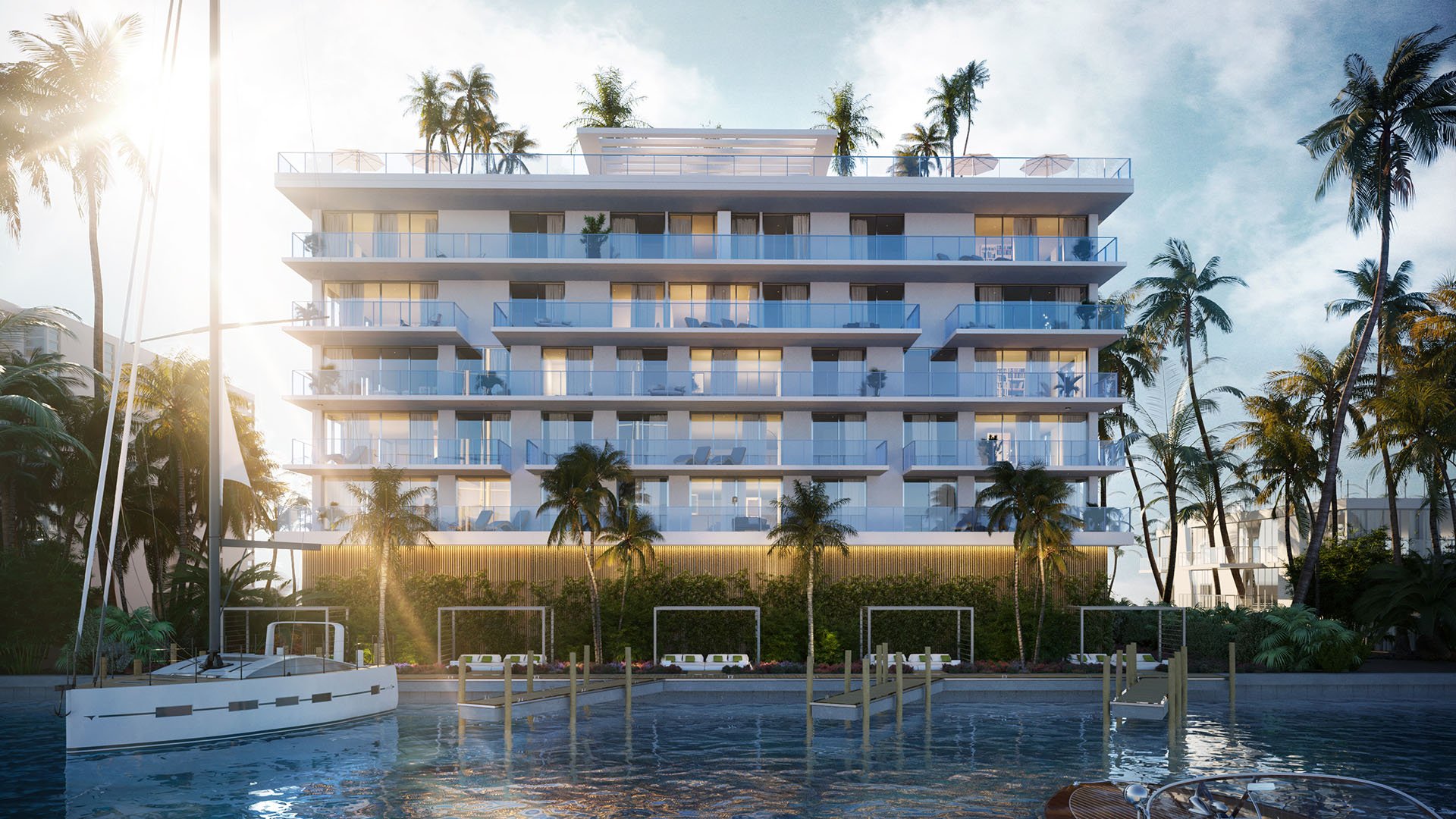
A residence should make ownership feel effortless. But when a delivery is valuable, delicate, or difficult to replace, convenience is only the starting point. The more consequential questions are who may accept it, where it will wait, and how responsibility passes from courier to resident.
For buyers comparing Origin Bay Harbor Islands with The Well Bay Harbor Islands, the published distinction is specific: Origin describes dedicated package infrastructure, while THE WELL emphasizes concierge, valet, and security without equivalent package-room detail in the materials reviewed. This is a difference in disclosure, not proof of superior shipment protection at either building.
A package room establishes a place, not a complete custody protocol. Neither project's reviewed materials expressly confirm bonded-courier acceptance, direct-to-unit courier access, or a formal high-value-delivery procedure. The buyer's task is to translate an appealing service description into written instructions for the intended shipment.
Origin Residences by Artefacto is listed at 9760 West Bay Harbor Drive, Bay Harbor Islands, FL 33154. Its advertised infrastructure includes a lobby-level mailroom and parcel room with individual access, also described as a dedicated mailroom with a separate package room. This gives buyers a concrete starting point for discussing receiving arrangements.
The advertised services include 24-hour security, advanced technology, personalized services, 24/7 front-desk reception, full-service valet, and a full-time on-site property manager. These descriptions provide a basis for questions; they do not establish staff authorization to sign for an unusually valuable shipment.
The package-room descriptions do not specify barcode checks, signature controls, resident notifications, or video verification. Nor does “individual access” explain who can enter, how access is recorded, or how a parcel is released. Buyers should request a walkthrough of the proposed receiving sequence, including what happens when the resident is unavailable.
Origin also advertises designated self-parking for all residences, four high-speed elevators, and two dedicated elevator lobbies. None of these features establishes courier permission to use the garage or elevators. The delivery route requires separate approval, particularly if an item needs an escort or scheduled elevator use.
THE WELL's advertised residential amenities include 24-hour valet parking and security, alongside a wellness concierge available in person or by text. Its club offering also describes full-service concierge services for residents and office tenants. These are service commitments, not a published high-value receiving policy.
The reviewed residential amenity descriptions do not clearly specify a dedicated package room or detailed package-screening procedures. Buyers should therefore start with the physical destination: where would an approved shipment be received, held, and transferred? An unpublished arrangement may exist, but it should not be assumed.
Residential and office provisions must remain distinct. The address 1177 Kane Concourse appears in THE WELL's office materials; it does not confirm the residential delivery entrance. Office provisions also describe state-of-the-art security, concierge service, controlled-access garage parking, and office valet. Those descriptions should not be taken as confirmation of residential courier access.
The practical request is straightforward: obtain the residential delivery address, entrance instructions, receiving contact, and applicable access rules in writing. Confirm whether the advertised services will be operating on the intended delivery date rather than treating amenity language as evidence of current availability.
An attentive concierge and a documented custody process serve different needs. Concierge availability does not establish shipment insurance, customs handling, bonded-logistics capability, or responsibility for loss. Likewise, a dedicated package room does not explain whether high-value items are accepted or excluded.
Ask management to distinguish ordinary parcel receiving from exceptional deliveries. The written response should identify any restrictions on declared value, item type, size, storage duration, and handling. It should also explain whether staff may accept a shipment when the owner is away and whose authorization permits that acceptance.
Apply the same discipline across the search. If it also includes Onda Bay Harbor, use the same receiving questionnaire rather than assuming comparable arrangements. Consistent questions make the answers more useful without implying that different residences share policies.
Package screening needs a precise definition before it can be compared. Ask whether the term means verifying courier identification, matching a parcel to a resident, recording its arrival, checking its exterior condition, or another procedure. Neither project's reviewed descriptions establish the full sequence.
Request written answers covering these points:
Acceptance and signatures: Who may authorize delivery, who may sign, and which shipments must be refused?
Storage and access: Where does the item wait, who may enter, and how is release to the resident documented?
Records and cameras: Are arrival, handoff, and collection recorded, and what retention periods apply to logs or footage?
Notifications and exceptions: How is the resident contacted, and what happens after hours or when collection is delayed?
Special handling: What rules govern oversized or temperature-sensitive items, appointments, escorts, and elevator access?
These are questions to confirm, not services established at either property. Request the applicable receiving policy and a named contact for shipment-specific approval. Address insurance and liability questions directly with the relevant carrier and insurer.
For an owner who is not always in residence, receiving arrangements should work without improvisation. Ask who may collect on the owner's behalf, how that person is authorized, and what happens if an approved delivery arrives outside its appointment. Written instructions should cover both arrival and final release.
The word “bonded” requires a separate conversation. Ask the carrier to identify the exact bonding arrangement, and obtain written building approval for that shipment. A carrier's description of its credentials does not, by itself, establish building acceptance or permission to proceed beyond the receiving area.
Clarify whether the handoff must occur at a designated entrance, whether an escort is required, and whether direct-to-unit delivery is permitted. If staff cannot accept the shipment, agree on an alternative with the carrier before dispatch rather than leaving the decision to the front desk.
Origin offers more explicit package-space detail; THE WELL describes a concierge-led service offering. Neither disclosure alone resolves the high-value-delivery question. The stronger fit is the residence whose confirmed procedures meet the buyer's actual requirements, with clear instructions for acceptance, access, storage, and release.
For a discreet residential search shaped around the details of ownership, explore MILLION.
If branded residences are on your mind — as a home or as an allocation — we would be glad to share what we are seeing, privately.
Begin a quiet conversationYes. Its advertised infrastructure includes a lobby-level mailroom and parcel room with individual access, also described as a dedicated mailroom with a separate package room.
The reviewed residential amenity materials do not clearly publish one. That does not establish that a package room or receiving arrangement is unavailable.
Neither project's reviewed materials expressly confirm bonded-courier acceptance. Ask the carrier to explain its exact bonding arrangement and obtain written building approval for the shipment.
Origin advertises 24/7 front-desk reception, but that does not establish authority to accept high-value shipments. Confirm authorization and signature rules in writing.
The advertised wellness concierge is available in person or by text, but the description does not establish insured receiving. Concierge service should not be treated as evidence of shipment coverage.
Origin's reviewed package-room descriptions do not specify detailed screening procedures, and THE WELL's reviewed amenities do not clearly publish a detailed protocol. Buyers should request the applicable written procedures.
Origin advertises four high-speed elevators and two dedicated elevator lobbies, but courier access is not established. Confirm elevator permission, scheduling, and escort requirements separately.
That address appears in THE WELL's office materials and does not confirm the residential delivery entrance. Obtain residential address and entrance instructions before dispatch.
Confirm who may accept and collect the shipment, how authorization is documented, and where the item will be held. Include notification, delayed collection, and after-hours instructions.
More explicit infrastructure detail does not establish superior shipment protection. Compare confirmed acceptance, custody, storage, and release procedures for the intended delivery.