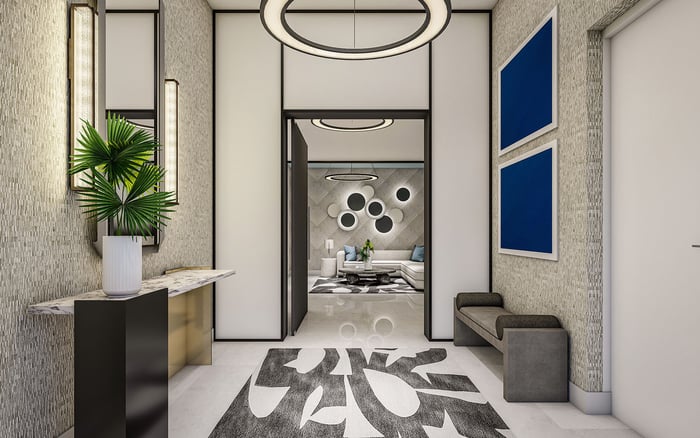
A private arrival is only as useful as the permissions behind it. For Palm Beach Gardens buyers, a disciplined review should connect elevator credentials, visitor approval, and household-service routes to the exact residence under consideration.
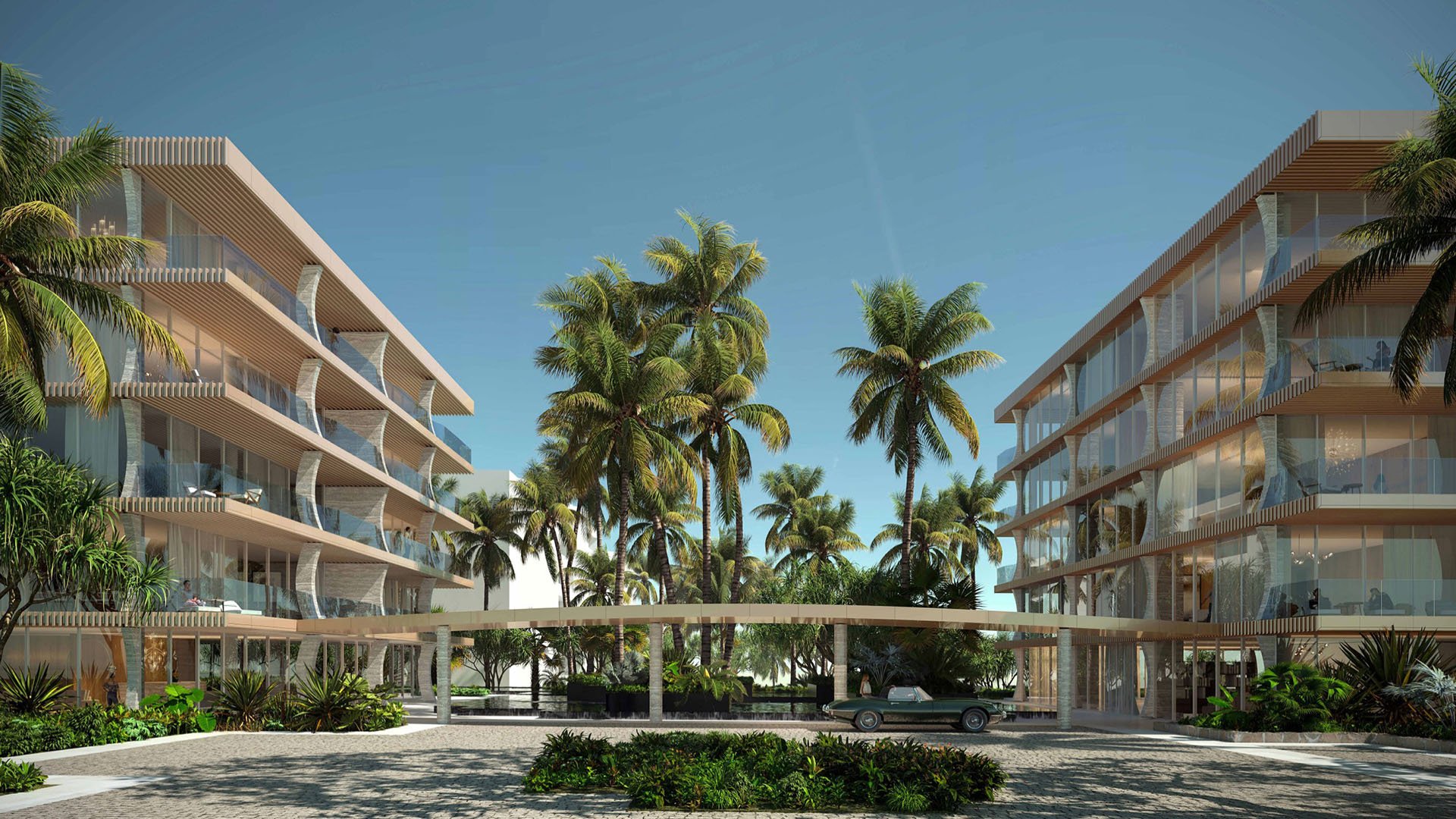
The most discreet residence is not simply one with a private elevator. It is one where owners understand who can approach their front door, under whose authority, and by which route. For a Palm Beach Gardens buyer, that distinction turns an attractive arrival sequence into a practical residence-management strategy.
At The Ritz-Carlton Residences® Palm Beach Gardens, the advertised address is 2200 PGA Boulevard, Palm Beach Gardens, FL 33408. Specified features include electronic fob-controlled elevator access to a private entry vestibule, 24-hour on-site security, and an entry gatehouse. An arrival porte cochère with valet service completes the advertised approach.
These features are meaningful, but each answers a different question. A gatehouse controls entry to the property; an elevator credential controls movement within it. Neither, on its own, establishes how a dinner guest, housekeeper, or contractor receives permission to reach a residence. The buyer's task is to connect those stages without assuming one control substitutes for another.
The specified fob-controlled access establishes an important baseline. It does not establish whether visitor elevator access is destination-restricted, escorted, time-limited, or logged. Those details remain unconfirmed-not necessarily absent.
Begin with the exact residence. Up to two private elevators may be available; do not treat two elevators as standard for every unit. Request the unit-specific access specification and confirm how the private vestibule connects to the residence and any shared circulation.
Then review permissions by user category. Ask which floors an owner's credential authorizes, which shared areas it opens, and whether household staff receive different permissions. For guests, establish who issues access, whether it is restricted to the intended destination, and whether it expires automatically or requires manual cancellation.
Credential revocation deserves equal attention. Ask who can deactivate a lost fob, how owners request that action, and how access is withdrawn when an employee or vendor relationship ends. A polished elevator interior is visible during a tour. Its permission structure requires a separate conversation and, ideally, written confirmation.
Advertised services include a full-time, on-site concierge team and property management, as well as 24/7 concierge service. These descriptions establish advertised service coverage, not a written visitor-authentication process.
Ask management to describe an ordinary guest arrival from beginning to end. Where is identification checked, if required? Who contacts the owner? What happens when the owner does not answer? Establish whether pre-registration changes the process and whether an unannounced visitor remains outside residential circulation while approval is sought.
For an approved visitor, clarify the next handoff. Permission to enter the grounds should not be assumed to include permission to operate an elevator. Ask whether staff accompany the visitor, activate a destination, or issue a temporary credential, and whether the arrival and subsequent access are recorded. These are questions to resolve, not confirmed procedures.
Buyers extending their search to The Ritz-Carlton Residences® West Palm Beach should apply the same questions independently. A shared brand name is not evidence of identical visitor permissions or operating rules.
Household services advertised in Palm Beach Gardens include kitchen stocking, fresh flowers, pet care, and in-residence dining. Their appeal is clear: daily life can require less owner coordination. Yet each service also raises an access question, particularly when the owner is away.
Separate resident and service entrances, along with a dedicated service-elevator route to residences, remain unconfirmed in the disclosed specifications. Do not mistake that uncertainty for proof that separation does not exist. Request a service-circulation plan and a walkthrough of the relevant routes.
Trace three separate scenarios: a delivery, a recurring household employee, and a contractor. Ask where each arrives, where authorization occurs, whether a loading area is used, and which elevator and vestibule complete the journey. Identify every point where service traffic might share the owner's arrival path.
Physical separation and operational separation are different. If routes overlap, ask whether scheduling, escorting, or credential restrictions manage that overlap. If routes are separate, confirm where they reconnect. Neither a second elevator nor a service label alone explains who may use a route or how access is controlled.
Local comparisons help calibrate expectations, provided they remain precise. The Landmark in Palm Beach Gardens is marketed with 24/7 concierge, valet, and security. Separately, the residence at 2720 Donald Ross Road, Apartment 505, is advertised with a privately keyed elevator and a 24/7 manned security gate. These are advertised features, not independently verified operating procedures.
Use these descriptions to frame questions, not rank security. Give staffing coverage, credential permissions, visitor approval, and service circulation separate lines in a comparison. Otherwise, a long amenity list can obscure an unanswered operational question.
Apply the same discipline to a broader Palm Beach area search. If Mr. C Residences West Palm Beach is also under consideration, request its own unit-level documents and management explanations. Compare answers for the actual residences without transferring assumptions between buildings.
For an owner who travels, the central issue is not simply whether someone can admit a visitor. It is who may authorize entry when the owner is unavailable. Define which decisions remain with the owner and which may be delegated to a designated representative.
Ask management how recurring employees, occasional vendors, and last-minute service requests are distinguished. Establish how an authorization is changed or withdrawn, whether a guest approval covers companions, and what happens when someone arrives outside an agreed window. These questions clarify the intended household routine without presuming any particular policy exists.
Before relying on an access feature, request the applicable condominium rules, unit-specific access-control specifications, visitor procedures, vendor-registration policies, and service-circulation plans. Keep each document tied to the residence being evaluated, particularly where elevator availability varies.
Review three representative journeys with management: the owner returning home, a guest arriving without the owner, and a vendor entering to perform an authorized task. Where a walkthrough is available, reconcile the physical route with the written procedure. Record unresolved points as items requiring clarification, not presumed shortcomings.
The strongest purchase decision distinguishes what is advertised from what is documented for the unit and what has been demonstrated. Privacy becomes more useful when the owner can understand and manage it.
For a discreet, residence-specific approach to your South Florida search, connect with MILLION.
If branded residences are on your mind — as a home or as an allocation — we would be glad to share what we are seeing, privately.
Begin a quiet conversationElectronic fob-controlled elevator access to a private entry vestibule is specified. That specification does not establish the full set of visitor permissions.
Two private elevators should not be assumed to be standard. Residences may have up to two private elevators, subject to availability, so buyers should confirm the configuration for the exact unit.
The development advertises 24-hour on-site security with an entry gatehouse. These features should not be treated as independently tested security controls.
No; advertised concierge availability does not establish procedures for identification checks, pre-registration, temporary credentials, or unannounced arrivals.
Destination restrictions, escort requirements, expiration settings, and access logging remain unconfirmed. Buyers should request the applicable visitor-access procedure.
Separate resident and service entrances and a dedicated service-elevator route are not confirmed. That does not mean those features are absent; request plans and a walkthrough.
Advertised services include kitchen stocking, fresh flowers, pet care, and in-residence dining. Buyers should clarify how each service receives authorization to enter.
Ask who deactivates credentials, how an owner requests revocation, and how permissions are withdrawn when a staff or vendor relationship ends.
Request applicable condominium rules, unit-specific access-control specifications, visitor procedures, vendor-registration policies, and service-circulation plans.
Compare staffing, elevator permissions, visitor approval, and service routes separately. Obtain building-specific answers rather than assuming that similar amenities or shared branding imply identical procedures.