A practical comparison of ORA by Casa Tua Brickell and Ziggurat Coconut Grove through the lens of household operations, daily calm, service access, and cultural proximity.
For affluent Miami buyers, residential calm is often misunderstood. It is not merely a quieter lobby, a larger terrace, or a softer palette. Calm is the sense that a household can run without friction. It is the school run that does not become a daily negotiation. It is the guest arrival that feels intuitive. It is the housekeeper, driver, grocery delivery, pet routine, dinner reservation, and weekend plan working in concert rather than colliding.
That is the useful lens for comparing ORA by Casa Tua Brickell and Ziggurat Coconut Grove. Both speak to buyers who want cultural energy nearby, but they approach daily life from very different directions. ORA by Casa Tua Brickell is the more vertical, service-rich, high-energy Brickell proposition, built around hospitality, amenity access, and the Casa Tua lifestyle language. Ziggurat Coconut Grove is positioned as a lower-scale, neighborhood-oriented alternative in a leafier setting, with cultural energy tied to Coconut Grove’s village-style public realm.
In buyer shorthand, this is a Brickell versus Coconut Grove decision, with new-construction and pre-construction expectations shaped by different ideas of convenience. The question is not which lifestyle is more luxurious. The question is which one makes a specific household easier to operate.
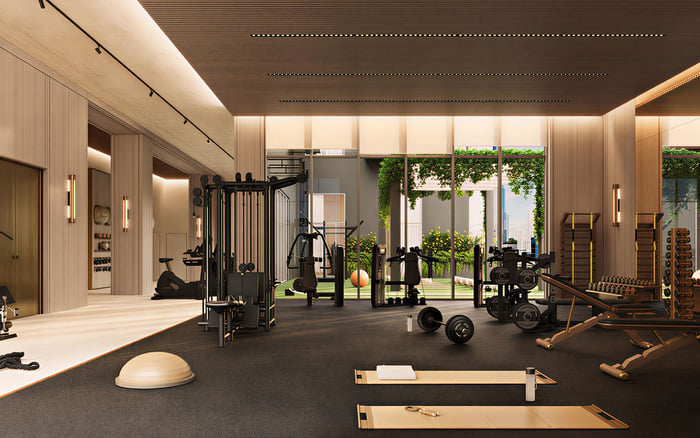
ORA by Casa Tua is best understood as a hospitality-forward urban address. Its core appeal is concentration. The building concept brings home, amenities, branded food-and-beverage programming, and daily service culture into one vertical environment. For buyers who want fewer decisions between waking up and leaving the building, that concentration matters.
The ORA advantage is strongest for households that value immediate access. A resident may want food and beverage options close at hand, amenity spaces that support entertaining, and a building atmosphere that feels active rather than withdrawn. In this model, calm is not silence. Calm is knowing that much of the day’s service layer sits inside or near the residential ecosystem.
That can suit buyers who split time between Miami and another primary residence, executives who work irregular hours, or couples who entertain often and prefer a polished urban rhythm. It can also suit residents who dislike the operational sprawl of calling multiple vendors for every small task. The more a household values centralized convenience, the stronger ORA’s case becomes.
The tradeoff is energy. Brickell is the more urban context in this comparison, and ORA’s ultra-vertical character aligns with that. Buyers should be honest about their tolerance for density, elevator dependency, traffic rhythm, and the social tempo of a hospitality-inflected building. For some, that activity is the point. For others, it can feel like too much infrastructure around private life.
Ziggurat Coconut Grove occupies a different emotional register. It is a proposed residential project in Coconut Grove, framed as a lower-scale alternative to the Brickell high-rise experience. Its architecturally distinctive, terrace-like form supports the impression of a residence more connected to neighborhood texture than vertical spectacle.
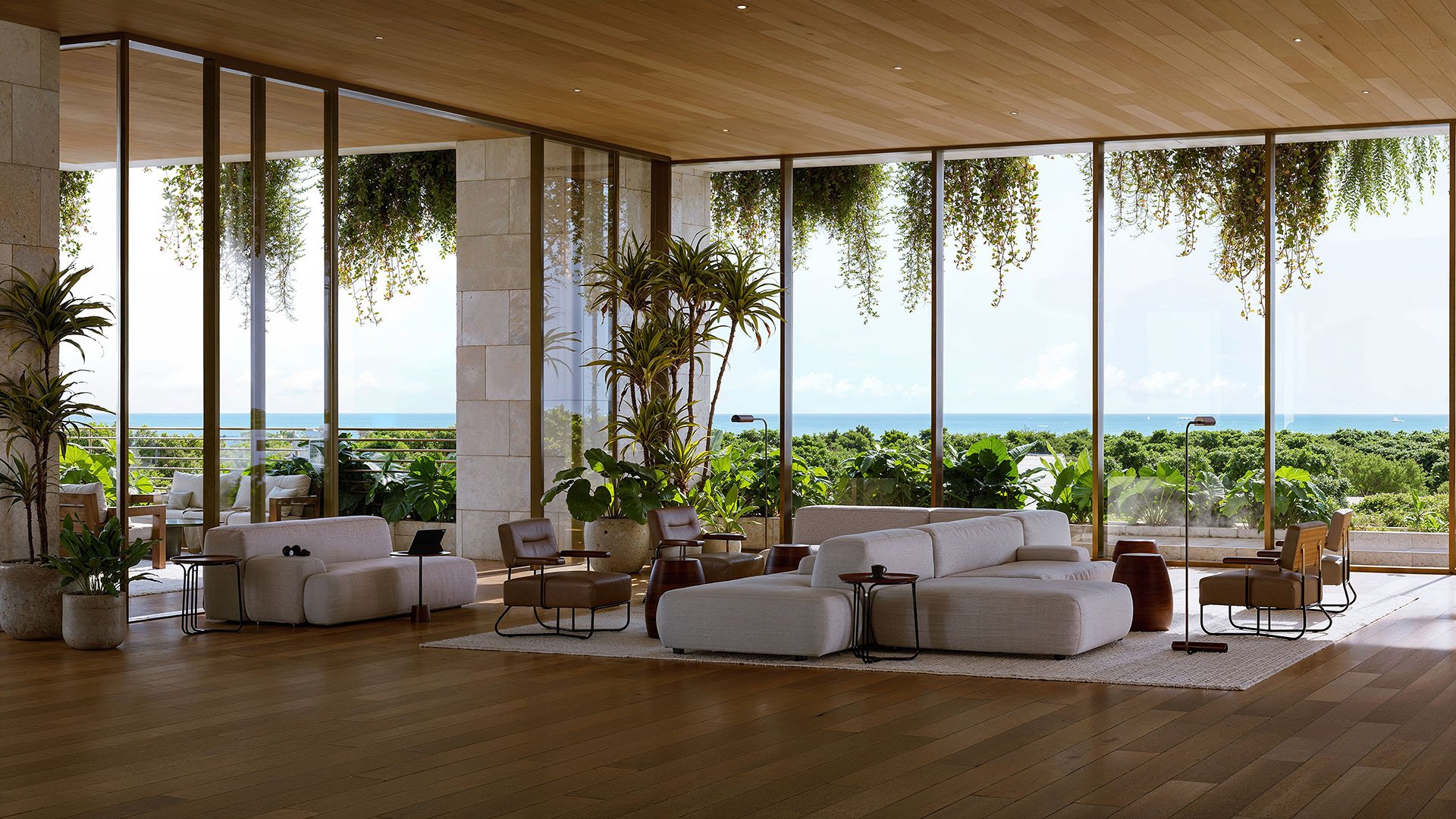
For household operations, Ziggurat’s likely advantage is flow. A lower-scale, leafier, more residential setting can make daily movement feel less institutional. Buyers drawn to Coconut Grove often want a place where the neighborhood itself participates in the home experience: shaded streets, village-style cultural energy, and a public realm that feels less corporate than Brickell.
This is especially relevant for families or long-horizon residents who want cultural access without living in the center of Miami’s most intense business district. Ziggurat Coconut Grove may appeal to buyers who prefer mornings that feel residential, evenings that can still include restaurants or cultural activity, and weekends that do not require leaving the neighborhood to reset.
The tradeoff is that calmer neighborhood living may not deliver the same degree of centralized hospitality. A buyer who expects building life to function as a concierge ecosystem, dining club, private lounge, and service platform may find the Grove proposition less compressed. Ziggurat’s appeal is not that everything is in one tower. It is that the surrounding neighborhood can soften the entire daily experience.
The correct comparison is not abstract. It should be tested against the household’s actual week. Start with school runs. A Brickell household may appreciate urban proximity but must accept the rhythm of a dense district. A Coconut Grove household may value a more residential departure pattern, though every family’s route will depend on school location and timing.
Next, examine staff access. Housekeepers, nannies, drivers, pet care, and personal assistants all interact with the property differently depending on loading, parking, lobby procedures, elevator movement, and neighborhood approach. ORA’s service-oriented premise suggests centralized convenience, but the vertical nature of the experience still matters. Ziggurat’s lower-scale positioning suggests a calmer daily cadence, but buyers should still evaluate how service movement would actually occur.
Grocery delivery and package flow are equally revealing. In a high-service building, the household may benefit from stronger systems and a more structured receiving culture. In a lower-scale neighborhood context, deliveries may feel less formal but also less bundled into an amenity-driven residential machine. Neither is inherently superior. One favors orchestration. The other favors ease.
Parking logistics are another quiet luxury variable. The buyer who regularly hosts family dinners, visiting friends, private instructors, or wellness providers should think carefully about guest arrivals. In Brickell, the arrival sequence can feel cosmopolitan and efficient when handled well, but it is still urban. In Coconut Grove, the approach may feel more residential and intuitive, depending on the final property operations and surrounding street experience.
Noise is not only measured in decibels. It is also social density, elevator encounters, restaurant energy, valet rhythm, and the visual tempo beyond the windows. ORA by Casa Tua Brickell is the more urban, high-energy option, and buyers should treat that as a feature only if they genuinely want it.
For some residents, proximity to activity creates psychological ease. They want the city below them, hospitality around them, and a building that feels animated. For others, the same qualities can create background friction. Those buyers may prefer Ziggurat’s alignment with residential calm, where cultural life is nearby but not necessarily folded into the building’s daily identity.
This distinction becomes sharper for buyers who work from home, maintain irregular sleep schedules, have young children, or host older relatives for extended stays. The more the residence must function as a sanctuary, the more important it is to define whether sanctuary means service-rich insulation or neighborhood quiet.
ORA is better matched to the buyer who wants Miami to feel immediately available. The ideal ORA resident values hospitality, amenities, food-and-beverage programming, and a resort-like residential product that reduces planning friction. This buyer is comfortable with vertical living and sees Brickell’s pace as part of the appeal.
Ziggurat is better matched to the buyer who wants home to feel embedded in a neighborhood. The ideal Ziggurat resident values lower-scale living, architectural distinctiveness, terrace-like form, and proximity to Coconut Grove’s cultural street life without choosing a high-rise Brickell routine. This buyer may be less interested in the building as lifestyle engine and more interested in the residence as a calm base.
The most sophisticated buyers will not frame the decision as city versus suburb, or energy versus quiet. Both properties sit near meaningful Miami cultural life. The distinction is operational. ORA concentrates lifestyle services vertically. Ziggurat disperses daily pleasure into a calmer neighborhood context.
Is ORA by Casa Tua Brickell the more urban choice? Yes. ORA is positioned in Brickell as the more vertical, high-energy, hospitality-driven option in this comparison.
Is Ziggurat Coconut Grove more neighborhood-oriented? Yes. Ziggurat aligns more closely with lower-scale living, residential calm, and Coconut Grove’s village-style cultural setting.
Which project is better for buyers who want services close by? ORA is the stronger fit for buyers who value centralized convenience through amenities, hospitality, and food-and-beverage access.
Which project is better for buyers who dislike high-rise intensity? Ziggurat is likely the better match for buyers seeking a calmer, leafier, lower-scale alternative to a Brickell tower lifestyle.
Should families compare school-run logistics before choosing? Yes. School routes, timing, parking, and daily traffic tolerance can matter as much as amenities or finishes.
How should buyers think about staff and vendor access? They should evaluate housekeeper access, grocery delivery, guest arrivals, parking procedures, and how each building supports daily movement.
Does ORA’s hospitality focus mean it will feel less private? Not necessarily, but buyers should consider whether an active, service-rich environment matches their desired level of discretion.
Does Ziggurat’s calmer positioning mean fewer conveniences? It may mean conveniences are less centralized than in a hospitality-forward tower, but the neighborhood setting can reduce other forms of friction.
Is this primarily an investment comparison? No. The more useful lens is household operations, including service flow, cultural access, noise tolerance, and everyday ease.
What is the central tradeoff between the two? ORA offers branded, vertical, hospitality-rich Brickell living, while Ziggurat offers lower-scale, culturally connected Coconut Grove living.
For a tailored shortlist and next-step guidance, connect with MILLION.
If branded residences are on your mind — as a home or as an allocation — we would be glad to share what we are seeing, privately.
Begin a quiet conversation