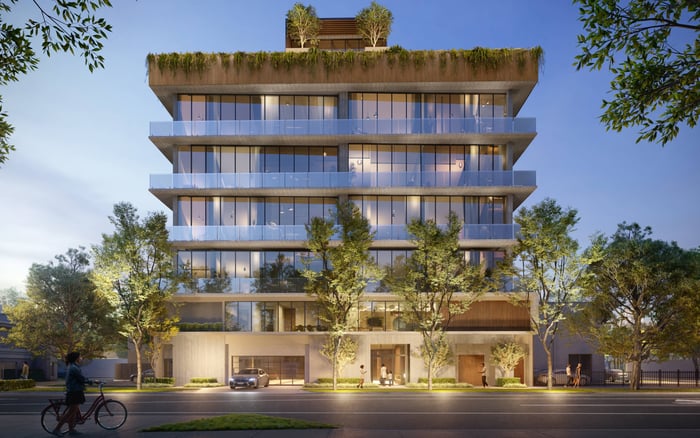
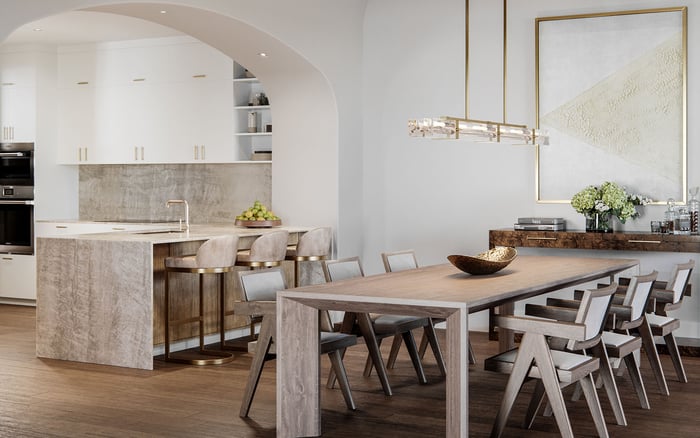
A buyer-focused comparison of Opus Coconut Grove and Cora Merrick Park, examining how privacy, neighborhood energy, amenity scale, security posture, and pricing shape two very different luxury residential propositions.
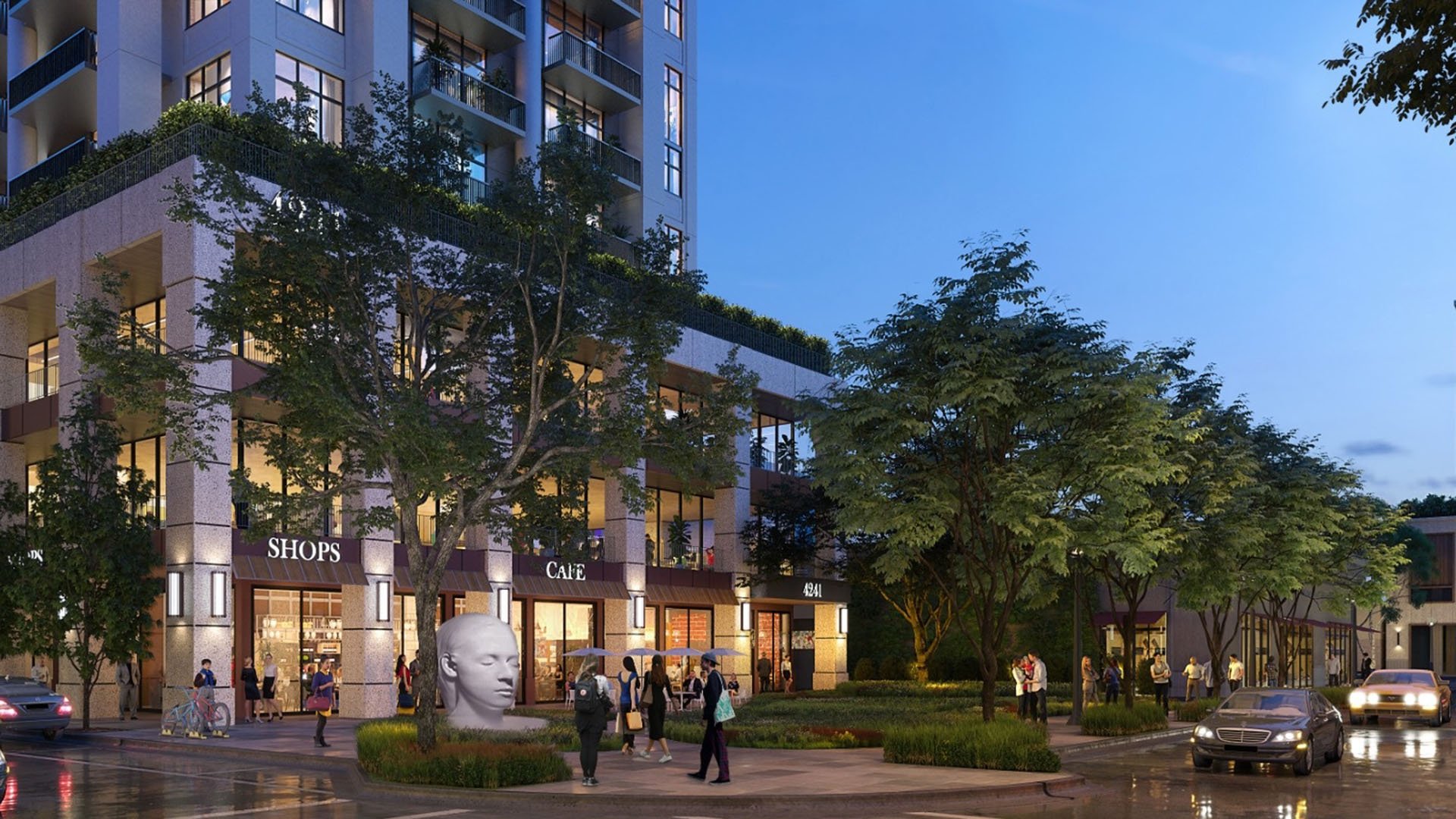
For a certain class of buyer, the comparison between Opus Coconut Grove and Cora Merrick Park is less about which address carries more prestige and more about how one wants luxury to feel on an ordinary Tuesday.
Opus Coconut Grove presents a public-facing expression of refinement. It is waterfront in character, organized around expansive glazing, open-plan interiors, private terraces, and a large amenity environment. It fits naturally into Coconut-grove’s walkable rhythm of dining, galleries, and village activity. Even in private space, the project remains in conversation with the neighborhood.
Cora Merrick Park offers a different proposition. Its appeal centers on lower density, quieter daily use, and a more insulated residential mood within Coral-gables. The project reads as boutique luxury shaped around discretion rather than spectacle.
For readers comparing South Florida residences, the distinction matters because both buildings answer the same question in different ways: how much exposure, activation, and shared amenity theater should come with a premium home?
Privacy is often discussed too broadly in the upper tier of the condo market. In practice, it can be understood through visual privacy, acoustic privacy, and social privacy.
At Opus Coconut Grove, visual openness appears central to the residential experience. Floor-to-ceiling glass and bay-oriented planning can create a strong sense of air, light, and horizon. That is a meaningful luxury asset, but it also introduces a familiar tradeoff of modern waterfront architecture: the more transparent the residence feels, the more carefully buyers may weigh sightlines, exposure, and how protected outdoor living feels in everyday use.
Cora Merrick Park approaches the question from the opposite direction. Its positioning suggests a more selective, inward-looking experience that may appeal to buyers who see home as retreat first and statement second. In that sense, Coral-gables becomes more than an address. It becomes part of the privacy proposition.
This is why some buyers who admire waterfront glass architecture still gravitate toward lower-visibility projects. The preference is not anti-luxury. It is simply a different interpretation of control.
Amenity programs often sound comparable on paper until a buyer considers how often they will be used and what atmosphere they create.
Opus Coconut Grove is framed around a broader lifestyle proposition. For buyers who genuinely use the building as an extension of their social and wellness calendar, a larger amenity environment can feel compelling. The project is designed for movement through shared spaces and for owners who enjoy a more animated residential setting.
Cora Merrick Park feels more restrained by comparison. Its appeal is less about volume and more about curation. That may sound like a compromise until one considers the household that wants fewer shared zones, less passing traffic, and a more intimate resident experience. For some owners, the best amenity is not abundance but calm.
That distinction helps explain why buyers drawn to Coconut-grove may also explore The Well Coconut Grove, while those prioritizing composed residential character in Coral-gables may also look at Ponce Park Coral Gables and The Village at Coral Gables.
A residence is never just a floor plan. It is also the choreography between front door and street.
Opus benefits from Coconut Grove’s walkable setting, where dining, village activity, and cultural touchpoints shape daily life. That creates a stronger sense of access and spontaneity. A resident can move from private residence to neighborhood engagement with very little friction. For socially engaged buyers, that permeability is part of the luxury.
Cora Merrick Park appeals to a different instinct. Its quieter pocket and more insulated setting reduce the sense of public interface. Buyers who value control over daily encounters may find this especially persuasive. The surrounding environment reinforces the project’s privacy-first logic rather than working against it.
Both projects are presented as secure luxury environments, but the lived feeling of that security is not necessarily the same.
At Opus Coconut Grove, security reads as part of a hospitality-oriented residential framework. In an active building, service and access control tend to be experienced alongside amenity use and resident circulation. That can feel seamless and refined for owners who appreciate a more social property.
At Cora Merrick Park, the security appeal is tied more closely to lower visibility and a quieter sense of arrival. This matters because some high-end buyers do not simply want staffing and controlled access. They want fewer reasons to be seen at all. The arrival sequence and reduced public interface can contribute to a stronger sense of insulation.
For privacy-first buyers, that difference is foundational.
Pricing is often where the tradeoff becomes most tangible, but specific figures can shift and public information may be incomplete. In broad terms, Opus Coconut Grove aligns with buyers paying for waterfront design language, views, and a more expansive amenity environment.
Cora Merrick Park, by contrast, is positioned around the value of discretion, lower density, and a quieter residential posture. In this segment of South Florida real estate, seclusion can carry its own premium just as strongly as spectacle.
That is not unusual in Miami-Dade. A filtered daily experience, reduced visual exposure, and a more composed residential setting can be as valuable to the right buyer as dramatic openness and nonstop activation.
Choose Opus Coconut Grove if your idea of luxury includes architecture with a public presence, sweeping glass, active amenities, and immediate connection to waterfront village life. It suits buyers who enjoy using the building, seeing the neighborhood, and treating the home as part sanctuary and part social platform.
Choose Cora Merrick Park if your first priority is control: control of sightlines, arrival, circulation, and the amount of daily interaction built into the property. It is better suited to buyers who prefer a composed residential mood over resort activation, and who see true luxury as the ability to withdraw without sacrificing quality.
Neither is inherently better. They simply elevate different luxuries. Opus emphasizes access, while Cora Merrick Park prioritizes privacy.
Is Opus Coconut Grove the better fit for buyers who want a more social lifestyle? Generally, yes. Its overall positioning suggests a more open and active residential experience tied to Coconut Grove’s walkable setting.
Does Cora Merrick Park appeal more to privacy-focused buyers? Yes. Its boutique character and quieter context make it a stronger fit for buyers who value lower visibility and a more insulated routine.
Which project feels more connected to the surrounding neighborhood? Opus Coconut Grove appears more integrated with everyday neighborhood movement, dining, and village activity.
Which residence is better for a retreat-like atmosphere? Cora Merrick Park is the clearer choice for buyers seeking a calmer, more inward-looking environment.
Are both developments located in South Florida luxury submarkets? Yes. Coconut Grove and Coral Gables are both established Miami-Dade luxury enclaves with distinct residential identities.
Is the main tradeoff between openness and privacy? In large part, yes. The comparison centers on whether a buyer prefers expansive exposure or more controlled daily living.
Do amenities matter differently for these two buyers? Absolutely. One buyer may value scale and activity, while another may prefer a more curated and low-traffic amenity environment.
Does neighborhood rhythm influence the decision as much as the building itself? Yes. Walkability, street energy, and the level of public interface can strongly shape how luxury feels day to day.
Is Coral Gables the stronger fit for buyers who want less day-to-day exposure? For many privacy-oriented buyers, yes. Its quieter residential feel can be more compelling than a more animated waterfront setting.
What is the best way to shortlist comparable options for touring? Start with location fit, delivery status, and daily lifestyle priorities, then compare stacks and elevations to validate views and privacy.
When you're ready to tour or underwrite the options, connect with MILLION Luxury.
If branded residences are on your mind — as a home or as an allocation — we would be glad to share what we are seeing, privately.
Begin a quiet conversation