A buyer-focused guide to evaluating finish schedules across oceanfront, bayfront, and city residences, with emphasis on durability, light, acoustics, terraces, maintenance, and long-term livability.
In South Florida luxury real estate, the view often leads the conversation. Oceanfront living promises horizon, breeze, and ceremony. Bayfront living offers reflection, boating energy, and softer light. City living, particularly in a vertical district such as Brickell, delivers immediacy, skyline drama, and a different kind of sophistication. Yet the finish schedule is where that experience becomes daily life.
A finish schedule is more than a list of materials. It is the architectural language of a residence, translated into flooring, cabinetry, countertops, appliances, hardware, plumbing fixtures, lighting, glazing, doors, wall treatments, and outdoor surfaces. For a discerning buyer, it reveals how a home is expected to age, how it will feel at different times of day, and how much effort it may require to keep it looking composed.
The best comparison is not simply expensive versus modest. It is suitability. A finish that performs beautifully in a protected city residence may feel less ideal on an exposed coastal terrace. A dramatic dark stone may photograph well, yet show every splash in a kitchen used constantly for entertaining. A pale oak floor may create serenity, but the buyer should understand its maintenance profile before pairing it with sand, pets, or frequent guests.
Oceanfront residences ask the most of finishes. The setting is spectacular, but it is also demanding. Buyers should look closely at materials that meet salt air, humidity, intense light, wet feet, and regular indoor-outdoor movement. The question is not whether the finishes look refined on opening day. The question is whether they will remain refined through seasons of use.
Flooring deserves special attention. Stone, porcelain, engineered wood, and other premium surfaces each bring a different feeling underfoot. In an oceanfront home, the transition from living room to terrace should be studied as a system. Is the floor easy to clean after beach access? Does it become slippery when damp? Does its tone compete with the brightness of the water, or does it quiet the room?
Cabinetry and metal details should also be read closely. Hinges, pulls, drains, shower fittings, and balcony rail components are small details until they begin to show wear. A buyer should ask whether the schedule specifies resilient finishes in wet areas and whether the aesthetic is cohesive from kitchen to bath to service areas. In the most successful coastal residences, glamour is not fragile. It is disciplined.
Bayfront living often sits between the visual drama of the ocean and the urban choreography of the city. The water is present, but typically in a more layered way, with boats, neighboring shorelines, sunsets, and evening reflections influencing the interior mood. Here, finish schedules should be evaluated for how they manage light and privacy.
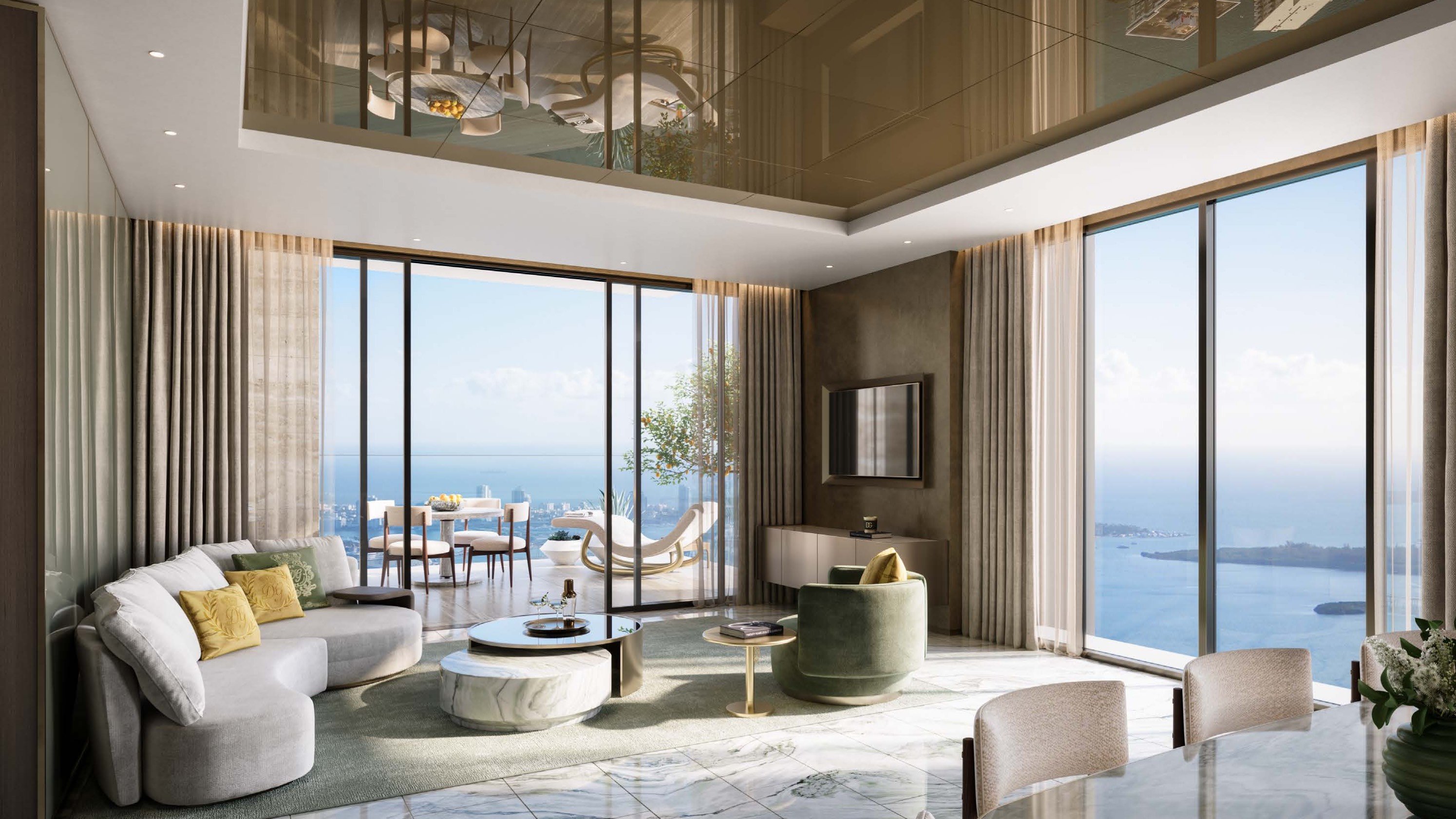
Glazing, window treatments, flooring tone, and wall finish become especially important. Highly reflective surfaces can be seductive in a showroom, but in a bayfront room they may amplify glare. Conversely, overly matte palettes can flatten the natural shimmer that makes the setting desirable. The strongest schedules balance reflection with calm.
A waterview premium should be supported by interior choices that frame the view rather than compete with it. Cabinetry with refined grain, stone with quiet movement, and lighting that layers rather than overwhelms can help a residence feel serene during the day and intimate at night. Buyers should also compare how primary suites, kitchens, and living areas each relate to the water. A beautiful view in one room does not compensate for hard, impractical materials in the places used most.
City residences are measured by a different rhythm. In Brickell and other dense luxury districts, the finishes must support a fast, polished, highly serviced life. The view may be skyline, river, bay, or a layered urban panorama, but the daily questions often involve acoustics, storage, lighting, and durability under frequent use.
Acoustic comfort is essential. Buyers should ask how flooring assemblies, glazing, doors, and wall construction contribute to quiet. In a city residence, luxury is not only what one sees. It is what one does not hear. Elevator corridors, mechanical systems, traffic, and neighboring residences all make the specification of doors, thresholds, and glazing more meaningful.
Storage is another marker of thoughtful design. A glossy kitchen is less impressive if pantry space is insufficient. A beautiful primary bath is less convenient if linen storage is treated as an afterthought. Finish schedules that include well-planned closet systems, durable interior doors, practical laundry surfaces, and quality hardware often translate into a more graceful life over time.
Begin with consistency. A strong finish schedule should feel coherent across the residence, not merely upgraded in the showpiece rooms. Compare the kitchen, primary bath, secondary baths, powder room, laundry, closets, and outdoor areas. If the visual quality drops sharply outside the main living spaces, the buyer should understand why.
Next, separate brand recognition from performance. A famous appliance or fixture may be attractive, but it should still suit the residence. Ask whether the refrigerator configuration supports how you live, whether the cooktop belongs to the intended style of entertaining, whether bath fittings are intuitive, and whether replacement parts or service access are practical.
Then consider maintenance. Natural stone, lacquer, specialty metals, wood flooring, textured plaster, and large-format surfaces can all be excellent choices when used intelligently. The right question is not whether a material requires care. Every refined home requires care. The right question is whether that care aligns with the owner’s lifestyle, staffing, travel pattern, and tolerance for patina.
In any new-construction purchase, buyers should also understand what is standard, what is optional, and what may be shown only as an upgrade. The finish schedule should make that distinction clear. If a model residence includes enhanced millwork, specialty lighting, or upgraded stone, those elements should be confirmed before decisions are made.
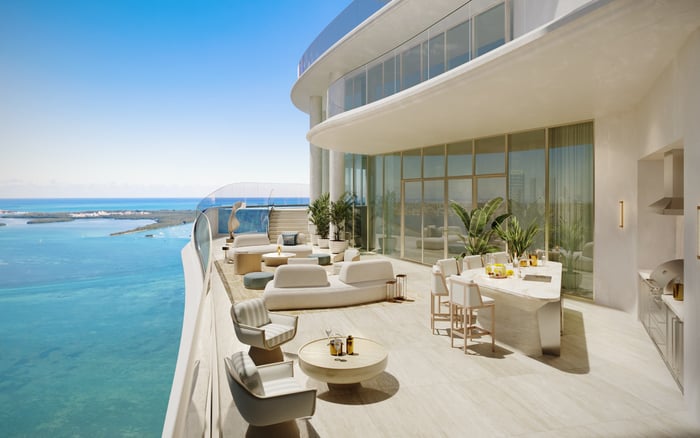
Outdoor space is one of South Florida’s great luxuries, and it is also where finish schedules are most often misunderstood. A balcony may be described as generous, but its value depends on surface material, drainage, lighting, railing design, privacy, and ease of furnishing. A narrow balcony with excellent proportions may live better than a larger one interrupted by awkward columns or mechanical elements.
A terrace deserves even closer review. Buyers should study the walking surface, edge conditions, exterior lighting, water access, and relationship to interior flooring. Does the terrace feel like an extension of the living room, or like an afterthought? Are the materials appropriate for exposure? Is there room for dining, lounging, planting, or simply standing with a morning coffee without rearranging furniture?
For waterfront homes, outdoor finishes also influence how relaxed the interiors can be. If the terrace is durable and easily cleaned, the residence can accommodate a more natural movement between inside and outside. If outdoor surfaces feel delicate, owners may unconsciously use the home with restraint, which is rarely the point of buying in South Florida.
When comparing oceanfront, bayfront, and city living, bring the finish schedule into every conversation. Ask for the exact specifications where available. Compare flooring thickness, cabinet construction, countertop material, appliance packages, plumbing fixtures, door hardware, lighting allowances, closet systems, and exterior surfaces. If something is described broadly, seek clarification before assuming it matches the presentation materials.
Walk through your actual day. Where do you enter after the beach? Where do groceries land? Where does luggage go after travel? Where do guests gather? Where does morning light hit the primary suite? Where will a dog, a child, or a housekeeper interact most with the surfaces? Luxury becomes convincing when the answers are already anticipated by the design.
Finally, compare finishes by setting, not in isolation. Oceanfront calls for resilience against exposure. Bayfront rewards a refined handling of light and reflection. City living values quiet, storage, and precision. The best residence is not the one with the longest list of premium names. It is the one whose finishes make its location feel effortless.
What is a finish schedule? It is a detailed outline of the materials, fixtures, appliances, hardware, and surfaces specified for a residence.
Why does it matter more in South Florida? Climate, light, humidity, and indoor-outdoor living place unusual demands on materials and detailing.
Should oceanfront buyers prioritize durability? Yes, but durability should still feel elegant, calm, and consistent with the architecture.
What should bayfront buyers study first? They should study how finishes handle reflection, glare, privacy, and changing light throughout the day.
What matters most in city residences? Acoustic comfort, storage, lighting, and durable daily-use surfaces are especially important.
Are famous appliance brands enough? No. The appliance layout, scale, serviceability, and fit with your lifestyle matter just as much.
How should buyers evaluate outdoor finishes? They should consider drainage, slip resistance, exposure, furniture placement, and connection to interior rooms.
Is natural stone always the best choice? Not always. It can be beautiful, but it should match the owner’s maintenance expectations and daily use.
What should be confirmed in a model residence? Confirm which finishes are standard, which are upgrades, and which are shown only for presentation.
Can finish schedules affect resale appeal? Yes. Coherent, durable, and timeless finishes can support broader appeal when the home returns to market.
When you're ready to tour or underwrite the options, connect with MILLION.
If branded residences are on your mind — as a home or as an allocation — we would be glad to share what we are seeing, privately.
Begin a quiet conversation