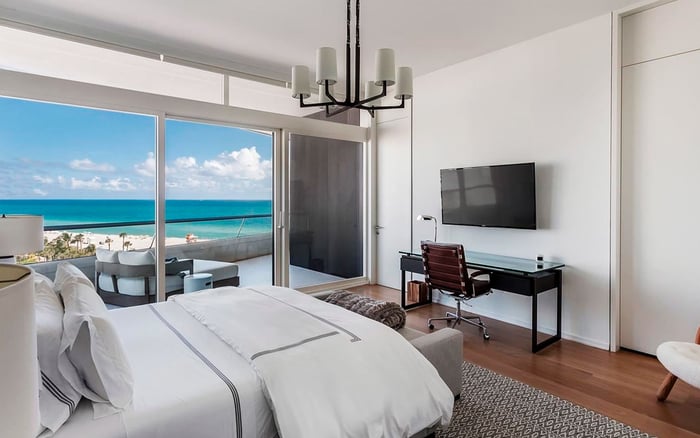
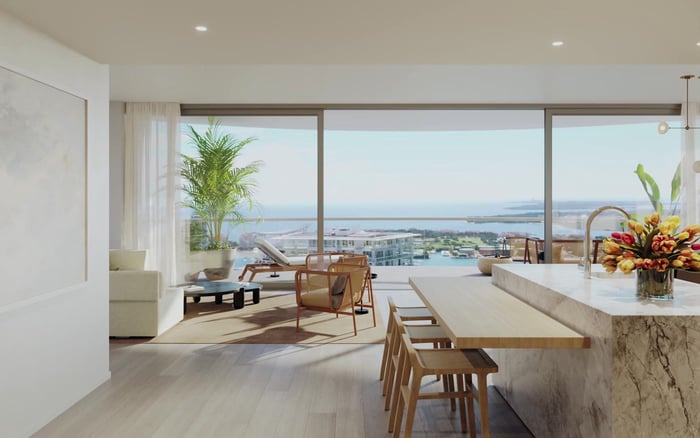
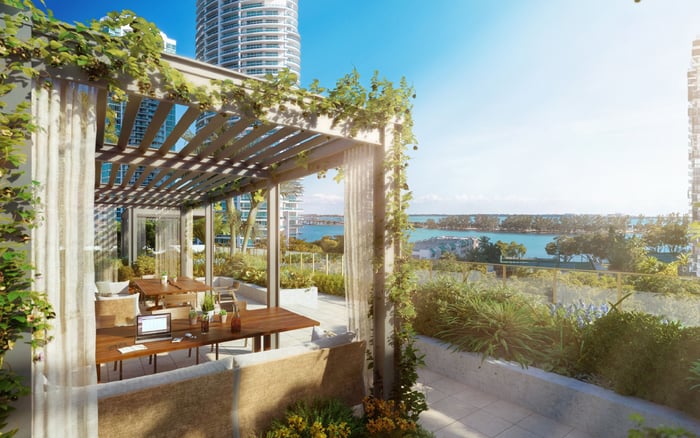
A buyer-focused guide to understanding condominium storm deductibles, testing loss-assessment coverage, and valuing interior improvements before acquiring a Miami-Dade waterfront residence.
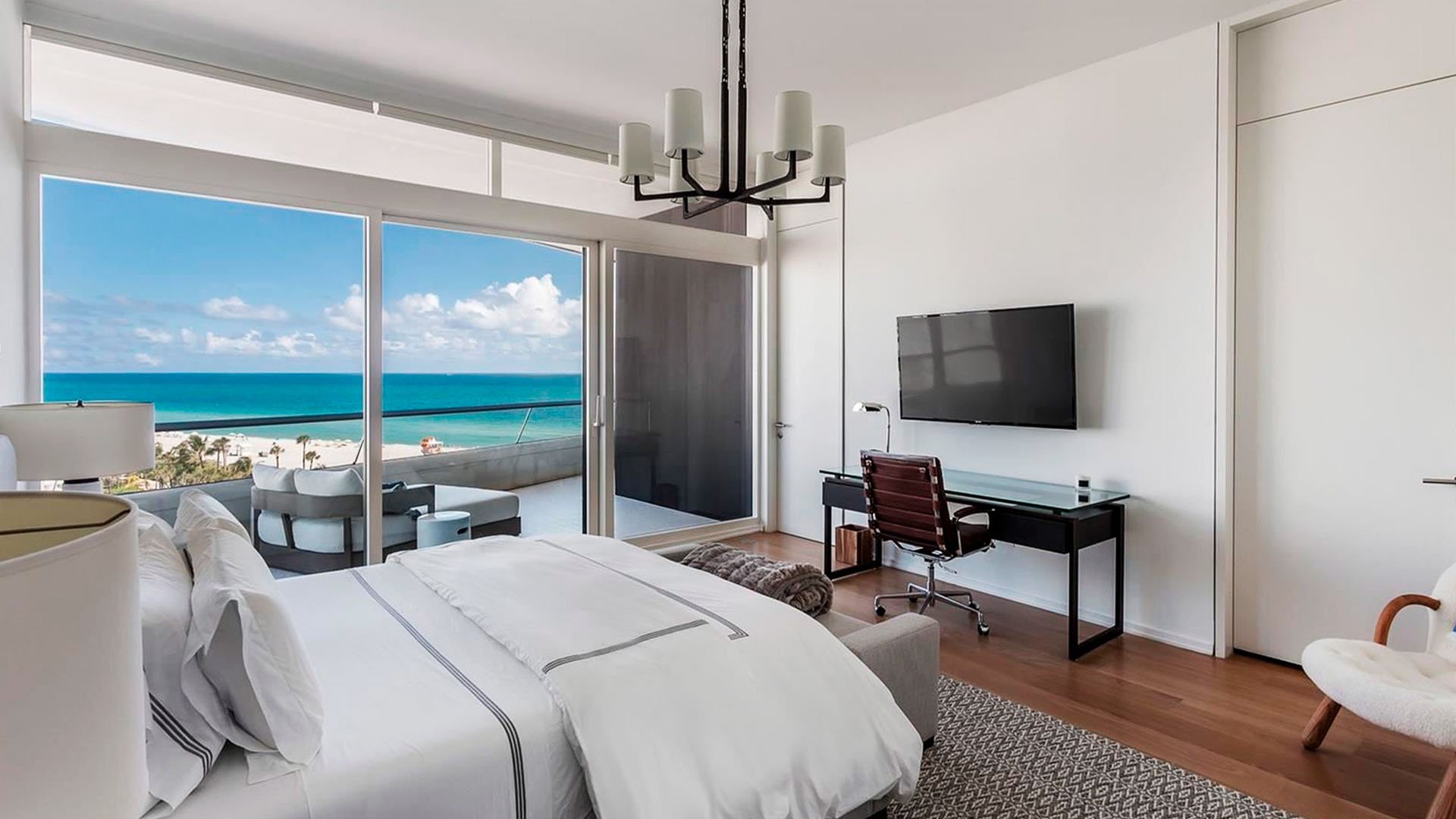
A waterfront residence deserves an insurance review as considered as its architecture. Beyond the outlook and interior finishes are three practical questions: which storm-related expenses could fall to the owner, which assessments the unit-owner policy covers, and what it would cost to reconstruct the interiors the owner is responsible for insuring.
For a buyer considering 57 Ocean Miami Beach, these questions belong alongside the design review. This framework concerns Florida condominiums, not special Miami-Dade requirements or detached waterfront homes. No project's insurance terms should be inferred from its address, presentation, or asking price.
The goal is a coordinated review of association insurance, unit-owner coverage, and the residence's improvement inventory. Each addresses a distinct part of the potential expense.
Start with the policy's exact deductible terminology. Named storm, hurricane, and windstorm are not interchangeable terms. Confirm the trigger, applicable insured-value base, minimum deductible, and whether the provision applies annually or separately to each event.
Florida permits percentage-based residential hurricane deductibles, subject to statutory conditions. A percentage alone, however, reveals little about the owner's exposure. It must first be applied to the insured value specified in the policy. The residence's purchase price is not a substitute for that base.
Request a written calculation that multiplies the applicable insured value by the deductible percentage and accounts for any minimum or other policy condition. Then examine how any resulting association expense would be allocated.
Florida condominium law generally treats association property-insurance deductibles and damage exceeding insurance limits as common expenses, subject to exceptions. Estimate the owner's potential share using the applicable common-expense allocation, rather than assuming every residence pays equally. Treat that calculation as a planning scenario, not a prediction of a future assessment.
For a Sunny Isles Beach purchase, including a residence at Jade Signature Sunny Isles Beach, request the same dollar-based review. The key distinction is between the association's deductible and the share that could ultimately fall to the individual owner.
A condominium unit-owner policy, commonly called an HO-6, warrants its own close reading. Florida policies issued or renewed on or after July 1, 2010, must include at least $2,000 in property loss-assessment coverage for qualifying direct property losses. That statutory floor does not assure adequate protection.
Compare the purchased limit with the owner's potential share of a covered association loss. Then ask whether a separate restriction applies when an assessment funds the association's master-policy deductible. A substantial headline limit does not necessarily make the full amount available for that purpose.
The statutory property loss-assessment deductible cannot exceed $250 per direct property loss. If a deductible applies to the owner's property damage from that same direct loss, the statutory loss-assessment coverage cannot impose an additional deductible for it. This protection should not be confused with the size of the association's deductible or the amount assessed.
Coverage also depends on whether the underlying loss is covered by the unit-owner policy. Maintenance assessments, reserve shortfalls, and ordinary capital projects generally are not covered property-loss claims. Loss-assessment protection can also address qualifying common-area liability claims, but property-assessment and liability-assessment coverage should be reviewed separately.
Ask the insurance adviser to identify the policy language relevant to each scenario, rather than offer a blanket assurance that assessments are covered.
The boundary between association property and owner-insured property matters as much as the limit purchased. Florida condominium law generally makes the association responsible for repairing or reconstructing portions of condominium property it must insure after an insurable event.
The association generally need not fund repairs to nonstandard improvements installed by an owner, former owner, or developer that benefit only one unit. Insurance specifically purchased for those improvements may provide recovery even when the association has no obligation to pay.
An inherited renovation is therefore as relevant as a newly commissioned one. For a Surfside buyer evaluating Arte Surfside, the task is to document the residence's actual improvements and confirm their insurance treatment, without assuming a particular coverage arrangement.
Create a responsibility schedule for interior finishes and personal property. Verify the treatment of windows, doors, hurricane protection, terraces, and balconies individually, rather than assigning everything associated with the residence to the HO-6 policy.
Owners are responsible for reconstruction costs for portions they must insure. If the association performs work on those portions, it may charge the expense to the owner as an assessment. The master policy therefore cannot replace a properly scoped unit-owner policy.
The valuation question is not what the residence is worth on the market, but what it would cost to rebuild or replace the insured property.
Photograph finishes and upgrades, retain renovation specifications and invoices, and request a current local reconstruction estimate. Separate items the owner is responsible for insuring from those addressed by the association's coverage. An interior valuation is useful only when its scope matches the property the policy is intended to protect.
A Brickell buyer considering Una Residences Brickell should apply the same discipline: reconcile the interior inventory with the coverage boundary before selecting limits. Neither an asking price nor a renovation's original invoice establishes today's reconstruction cost.
Review the inventory whenever improvements change. The goal is an insured value that reflects the residence's documented condition, not an unsupported round number.
Standard homeowners coverage generally excludes flood. A waterfront condominium therefore requires a separate review of both association and unit-owner flood protection.
Confirmation of wind or hurricane coverage does not confirm flood coverage. Ask which property each flood policy insures, what limits and deductibles apply, and how those provisions relate to the owner's interiors and belongings. Do not assume an assessment tied to an excluded underlying loss is recoverable through property loss-assessment coverage.
Before settling on coverage, obtain current master-policy declarations, full policy forms, endorsements, deductible schedules, and valuation information. Add the condominium's insurance and assessment-allocation provisions, then review them alongside the proposed HO-6 policy and improvement inventory.
Ask the association representative, insurance adviser, and condominium counsel, where appropriate, to reconcile three items: a dollar-based storm-deductible scenario, a coverage review for potential assessments, and a reconstruction estimate for owner-insured property. Resolve responsibility questions before relying on the selected limits.
The objective is not a promise that every storm-related expense will be insured. It is a clear understanding of what the association covers, what the owner covers, and what remains the owner's financial responsibility.
For a considered perspective on Miami-Dade waterfront ownership, explore MILLION.
If branded residences are on your mind — as a home or as an allocation — we would be glad to share what we are seeing, privately.
Begin a quiet conversationNo. It addresses Florida condominium insurance and assessment responsibilities, not detached-home coverage or special Miami-Dade requirements.
No. Confirm each policy's trigger, insured-value base, minimum deductible, and annual or event-based application.
Translate the percentage into dollars using the policy's applicable insured-value base and conditions. Then use the condominium's applicable common-expense allocation to estimate the owner's potential share.
Florida condominium unit-owner policies issued or renewed on or after July 1, 2010, must include at least $2,000 for qualifying direct property losses. That minimum does not establish adequate protection for a particular residence.
It cannot exceed $250 per direct property loss. If a deductible applies to the owner's property damage from the same direct loss, this coverage cannot impose an additional deductible for that loss.
Not necessarily. Review any master-deductible assessment restrictions rather than relying on the policy's headline loss-assessment limit.
Assessments for maintenance, reserve shortfalls, and ordinary capital projects generally are not covered property-loss claims. Property loss-assessment coverage depends on a covered underlying loss.
The association generally need not fund repairs to nonstandard improvements benefiting only one unit. Specifically purchased insurance may provide recovery, subject to its terms.
No. Replacement-cost planning should reflect rebuilding or replacing the insured property, supported by an improvement inventory and a current local reconstruction estimate.
No. Standard homeowners coverage generally excludes flood, so association and unit-owner flood policies need a separate review.