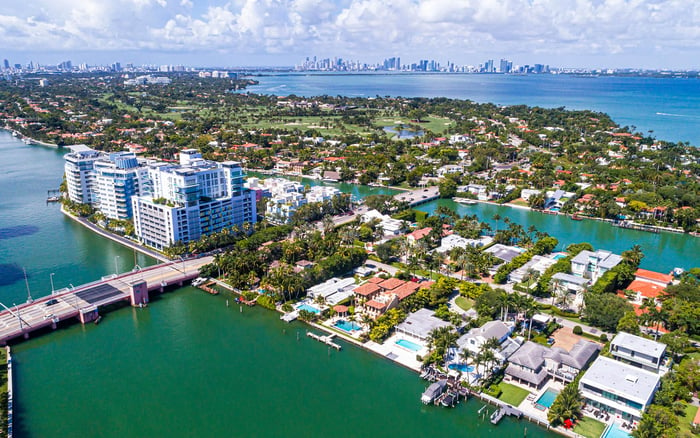
A disciplined Miami-Dade waterfront acquisition pairs property selection with independently verified payments, contract-led calendars, deliberate approvals, and a durable closing archive. For family offices, the essential distinction is between legal obligations, contractual commitments, and internal governance choices.

A Miami-Dade waterfront residence can fulfill a family's vision long before its acquisition file meets the family office's standards. The view invites a decision; the payment process demands a separate review. Discretion means more than limiting access to financial information. It means knowing who may authorize a deposit, how the recipient is verified, and which documents will explain the transaction years later.
For a family considering The Perigon Miami Beach, these controls belong alongside the property evaluation, not after it. The same principle applies throughout Miami Beach and the wider county: keep legal obligations, contractual deadlines, and voluntary office policies distinct. A prudent internal safeguard should never be mistaken for a statutory requirement, nor should a statutory rule be applied to the wrong party.
Start with the executed purchase agreement. It should clearly identify the escrow holder and provide contact information. Before funds move, confirm the holder's applicable license and independently verify the contact details used to confirm payments.
Many Florida contracts call for a deposit within approximately three business days. That is not a universal deadline. The signed agreement should set the family office's calendar, including subsequent deposits and changes documented through amendments.
A separate Florida broker rule requires escrow funds to be deposited immediately, defined as within three business days. That broker-handling obligation is not the buyer's delivery deadline. Nor should it automatically be applied in the same way to a title company, attorney, or family office.
For a potential purchase at Una Residences Brickell, one proposed internal control is to translate the signed agreement into a payment register before authorizing the first transfer. Record the amount, deadline, payment method, and confirmation of receipt. Attach written deposit receipts; a sent-wire notification is not the complete record.
The essential payment safeguard is an independent callback. Before sending a deposit or closing wire, call the title company or closing attorney at an independently verified number-not one supplied in the wire-instruction email.
Verbally confirm the beneficiary name, bank, routing number, and account number. Compare those details with instructions received through another channel. The purpose is to establish the destination independently, not simply repeat information from the same potentially compromised exchange.
Emailed instruction changes, urgent demands to wire, callback numbers available only in an email, and unexpected beneficiary names warrant verification before funds move. A proposed office policy should treat each as grounds to pause payment authorization, not as an administrative inconvenience. If timing becomes tight, involve counsel promptly rather than allowing urgency to displace verification.
Recommended communication practices include a dedicated transaction email address, two-factor authentication, and avoiding unsecured email for sensitive financial information. These are safeguards, not guarantees. Within its controlled transaction file, the office should also retain a verification record identifying who performed the callback and which instructions were approved.
A family office can adopt dual approval for beneficiary changes, early deposit releases, and wires above internally set thresholds. One proposed arrangement assigns payment preparation to treasury staff and approval to designated senior personnel, with general counsel reviewing legal questions about a requested release.
Those roles and thresholds are governance choices. No general family-office approval threshold for Miami-Dade waterfront purchases is established here.
Florida law provides a narrow dual-signature example: withdrawals from accounts covered by a particular contractor or developer escrow provision require signatures from both the contractor or developer and the buyer or buyer's agent, subject to exceptions. That limited rule is not a universal requirement for residential escrow accounts. Counsel should determine whether it applies to the transaction.
When evaluating Ocean House Surfside, an office can use the same internal approval framework it uses elsewhere while counsel assesses the actual agreement. A Surfside address does not establish which release provisions apply. Internal authorization and contractual permission are separate questions; both need answers before an exceptional payment proceeds.
A payment calendar alone is insufficient. Calendar applicable inspection, financing, appraisal, title, and association deadlines, and retain written notices of waivers or extensions. Keep the supporting emails, notices, inspection documents, and lender letters that explain each decision.
For a family comparing Bay Harbor Towers with other residences, a consistent decision record is useful without implying that different properties share identical terms. The office's proposed checklist should identify the relevant contract provision, decision owner, supporting documents, and required notice.
Internal approval does not replace whatever notice the agreement requires. Counsel should connect the office's decision process to the required contractual action and deadline.
Record retention deserves a policy of its own, not a single folder labeled closing. Separate permanent property documents from payment evidence, contractual records, and decision correspondence.
For brokers, Florida's 2025 statutory framework requires retention of at least one legible copy of brokerage books, accounts, and records for at least five years from receipt of entrusted funds. If no funds are entrusted, the period begins with execution of the brokerage-services agreement. That broker obligation does not establish the family office's retention schedule.
Recommended closing practice is to keep the deed and title insurance policy indefinitely, and the closing statement for at least seven years for tax purposes. The seven-year period is guidance-not a universal statutory rule or permission to destroy the file automatically afterward. Set the office's schedule with legal and tax advisers.
The archive should also preserve deposit receipts, payment logs, verified instructions, approvals, amendments, and contingency correspondence. Miami-Dade recording requirements specify that deeds must be signed by the seller, notarized, and properly acknowledged. Ask closing counsel to confirm the deed's execution and recording status, and retain the resulting property record.
If a wire appears fraudulent, immediately contact the sending bank's fraud department to request a recall, notify the closing professionals, and file a complaint with the FBI's IC3. Keep these response steps accessible to those authorized to act.
The objective is a transaction that remains clear long after the excitement of selection has passed: the correct recipient, timely deposits, documented authority, and records that preserve both ownership and the decisions behind it. None of these controls replaces property-specific legal review. Together, they give the family office a disciplined framework for acting on an exceptional home.
For a considered perspective on Miami-Dade waterfront residences, explore MILLION.
If branded residences are on your mind — as a home or as an allocation — we would be glad to share what we are seeing, privately.
Begin a quiet conversationThe signed purchase agreement and applicable amendments should control. Approximately three business days is common guidance, not a universal buyer deadline.
No. The broker rule concerns handling escrow funds and is distinct from the buyer's contractual obligation to deliver a deposit.
Call the title company or closing attorney using an independently verified number. Verbally confirm the beneficiary, bank, routing number, and account number, then compare instructions through another channel.
Emailed instruction changes, urgent demands, email-only callback numbers, and unexpected beneficiary names warrant independent verification before payment.
No general family-office dual-approval requirement is established here. Internal thresholds are governance choices, while a narrow Florida escrow provision imposes dual signatures on withdrawals from accounts it covers, subject to exceptions.
Keep written receipts and a transaction log recording amounts, deadlines, payment methods, and confirmation of receipt. A proposed internal policy can also preserve verification and approval records.
Track applicable inspection, financing, appraisal, title, and association deadlines. Retain written waivers or extensions and the documents supporting each decision.
Recommended closing practice is to retain both indefinitely. Establish the broader transaction-file schedule with legal and tax advisers.
No. At least seven years is recommended tax-related retention guidance, not a universal statutory period or an automatic destruction date.
Immediately contact the sending bank's fraud department to request a recall, notify the closing professionals, and file a complaint with the FBI's IC3.