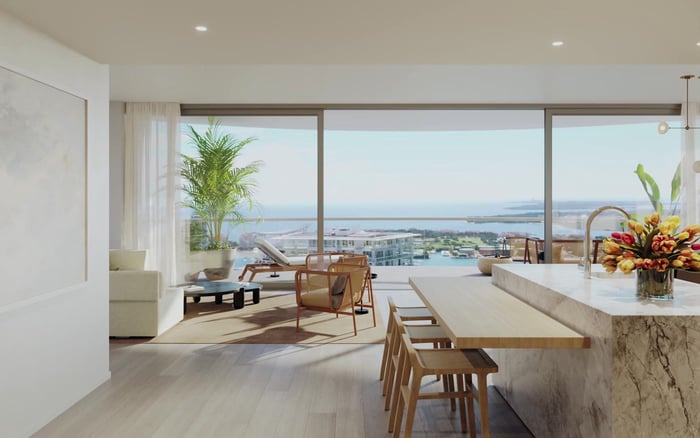
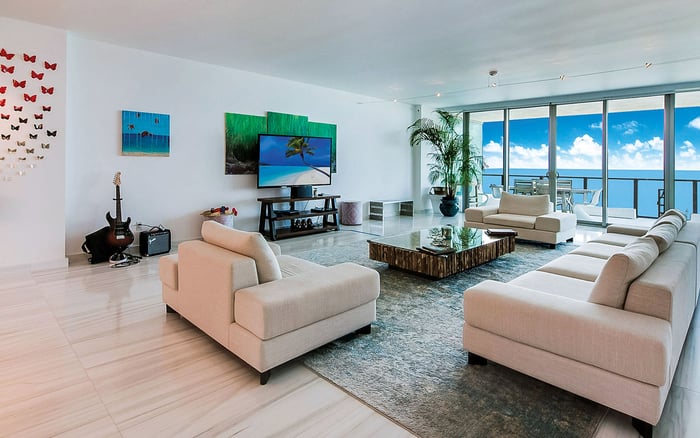
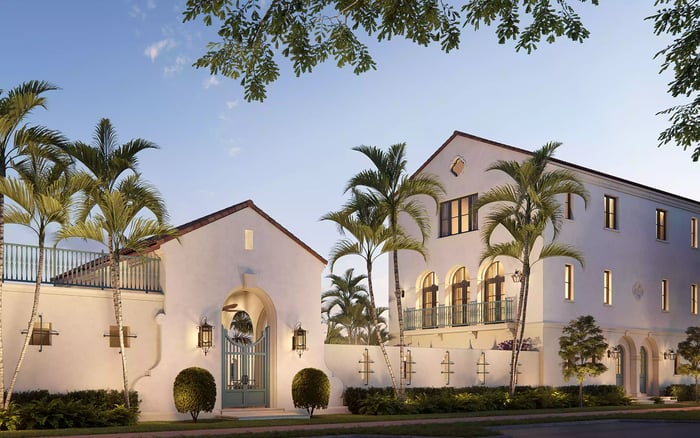
At Oceana Key Biscayne, effortless entertaining begins with precise operational questions. A buyer’s guide to kitchen ventilation, caterer access, event permissions and service-elevator reservations, with a focus on written confirmation before commitment.

The most persuasive luxury is often invisible: dinner arriving without corridor congestion, a chef working comfortably, and the last equipment cart disappearing without interrupting the household. At Oceana Key Biscayne, buyers who entertain should assess those movements as carefully as the residence itself.
Located at 350 and 360 Ocean Drive, Key Biscayne, Florida 33149, the development is marketed as a gated oceanfront property with a 500-foot private beach and extensive landscaped grounds. Advertised services include 24-hour concierge assistance and valet parking. These establish an appealing residential setting-not a commitment to coordinate caterers, supervise vendors or staff private events.
The central distinction is simple: an amenity is not an operating permission. Confirm current catering rules, elevator availability and unit-specific ventilation suitability in writing before allowing them to shape a purchase decision.
Start with a short operating brief rather than a general question about whether entertaining is allowed. Describe the intended guest count, frequency, cooking methods, staffing needs, delivery pattern and proposed venue. A recurring private chef using existing appliances raises different questions from prepared-food delivery or an event involving portable cooking equipment.
Specify whether meals will be prepared entirely inside the residence, finished there after off-site preparation, or served in a common area. Identify expected arrival and departure times, including equipment collection. Management can respond more precisely to a defined scenario than to the phrase “occasional dinner parties.”
For buyers also considering Park Grove Coconut Grove, use the same brief to request property-specific answers. Comparing written permissions is more useful than comparing broad service descriptions; no building’s arrangements should be assumed to apply elsewhere.
Request the residence’s hood and exhaust specifications, along with available plans and alteration records. Ask the appropriate engineer to establish whether the system exhausts outdoors or recirculates, what equipment it serves, and whether the proposed cooking routine is compatible with its approved configuration. A visually substantial hood is not, by itself, evidence of suitable ventilation.
Have the chef describe intended appliances and cooking methods before commissioning changes. High-heat searing, extended cooking and simultaneous appliance use warrant technical review-not an assumption that a particular system will pass or fail.
If changes are contemplated, obtain written association, engineering and permitting guidance on ductwork, make-up air, gas equipment and any proposed common-element penetrations. Separate technical feasibility from permission: a workable solution still needs the applicable approvals.
Commercial mechanical-plan-review guidance addresses ventilation and outdoor-air requirements, but does not establish approval for a residential chef setup at Oceana. The assessment must be specific to the unit and proposed work. Until then, treat any kitchen upgrade as an unresolved purchase consideration, not a routine post-closing improvement.
A useful logistics review begins where the delivery vehicle stops and ends after the final cleanup. Underground parking and valet service are advertised for the property, but neither establishes caterer unloading rights, garage-clearance limits or permission to leave a vehicle while staff work upstairs.
Ask management to identify the approved unloading point, vehicle restrictions, vendor parking arrangements and route to the residence or event room. Confirm where carts may wait, which surfaces need protection, and whether delivery windows differ from vendor working hours. Have the caterer check the route against actual equipment dimensions.
Clarify registration, identification, insurance, additional-insured documentation and recurring-access arrangements. Ask how keys or fobs, after-hours entry and staff substitutions would be handled. These are questions to resolve, not confirmed Oceana requirements.
Do not treat the pool restaurant as a reserve kitchen. Its advertised presence does not establish access for a resident’s private chef, storage privileges or use of service facilities. Plan food holding, washing, waste removal and equipment staging within the spaces expressly approved for the event.
Oceana’s advertised features include a service elevator, separate from private unit elevators and lobbies. That distinction matters, but it does not establish service-car dimensions, carrying capacity, operating hours or reservation priority. Do not assume private residential access is an approved alternative for catering carts.
Obtain the current elevator policy and ask about booking lead times, permitted windows, blackout periods, competing reservations and cancellation terms. Request cabin dimensions, door clearance, weight limits, padding requirements and any operator or staffing charges. The caterer should confirm that the largest item fits the entire approved route, not just the elevator cabin.
Build the proposed schedule around setup, food delivery and collection after service. Ask what happens if dinner runs late, equipment cannot be collected within the booked window, or the service car becomes unavailable. Any fallback should be approved, not improvised through a residential lobby.
If Apogee South Beach is also on the shortlist, apply the same arrival-and-departure test there independently. A meaningful comparison records confirmed access arrangements, not presumed equivalence between properties.
Oceana’s advertised amenities include a party room and a media room/private cinema. Their presence does not confirm that outside catering, particular guest counts or specific cooking equipment are permitted. Request written venue rules covering occupancy, reservations, guest and vendor access, fees, deposits, staffing and post-event cleaning.
Keep cooking scenarios explicit. Existing residential appliances, prepared-food delivery and portable or commercial-style cooking are not interchangeable. Do not assume propane, chafing fuel, fryers or smokers are allowed, indoors or outside.
Local special-event application materials include provisions addressing fire watch, outdoor activities, temporary tents, canopies, membrane structures and cooking. Ask the Village whether the particular event needs permits. Association consent is not municipal authorization, and the existence of an application does not establish that every private gathering requires one.
Request the current declaration, bylaws, house rules, alteration procedures, event policy and elevator policy. Then seek written management confirmation of the intended operating brief, distinguishing routine permissions from matters requiring separate review.
Organize the answers into three categories: confirmed arrangements, conditional approvals and unresolved questions. Record any applicable charges and restrictions alongside the relevant activity. A recurring chef arrangement and a catered celebration may need different permissions, even within the same household.
The objective is not to turn entertaining into administration. It is to determine whether the residence can support the life envisioned without relying on informal assurances. Resolve the essential operational questions before deciding the home is a fit.
For a discreet perspective on matching a South Florida residence to your household’s priorities, connect with MILLION.
If branded residences are on your mind — as a home or as an allocation — we would be glad to share what we are seeing, privately.
Begin a quiet conversationOceana Key Biscayne is located at 350 and 360 Ocean Drive, Key Biscayne, Florida 33149.
A service elevator is listed among its features, separately from private unit elevators and lobbies. Scheduling rules and freight specifications need written confirmation.
Advertised concierge assistance does not establish catering coordination, vendor supervision or private-event staffing. Confirm the services available for your intended event.
Request the unit’s hood and exhaust specifications, available plans and alteration records. Obtain engineering and applicable association and permitting guidance before relying on a proposed cooking setup or modification.
No. Commercial mechanical-plan-review guidance does not establish unit-specific approval for a residential chef setup or kitchen alteration at Oceana.
The advertised pool restaurant does not establish access to its kitchen or service facilities for residents’ private chefs. Any such access needs express confirmation.
A party room is advertised, but permission for catered events is not established. Obtain written reservation terms, occupancy limits and vendor rules.
Confirm unloading locations, vehicle clearance, parking, cart routes, surface protection and delivery windows. Include waste removal and post-event equipment collection in the plan.
Request booking lead times, operating windows, blackout periods, cabin and door dimensions, weight limits, protection requirements and applicable charges. Confirm both delivery and collection arrangements.
Ask the Village whether the specific event requires permits, particularly when outdoor structures or cooking are proposed. Listed special-event materials do not establish that every private gathering needs a permit.