A buyer-focused look at One Thousand Museum in Downtown Miami, examining why ownership patterns, low density and daily use matter when evaluating grocery and pharmacy convenience.
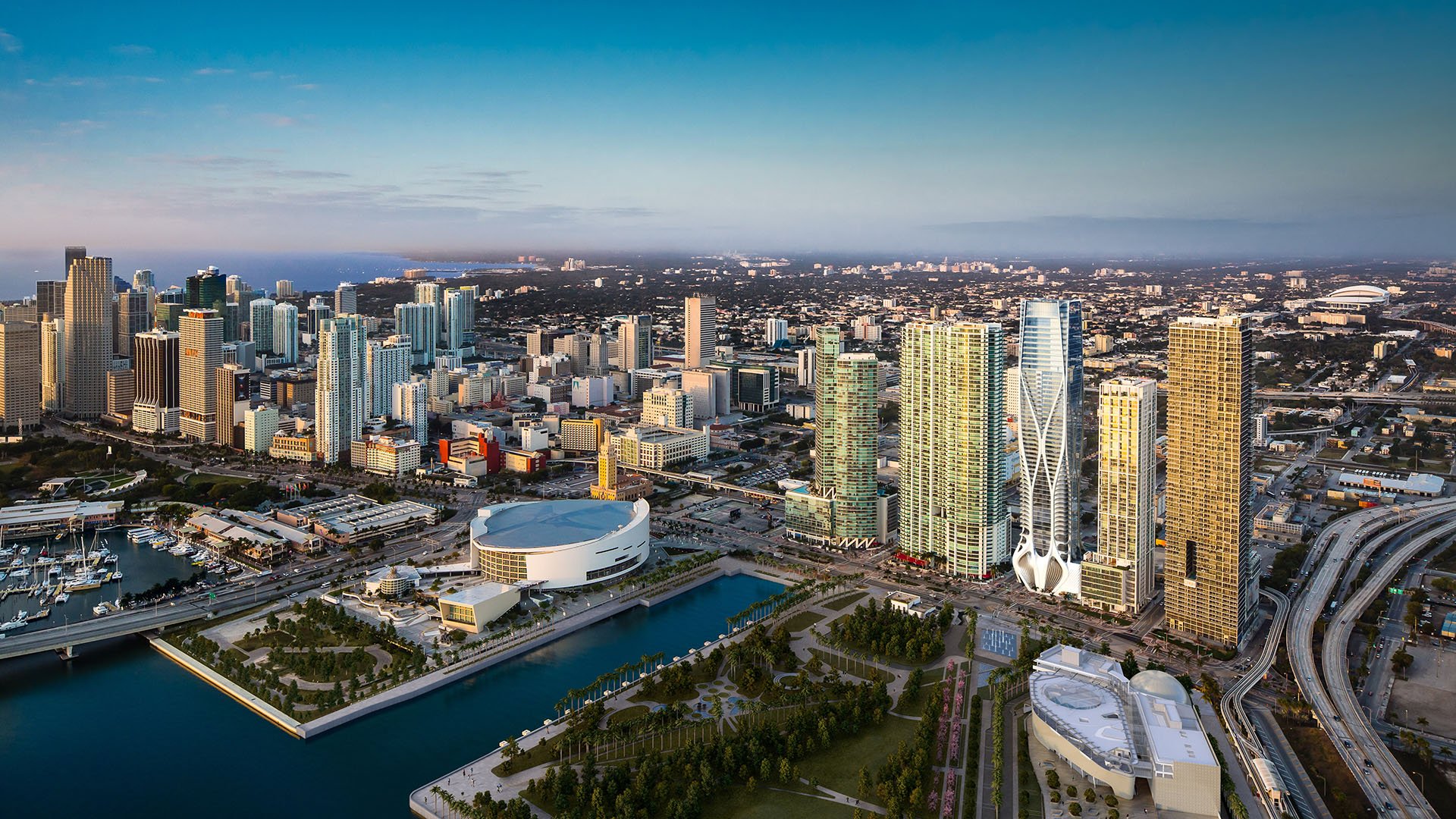
One Thousand Museum is not a conventional Downtown Miami condominium. At 1000 Biscayne Boulevard, the 62-story tower designed by Zaha Hadid Architects reads first as architecture, then as real estate. Its sculptural exterior exoskeleton, limited-collection positioning and large-format residences place it firmly in the realm of trophy ownership, not ordinary urban housing.
That distinction matters when buyers ask a practical question: how easy is daily life here, especially when the conversation turns to grocery and pharmacy access? In an ultra-luxury tower, the answer is not only what appears nearby on a map. It is also how residents use the building, how often homes are occupied, how much daily foot traffic the immediate area generates and whether neighborhood-serving retail has enough consistent demand to feel effortless.
For One Thousand Museum Downtown Miami, the ownership question is therefore a lifestyle question. The building promises privacy, scale and full-service living. The buyer must decide how those advantages align with the ordinary rituals that make a primary residence comfortable.
Limited-collection luxury buildings often behave differently from dense residential towers. Fewer residences can mean quieter elevators, greater discretion and a stronger sense of exclusivity. At One Thousand Museum, the mix of half-floor, full-floor, duplex and penthouse-style homes reinforces its private, estate-in-the-sky identity.
The same attributes can shape the retail ecosystem around a building. A high-unit-count tower may send hundreds of residents into the neighborhood each day for coffee, prescriptions, groceries and services. A trophy condominium with larger homes and fewer households may create a different rhythm, particularly if some owners use their residences seasonally or as part of a broader global portfolio.
This should not be read as a conclusion about the building’s occupancy or the neighborhood’s retail strength. It is a prompt for buyer diligence. The ownership profile of a luxury tower influences daily demand, and daily demand is what supports convenience that feels seamless rather than occasional.
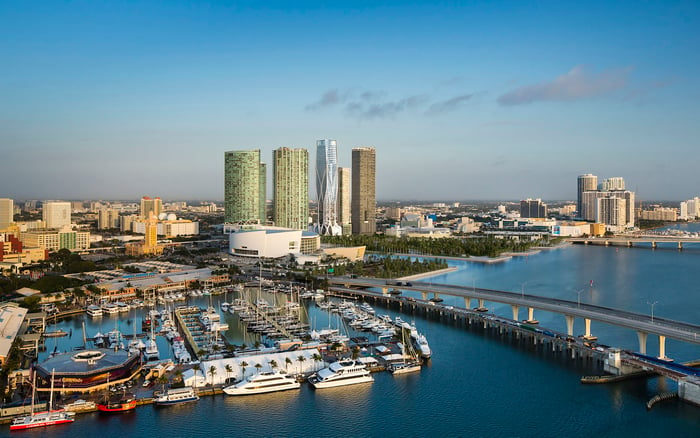
Downtown Miami has become a layered residential market, with cultural institutions, waterfront parks, office towers, hotels, restaurants and high-rise living compressed into a relatively small geography. One Thousand Museum sits along Biscayne Boulevard near Museum Park, now Maurice A. Ferré Park, and Miami’s major cultural institutions. That setting gives the tower a civic and visual prominence few residential buildings can match.
Yet Downtown is not a single lifestyle experience. A buyer standing in front of a tower on Biscayne Boulevard may experience the city differently from a buyer living deeper in a residential side street or closer to a retail corridor. The right question is not simply whether Downtown has grocery and pharmacy options. It is whether the route, timing, delivery reliability and concierge coordination fit the way the owner expects to live.
For a primary resident, that may mean walking for essentials on a weekday evening. For a second-home owner, it may mean pre-arrival stocking, prescription coordination and trusted service providers. For an investment-minded buyer, the issue becomes broader: does the surrounding convenience profile support future desirability among the next generation of luxury users?
One Thousand Museum’s amenity package emphasizes wellness, leisure and hospitality-style services. Its brand of luxury is full-service and self-contained, with privacy and exclusivity central to the offering. The rooftop helipad, an uncommon feature in Miami residential development, further reinforces the building’s identity as an object of exceptional access.
That level of service can soften the importance of immediate street-level retail. Many ultra-luxury residents do not experience grocery shopping or pharmacy access in the same way as a typical urban buyer. They may rely on staff, delivery, concierge assistance, house managers or scheduled routines. For these owners, the question is less, “Can I walk to everything?” and more, “Can the building and neighborhood support the way my household operates?”
Still, service does not erase location. Even the most discreet lifestyle depends on reliable logistics. The more a buyer expects to live in the residence full time, the more important it becomes to test the real cadence of daily errands, from weekday delivery windows to weekend traffic patterns.
A serious buyer should treat access as a lived exercise, not a brochure assumption. Visit at the hours you expect to use the neighborhood. Walk the routes you might take for basics. Time the drive or ride for errands. Ask how deliveries are received, stored and coordinated. Understand whether pharmacy needs are simple, recurring or highly specific.
This is especially important for penthouse and large-format buyers, whose households may have more complex service expectations. A large residence can feel like a private home in the sky, but it still depends on the urban infrastructure below it. The more elaborate the lifestyle, the more important operational details become.
Water-view appeal, architectural pedigree and cultural adjacency are powerful advantages. They define the emotional case for One Thousand Museum. Grocery and pharmacy access defines the practical case. In the ultra-premium tier, both must be true enough for the buyer’s life.
Luxury buyers often focus on finishes, views, architecture and amenity depth. At One Thousand Museum, those elements are central to the building’s appeal. The Zaha Hadid design, the exoskeleton, the 62-story scale and the limited-collection format all contribute to its status within the Downtown skyline.
But long-term value also rests on everyday livability. A building can be extraordinary and still require a thoughtful buyer to ask basic questions. How many residents create daily energy in the immediate area? Does the surrounding retail feel active at the times that matter? Is the building better suited to a primary residence, a lock-and-leave urban home or a hybrid of both?
There is no single answer because buyer profiles are not identical. One owner may prize the quiet of a limited-collection tower precisely because it does not feel like a busy vertical neighborhood. Another may want more street-level convenience and daily retail density. The point is alignment.
One Thousand Museum is among Miami’s most recognizable architect-designed residential towers because it succeeds as an object of design. Its larger question is more subtle: how does an ultra-private, low-density luxury building participate in the everyday life of Downtown Miami?
For the right buyer, the answer can be compelling. The building offers scale, discretion, services, cultural proximity and an unmistakable architectural signature. But grocery and pharmacy access should be evaluated through the lens of actual use, not assumed from an address alone.
The most sophisticated purchase decision recognizes both sides. One Thousand Museum is a statement residence, but ownership is lived through ordinary routines. The best buyers will appreciate the icon, then test the errands.
Where is One Thousand Museum located? One Thousand Museum is located at 1000 Biscayne Boulevard in Downtown Miami.
Who designed One Thousand Museum? The tower was designed by Zaha Hadid Architects and is known for its sculptural exterior exoskeleton.
How tall is One Thousand Museum? The building is 62 stories tall, making it one of Downtown Miami’s most visually prominent residential towers.
What type of residences does the building offer? The property markets large-format homes, including half-floor, full-floor, duplex and penthouse-style residences.
Why does ownership mix matter for grocery and pharmacy access? Ownership patterns can influence daily foot traffic, service demand and the level of neighborhood convenience buyers experience.
Is grocery and pharmacy access simply a matter of distance? No. Buyers should also consider timing, routes, delivery logistics, concierge support and how often they will occupy the residence.
Is One Thousand Museum better suited to primary or second-home use? It can appeal to both, but each buyer should test how the building’s privacy and services match everyday routines.
What makes the tower unusual among Miami luxury condominiums? Its Zaha Hadid design, limited-collection positioning, large residences and rooftop helipad distinguish it within the market.
How should buyers evaluate daily convenience before purchasing? They should visit at realistic times, test errands, review delivery procedures and consider pharmacy needs in practical terms.
What is the best way to shortlist comparable options for touring? Start with location fit, delivery status, and daily lifestyle priorities, then compare stacks and elevations to validate views and privacy.
For a tailored shortlist and next-step guidance, connect with MILLION.
If branded residences are on your mind — as a home or as an allocation — we would be glad to share what we are seeing, privately.
Begin a quiet conversation