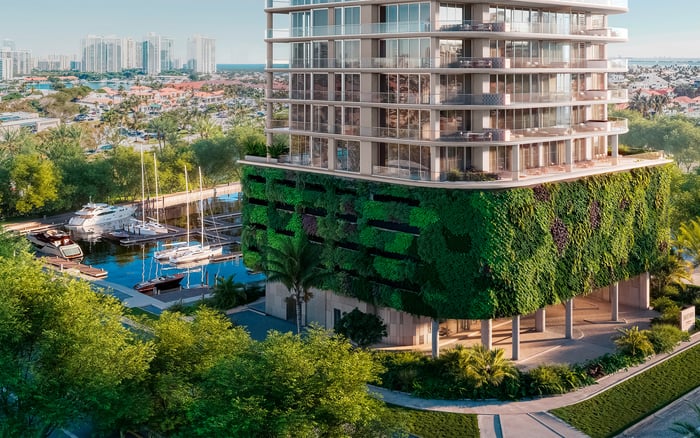
A buyer-focused guide to evaluating boat access, marina usability, air draft, tide assumptions, and contractual protections at One Park Tower by Turnberry in North Miami.

One Park Tower by Turnberry North Miami sits inside a buyer conversation that extends beyond views, finishes, and amenity language. For many South Florida purchasers, waterfront living carries an implicit expectation of boating convenience. The practical value of that convenience, however, depends on details that should be tested before a contract becomes difficult to unwind.
The key distinction is simple: a residence can offer a beautiful water view without offering true yacht-access functionality for a particular vessel. Those are separate underwriting questions. A buyer purchasing primarily for lifestyle may view the water as atmosphere. A buyer who owns a yacht, plans to acquire one, or expects future resale appeal to boaters should evaluate access with the same discipline applied to title, association documents, insurance, and financing.
That does not mean assuming there is a problem. It means avoiding assumptions. Bridge clearance, tide conditions, channel depth, marina rules, slip rights, and operating limits can shape whether advertised boating benefits translate into daily use.
The strongest diligence begins with the actual boat. Buyers with a specific yacht should compare its loaded air draft against the lowest practical bridge-clearance point on the relevant route. Loaded means real-world height, not a simplified specification. Antennas, radar arches, hardtops, mast equipment, tenders, and removable accessories can change the answer.
Ask for written clarification of the maximum vessel size and air draft that can practically access any marina or nearby docking facilities associated with the property. That clarification should address length, beam, height, and draft. It should also distinguish what is technically possible in ideal conditions from what is comfortably usable across normal ownership conditions.
For new-construction waterfront buyers, this is especially important because marketing language often arrives before every operating detail feels familiar to purchasers. The question is not whether the property is waterfront. The question is what type of boat access, if any, can be relied upon by a specific owner.
If a sales conversation includes a clearance figure, the next question is how that figure is measured. Buyers should ask whether it is measured at mean high water, mean higher high water, or another tide datum. A number without a tide reference can create false confidence.
The same scrutiny should apply to seasonal conditions. Ask whether quoted clearance assumptions account for seasonal tides, king tides, storm surge, wind setup, and sea-level-rise projections. A yacht that clears on one afternoon may not clear under every reasonable operating scenario. For a buyer planning frequent use, the margin matters.
This is where precision becomes a luxury standard. It is not enough to hear that access is convenient. The buyer should understand the limiting condition, the conservative assumption, and whether the answer changes at particular tides.
A serious boating buyer should ask whether the developer, marina operator, or sales team will provide a navigation route map from the property to open bay or ocean access. The route is where bridge clearance, channel depth, markers, turns, traffic, and operating practices become tangible.
A route map should also help identify who controls the relevant elements. Buyers should ask whether dredging, channel maintenance, or navigation aids are controlled by the developer, an association, a marina operator, or a public agency. If maintenance depends on a party outside the condominium structure, buyers should understand the limits of control.
The same applies to future interruptions. Public works, bridge repairs, seawall work, or environmental permitting may affect access temporarily or, in some circumstances, more durably. The issue is not to predict every event. It is to ask who communicates, who decides, and what remedies or alternatives exist if access changes.
Buyers coming from Aventura, Sunny Isles, or other boating-oriented enclaves may be accustomed to asking these questions instinctively. In North Miami, the same rigor should apply when boat access is part of the value narrative.
Marina rights are often more nuanced than casual conversation suggests. Buyers should ask whether slips, if available, are deeded, licensed, leased, assigned by the association, or subject to separate availability and pricing. Each structure has different implications for control, transferability, cost, and resale appeal.
The condominium documents, marina agreements, and disclosures should also be reviewed for restrictions on vessel length, beam, height, draft, liveaboard use, insurance, fueling, and tender storage. A boat slip can be valuable, but only if the permitted use matches the buyer’s plans.
This is also where binding documents matter. Ask whether bridge-clearance and channel-depth representations are included in contract documents, condominium disclosures, marina agreements, or other binding materials. If they appear only in non-binding marketing collateral, buyers should ask their broker and attorney how to preserve the representation in writing.
A luxury real estate team may understand the residence. A captain, licensed marine surveyor, or naval architect can evaluate the route for the intended vessel. Buyers should ask whether a qualified marine professional has reviewed the actual route rather than relying on generic bridge-clearance numbers.
That review can be particularly useful when the vessel is close to an assumed clearance threshold, carries tall equipment, or has a draft that makes channel depth meaningful. The professional’s role is not to replace legal review. It is to test whether the boating use case is practical, repeatable, and aligned with the buyer’s expectations.
The most disciplined buyers create a written checklist before signing: vessel dimensions, loaded air draft, tide datum, route map, slip status, marina operating rules, channel depth, maintenance responsibility, and any access contingencies. For a waterfront investment, that checklist can protect both personal use and future marketability.
One Park Tower by Turnberry North Miami may appeal to buyers for many reasons, including waterfront atmosphere, design, amenities, location, and the broader North Miami lifestyle. Bridge-clearance diligence is not a critique of that appeal. It is a way to define it accurately.
If the purchase rationale is waterfront living generally, the buyer may focus on views, privacy, building services, and daily convenience. If the rationale depends on yacht access, the buyer should underwrite the residence differently. In that case, boating functionality becomes part of the asset analysis, not merely an amenity description.
The prudent approach is to ask early, document carefully, and preserve any important boating assumptions in writing. Buyers should work with their broker and attorney to include vessel-size assumptions and any contingencies tied to marina or route verification. In South Florida’s premium market, the best waterfront purchases are not made on romance alone. They are made when the romance survives diligence.
Should One Park Tower buyers assume yacht access is automatic? No. Buyers should treat boat access and marina usability as diligence items before relying on waterfront lifestyle language.
What is the first bridge-clearance question to ask? Ask for written clarification of the maximum vessel size and loaded air draft that can practically access the relevant marina or docking facilities.
Why does tide datum matter? A clearance figure can change meaning depending on whether it is measured at mean high water, mean higher high water, or another tide reference.
Should king tides and storm conditions be part of the discussion? Yes. Buyers should ask whether clearance assumptions consider seasonal tides, king tides, storm surge, wind setup, and sea-level-rise projections.
What should owners with an existing yacht verify? They should compare the yacht’s loaded air draft, including antennas and equipment, with the lowest practical clearance point on the route.
Is a navigation route map worth requesting? Yes. A route map helps buyers understand bridges, channel depth, operating constraints, and the path to open bay or ocean access.
Who should review the route for a specific vessel? A captain, licensed marine surveyor, or naval architect can help evaluate practical access for the intended boat.
Are marina slips always included with a residence? Not necessarily. Buyers should confirm whether slips are deeded, leased, licensed, assigned, or separately priced and available.
What documents should mention boating promises? Buyers should look to binding contract materials, disclosures, condominium documents, or marina agreements, not only marketing language.
Can bridge-clearance diligence affect resale? Yes. If future buyers value boating, documented access assumptions can help clarify the property’s position in the waterfront market.
For a tailored shortlist and next-step guidance, connect with MILLION.
If branded residences are on your mind — as a home or as an allocation — we would be glad to share what we are seeing, privately.
Begin a quiet conversation