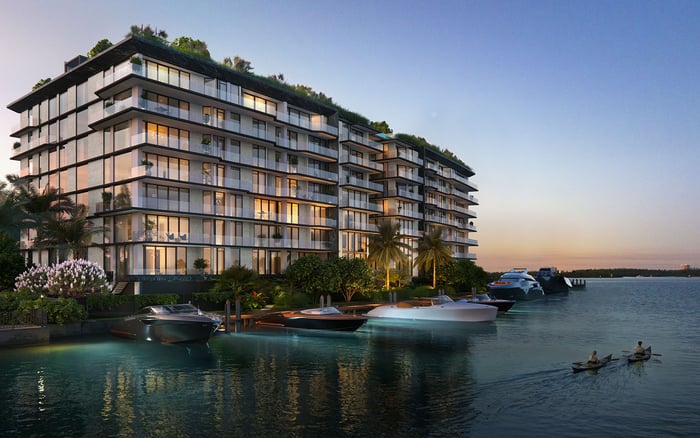
A discreet buyer guide to evaluating Onda Bay Harbor through the lens of seasonal family arrivals, everyday entry patterns, storage, privacy, and second-home practicality.

Onda Bay Harbor is a boutique bayfront condominium in Bay Harbor Islands, a setting that naturally appeals to buyers who value privacy, water adjacency, and a quieter residential rhythm. For seasonal families, however, the question is not only whether a home feels beautiful during a showing. The more revealing test is how it performs after travel, when the household arrives with luggage, children, guests, groceries, and the compressed expectations of a limited South Florida stay.
That is where the idea of a family-entry sequence becomes useful. It is not a claim about a specific building feature unless verified in the purchase materials. It is a buyer discipline: mapping how a family moves from car or drop-off, through lobby or access points, into elevators, corridors, residence entry, storage, and daily living zones. In the luxury market, this sequence often determines whether a seasonal home feels effortless or demanding.
For Onda Bay Harbor, the foundation is simple: boutique, bayfront Bay Harbor living within Bay Harbor Islands. The deeper work is to assess whether that context supports the cadence of real family use.
A family-entry sequence begins before the front door. It includes arrival by car, transfer from luggage to residence, guest access, package handling, stroller or sports-equipment movement, elevator privacy, and the transition from public to private space. In a primary residence, families adapt over time. In a second home, friction is magnified because every stay is concentrated.
Seasonal buyers often arrive in waves. One parent may arrive first, followed by children, grandparents, friends, or household staff. A residence that shows well during a quiet afternoon can feel different during a holiday week. The goal is to understand how the building supports overlapping arrivals without turning the first hour in Miami into a logistical exercise.
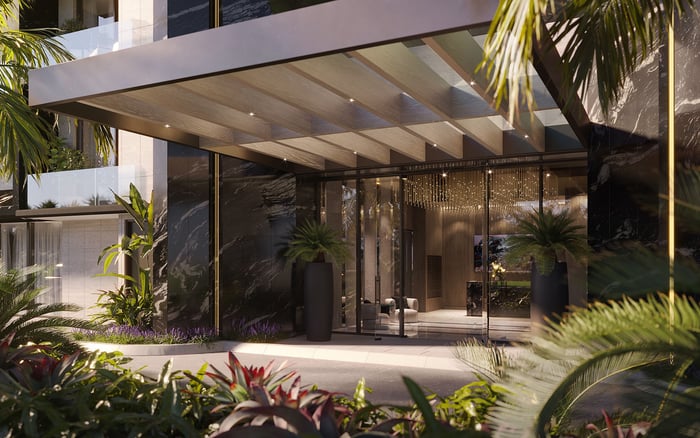
The most useful question is not, “Is the entrance elegant?” It is, “Can the household arrive comfortably and privately, with the right degree of separation between family movement, guest movement, and service movement?” That distinction is particularly important in boutique buildings, where scale can feel intimate and refined, but may also require buyers to study the choreography more carefully.
Bay Harbor Islands is often valued by buyers seeking a more discreet residential setting near the broader Miami Beach and Bal Harbour orbit. In that context, Onda Bay Harbor’s bayfront positioning gives the project a calm identity, but seasonal ownership still requires practical scrutiny.
A concise buyer brief might prioritize Bay Harbor calm, boutique scale, waterview orientation, second-home practicality, and new-construction expectations. Each of those ideas should be translated into observable questions during due diligence. Does the arrival path feel private at peak times? Is the elevator experience comfortable for a family returning with beach bags or luggage? Can guests find their way intuitively? Are deliveries, housekeeping, and maintenance access handled in a way that preserves the owner’s sense of retreat?
A bayfront address can provide a powerful emotional pull, but the lived experience depends on the full sequence from curb to sofa. Seasonal buyers should walk that path more than once, ideally imagining the heaviest-use moments rather than the easiest ones.
Begin with access. Buyers should understand how residents, guests, vendors, and deliveries enter and move through the property. If there are separate pathways or protocols, those should be reviewed in the actual governing documents and confirmed during private walkthroughs. If there are not, buyers should consider whether shared circulation still feels appropriate for their family’s privacy expectations.
Next, study storage. Seasonal homes accumulate items quickly: luggage, beach gear, water-sport equipment, children’s items, holiday wardrobes, and owner supplies that remain between visits. Even a beautifully composed residence can feel undersized if storage is not aligned with the way the family truly uses the home.
Parking and drop-off deserve the same attention. A household that regularly hosts visiting relatives or travels with multiple bags needs a different arrival experience than an individual owner who comes for a long weekend. Buyers should ask how peak-season arrival, guest parking, ride-share drop-offs, and service appointments are handled.
Finally, consider the emotional transition. The best family-entry sequence allows the owner to decompress quickly. Water, light, and quiet matter, but so do small practicalities: where bags land, where shoes go, where children move first, and whether the kitchen or primary living area is reached naturally after entry.
Boutique buildings appeal to many high-net-worth buyers because they can feel more personal than large towers. They may offer a quieter residential personality, a more legible sense of place, and a reduced sense of anonymity. For families, that intimacy can be appealing, especially when the property is used seasonally and owners want to feel at home quickly.
The tradeoff is that every shared space becomes more noticeable. Lobby volume, elevator frequency, corridor layout, and staff interaction can all influence how private a seasonal residence feels. This does not make boutique living better or worse; it makes it more specific. Buyers should evaluate the match between the building’s scale and their own family patterns.
For Onda Bay Harbor, the boutique bayfront description sets an expectation of discretion. The buyer’s task is to confirm how that discretion is experienced in daily use. A polished lobby matters, but the repeated sequence matters more.
Luxury buyers often move quickly to materials, views, ceiling heights, and outdoor space. Those elements are important, but seasonal families should begin with operational questions. How does the home work at arrival? How does it work on the third day, when guests are visiting and deliveries are scheduled? How does it work at departure, when luggage, cleaning, maintenance, and closing-up routines converge?
Waterview priorities should also be examined in relation to daily movement. A view that is revealed only after a long or awkward path may feel less restorative than one that anchors the experience immediately. Conversely, a thoughtfully sequenced residence can make even routine arrivals feel composed.
The right approach is to treat the showing as a rehearsal. Walk in as if the family has just landed. Consider who carries what, who goes where, and whether the residence allows everyone to settle without negotiation. That is the real luxury test.
What is Onda Bay Harbor? Onda Bay Harbor is a boutique bayfront condominium in Bay Harbor Islands.
Why does family-entry sequence matter for seasonal buyers? Seasonal stays compress daily routines, so arrival, storage, access, and privacy can strongly affect comfort.
Is family-entry sequence a specific amenity? No. It is a buyer evaluation framework for studying how a household moves from arrival point to private residence.
Should buyers assume all residences have the same arrival experience? No. Buyers should review the specific residence, access path, parking, elevator use, and building protocols.
How should families evaluate storage? They should consider luggage, beach items, children’s gear, owner supplies, and what remains between visits.
Does boutique scale always mean more privacy? Not automatically. Boutique scale can feel discreet, but privacy depends on circulation, access, staffing, and layout.
What should be tested during a walkthrough? Buyers should rehearse a real arrival with luggage, guests, deliveries, and the family’s normal routines in mind.
Why is Bay Harbor Islands relevant to this discussion? The area’s quieter residential character makes arrival, privacy, and daily rhythm especially important to evaluate.
Should finishes come before operational questions? For seasonal families, operational questions should come early because they shape how the home is actually used.
What is the best next step for an interested buyer? Arrange a private evaluation that studies both the residence and the family’s seasonal ownership pattern.
If you'd like a private walkthrough and a curated shortlist, connect with MILLION.
If branded residences are on your mind — as a home or as an allocation — we would be glad to share what we are seeing, privately.
Begin a quiet conversation