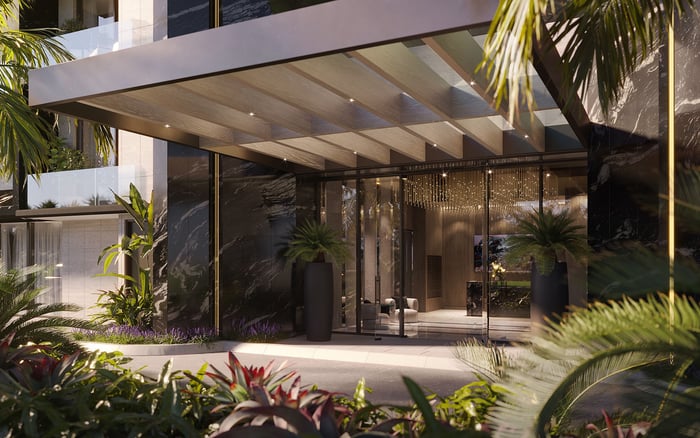
A practical, privacy-first guide for seasonal buyers evaluating how doorman discretion, visitor control, vendor access, delivery handling, and arrival coordination shape the ownership experience at Onda Bay Harbor.

For seasonal buyers, privacy is rarely a single feature. It is an operating standard. At Onda Bay Harbor, the appeal centers on a quieter residential base in Bay Harbor Islands, with the kind of ownership rhythm that often depends on trusted front-of-house judgment. For owners who may be away for weeks or months at a time, the most important luxury may be the least photographed one: doorman discretion.
Discretion is often treated as a soft amenity, an expected courtesy that comes with a premium address. Seasonal ownership makes it far more practical. The front desk or doorman team may become the daily interpreter of who belongs, who is expected, who is unknown, and what should remain private. Arrivals, guests, vendors, deliveries, service requests, vehicles, boats, and absences can all reveal more about a household than an owner intends.
The more refined question for seasonal buyers is whether the operating culture protects privacy when the owner is elsewhere. That is especially important in South Florida, where second-home use can involve family visits, service appointments, travel schedules, and changing arrival patterns throughout the season.
A primary resident can often correct small access issues in real time. A seasonal owner cannot. When the residence is vacant, staff may be the first point of contact for a housekeeper, contractor, driver, chef, personal assistant, boat crew, delivery team, or unexpected visitor. That makes discretion less about demeanor and more about protocol.
The key issue is not whether staff are pleasant. It is whether they are consistent. Buyers should ask who may authorize guests, how visitor permissions are recorded, whether recurring vendors require approval, and what happens when someone arrives claiming to be expected. Written guest-access procedures matter because informal judgment, even when well intentioned, can vary by shift, holiday, or peak-season pressure.
Seasonal buyers should also consider confidentiality around presence and absence. A low-profile owner may not want staff discussing whether the residence is occupied, who visited last weekend, whether a particular vehicle was seen, or whether a boat came in after dinner. In a luxury building, discretion should include silence around routines, not merely politeness at the door.
Boutique-scale living can support more personalized service than a larger high-rise. The same intimacy that makes a building appealing can also make staff behavior more visible. In a smaller residential environment, one conversation at the front desk can build confidence. One casual remark can undermine it.
This is why buyers should evaluate discretion as part of the building’s value proposition, alongside design, location, arrival experience, and day-to-day service expectations. The strongest service culture is not intrusive. It recognizes residents without broadcasting them. It anticipates needs without creating a narrative around them. It can coordinate access without turning a private residence into a social bulletin board.
That distinction is especially important in Bay Harbor Islands, where many buyers want a calmer residential character compared with more tourist-heavy Miami areas. Buyers comparing Onda with other island options such as Alana Bay Harbor Islands, La Baia North Bay Harbor Islands, or Origin Bay Harbor Islands should look beyond finishes and views. The real question is how each building’s front-of-house rhythm supports privacy in everyday use.
The most useful questions are direct. Ask how the building defines discretion in staff policies. Ask whether resident arrivals, guest names, travel patterns, service appointments, boat activity, and vehicle information are treated as confidential. Ask whether staff are instructed not to discuss one resident’s schedule with another resident, an outside vendor, or a curious caller.
Then move from principle to procedure. How are pre-authorized guests submitted? Can permissions be time-limited? Are visitor logs digital, written, or handled another way? What identification is required for unknown visitors? Who can approve a contractor when the owner is away? How are recurring service providers distinguished from one-time vendors?
For a waterfront or marina-oriented lifestyle, the same thinking should extend to all arrival points. If owners, guests, or crews may arrive in different ways, front-of-house control should account for more than the lobby. A residence with multiple access patterns can create a broader arrival environment, and privacy expectations should follow the owner from car to dock to residence.
Staffing consistency also deserves attention. Seasonal demand can create pressure during holidays, evenings, weekends, and high-occupancy periods. A buyer does not need to know every staffing detail to ask the right question: does the building’s service model support the same privacy standard when the regular rhythm is disrupted?
Onda is positioned for buyers who want a private South Florida base without the intensity of a larger urban tower or a more transient resort corridor. For seasonal owners, the residence may function as both a retreat and a point of departure, with privacy expectations that extend beyond the front door.
That is precisely why doorman discretion matters. The more fluid the lifestyle, the more important the gatekeeping. A seasonal owner may have family visiting in winter, a chef preparing the residence before arrival, a driver meeting guests, a contractor addressing an issue during an absence, and a boat crew coordinating separately. Each interaction is manageable. Together, they create a privacy map.
Buyers looking at Bay Harbor Towers or other Bay Harbor Islands residences should apply the same lens. A quiet address is not automatically a discreet operation. Privacy is created through repeated decisions: what staff say, what they do not say, how they verify access, how they document permissions, and how they respond when a request falls outside the expected script.
The most sophisticated buyers will treat this as part of due diligence, not as a post-closing preference. Before committing, ask to understand the building’s guest protocols, vendor approval process, delivery handling, and confidentiality expectations. If the answers are clear, consistent, and documented, discretion becomes part of the ownership experience rather than a vague promise.
Why does doorman discretion matter so much at Onda Bay Harbor? Seasonal owners may be away often, so staff can become practical gatekeepers for access, information, deliveries, visitors, and vendors.
Is discretion the same as security? No. Security focuses on control and safety, while discretion also covers confidentiality, judgment, and how resident information is handled.
What should a buyer ask about guest access? Ask who can authorize guests, how permissions are recorded, how unknown visitors are screened, and whether protocols are written.
Should vendor access be reviewed before closing? Yes. Housekeepers, contractors, chefs, drivers, assistants, and boat crews may all need access when the owner is away.
Does boutique scale improve privacy? It can support more personal service, but it also makes individual staff behavior more visible and consequential.
What information should staff avoid discussing? Buyers should expect discretion around arrivals, absences, guests, vehicles, boats, service requests, and household routines.
Why can marina or waterfront access be relevant to front-of-house control? Different arrival patterns can create additional privacy considerations, so protocols should account for owners, guests, and crews beyond the lobby.
Is Bay Harbor Islands suitable for low-profile seasonal buyers? Its quieter residential character can appeal to privacy-focused buyers seeking a calmer setting near Miami’s coastal enclaves.
Can informal staff judgment be enough? Written protocols are preferable because they help keep access and confidentiality standards consistent across shifts and seasons.
When should buyers evaluate doorman discretion? Before closing, as part of due diligence on the building’s operating culture, guest procedures, and vendor-access practices.
To compare the best-fit options with clarity, connect with MILLION.
If branded residences are on your mind — as a home or as an allocation — we would be glad to share what we are seeing, privately.
Begin a quiet conversation