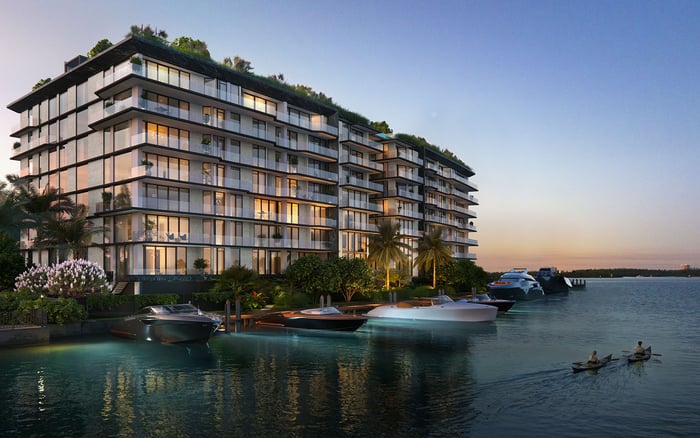
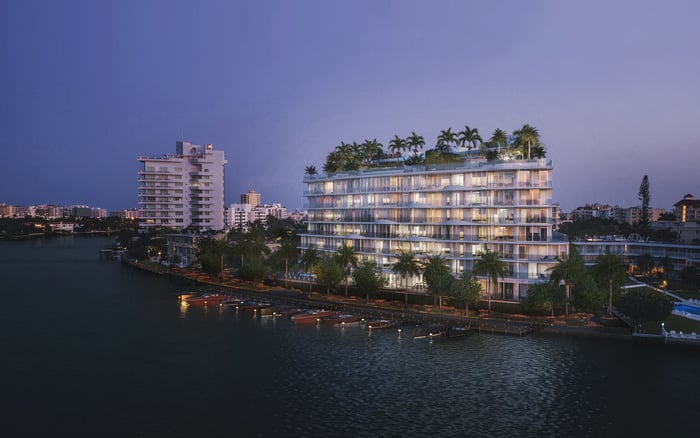
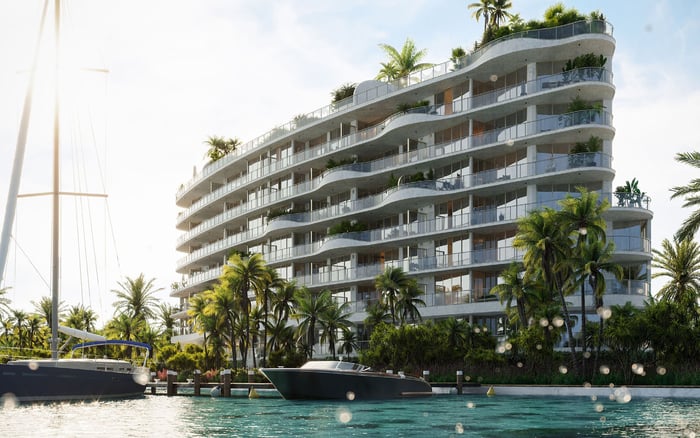
A buyer-focused editorial on how Onda Bay Harbor expresses quiet luxury through private dining logistics, discreet service, and hospitality-style residential living.
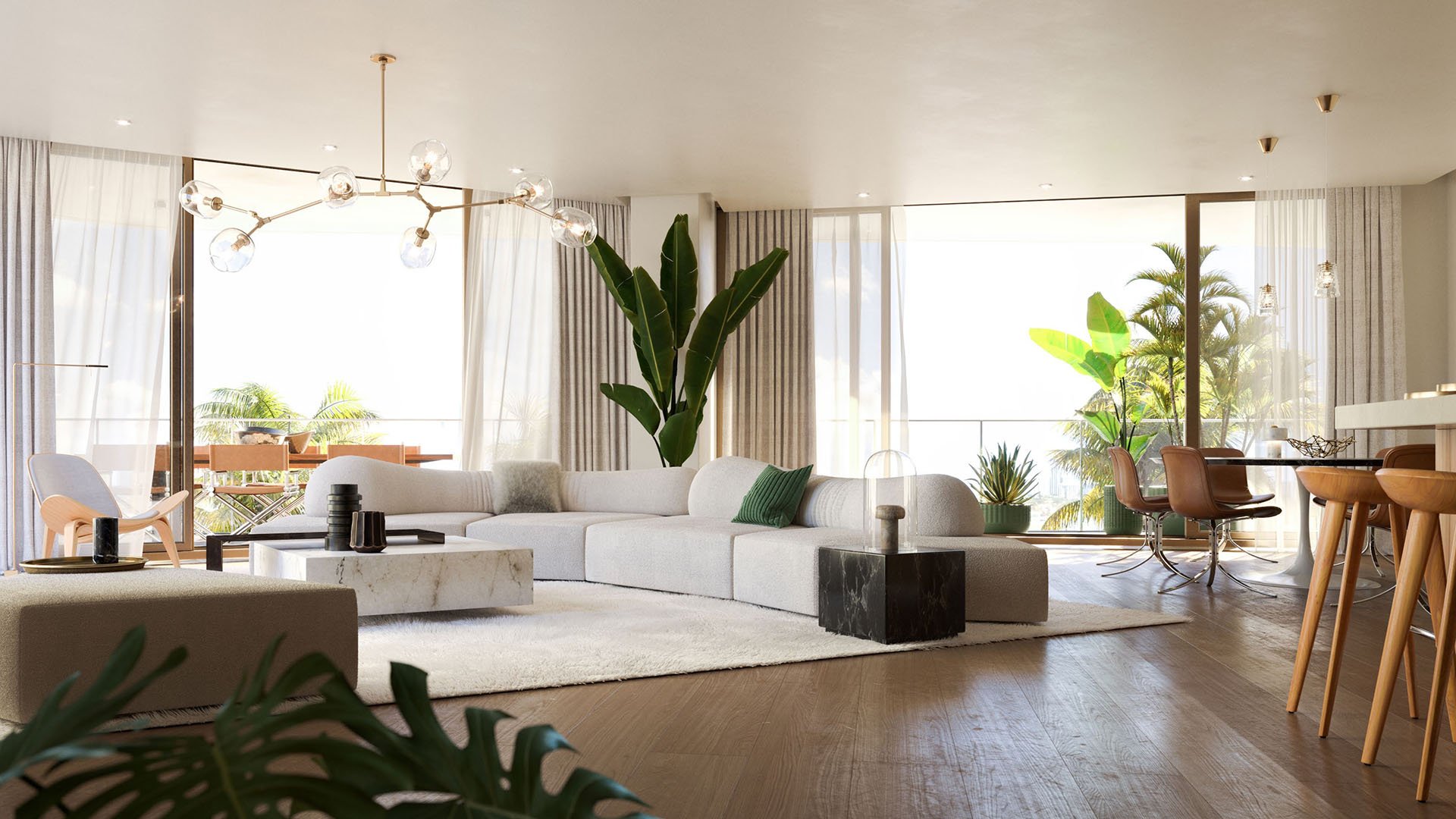
At the upper end of South Florida real estate, the most persuasive amenities are becoming harder to photograph. A grand room still matters. A view still matters. Finishes, ceiling heights, and address still form the grammar of luxury. Yet for a buyer using a condominium as a primary home, the deeper question is no longer simply where dinner is served. It is how quietly the building can make that dinner happen.
That is the more compelling case for Onda Bay Harbor. Its appeal can be read as a boutique waterfront proposition where privacy, service, and operational choreography carry as much weight as visible design. In this context, quiet luxury is not a neutral palette or a soft-spoken lobby. It is the ability to host well without turning the home into a production site.
Private dining logistics offer a precise lens for why this matters. A resident may want an intimate chef dinner, a family celebration, a catered holiday, or a small gathering that feels restaurant-caliber without the exposure of a public room. The value is not only the space itself. It is the choreography behind it: how food arrives, where staff move, how elevators are used, how cleanup disappears, and how the resident remains host rather than manager.
Boutique buildings are often discussed in emotional terms: calmer lobbies, fewer neighbors, a more residential atmosphere. Those qualities are real, but the operational advantage is just as important. With fewer residences, service can become more personal, rules can be clearer, and dining-related logistics can be managed with a level of discretion that larger buildings may struggle to deliver consistently.
For Onda Bay Harbor, this is central to the quiet-luxury narrative. The building is not merely a container for private homes with the city as the amenity beyond the front door. It belongs to a new expectation in which the residence internalizes curated lifestyle services. Food and beverage, once treated as a secondary amenity, can become part of the residential brand and, over time, part of how value is perceived.
That does not require spectacle. In fact, spectacle can work against the mood. The Bay Harbor buyer is often drawn to privacy, waterfront calm, and the possibility of a more controlled daily rhythm. Water-view living becomes more powerful when paired with frictionless hosting. A terrace dinner, for example, is only as elegant as the service path that supports it.
Private dining depends on systems most guests never see. Kitchens matter, but so do circulation paths. Staffing models matter, but so do vendor relationships. Technology matters, but only if it simplifies requests rather than creating another layer of management. Governance matters because one resident’s celebration must not compromise another resident’s sense of home.
This is where luxury becomes managerial, not merely decorative. A building that supports private dining well must think through deliveries, timing, elevator use, guest arrivals, storage, security, staffing access, sound, and post-event reset. The most refined version is almost invisible. A resident makes a request, the experience unfolds, and the home returns to its normal state without residue.
For primary-home buyers, that kind of reliability has real importance. Seasonal owners may focus on arrival rituals and peak moments. Full-time residents judge a building by repetition: weeknight dinners, visiting relatives, birthdays, business guests, and the ability to live generously without always leaving the property. The luxury is not occasional indulgence. It is dependable ease.
South Florida’s ultra-premium market has long been fluent in views, finishes, and prestige addresses. Those attributes still anchor demand. What is changing is the buyer’s definition of completeness. The newer expectation is more hospitality-driven: wellness, concierge service, hosting support, privacy protocols, and food and beverage that feel curated rather than generic.
That shift helps explain why buyers comparing Bay Harbor Islands may look beyond a building’s visible surfaces. They may consider how a residence will function during a catered evening, how family life intersects with staff access, and whether common spaces can support curated gatherings without becoming public-facing venues. In that conversation, neighboring searches can include Alana Bay Harbor Islands and La Maré Bay Harbor Islands as buyers assess the area’s boutique waterfront character.
The point is not that every building must behave like a hotel. The strongest private residences preserve the emotional security of home. But they borrow from hospitality where it improves daily life: the reservation mindset, the anticipatory detail, the sense that a request has already been translated into a plan.
The private dining conversation has two layers. The first is in-residence entertaining. This is the most intimate version, where the resident’s own home becomes the setting and the building supports the event without taking center stage. The second is curated common-space dining, where residents can gather in a controlled environment that still feels residential rather than commercial.
Both models require restraint. In-residence dining must protect privacy. Common-space dining must protect exclusivity. The better the operational framework, the less the resident has to think about either one. That is especially meaningful in a boutique setting, where social energy can be cultivated without sacrificing quiet.
This same service-first mindset can be seen in other lifestyle-driven searches across South Florida. Buyers studying wellness-oriented residential living may also consider The Well Bay Harbor Islands, while those comparing hospitality-led urban living may look toward ORA by Casa Tua Brickell. The broader pattern is clear: the residence is being asked to do more than look impressive. It must perform.
The investment case for private dining logistics is subtle but important. A building that makes life easier may hold attention longer than one that relies only on launch imagery. In the ultra-premium category, buyers often have access to beautiful kitchens, private terraces, and prestigious neighborhoods. The differentiator becomes how naturally those assets can be activated.
For Onda Bay Harbor, private dining is a way to understand long-term relevance. It speaks to residents who value discretion, personalization, and the ability to entertain without friction. It also reflects a larger migration of luxury expectations from ownership as display toward ownership as a platform for a better-managed life.
The quietest luxury in South Florida may be the dinner party nobody in the building notices, except the invited guests. That is the private dining promise at its most refined: not abundance for its own sake, but control, comfort, and the graceful disappearance of complexity.
Why is private dining logistics relevant to Onda Bay Harbor? It shows how quiet luxury depends on service, privacy, and operational ease, not only on design or views.
What does quiet luxury mean in this context? It means a residential experience where complexity is handled discreetly and the resident feels unburdened.
Is this only about having a beautiful dining room? No. The larger value lies in staffing, circulation, deliveries, technology, and governance working together.
Why does boutique scale matter? A smaller residential setting can support more personal coordination and clearer service expectations.
Does private dining apply to everyday living? Yes. It can support weeknight meals, family visits, celebrations, and small events with less friction.
Is this trend specific to Bay Harbor Islands? Bay Harbor Islands is well suited to the conversation, but the broader shift is visible across South Florida.
How does this differ from hotel-style living? The goal is not to make a home feel public, but to borrow hospitality discipline where it improves privacy and ease.
Why is food and beverage becoming more important in residences? It turns lifestyle service into a daily advantage rather than a decorative amenity.
Who is the ideal buyer for this kind of service model? A buyer who values privacy, personalization, hosting, and a primary-home experience with fewer operational burdens.
What is the best way to shortlist comparable options for touring? Start with location fit, delivery status, and daily lifestyle priorities, then compare stacks and elevations to validate views and privacy.
For a discreet conversation and a curated building-by-building shortlist, connect with MILLION.
If branded residences are on your mind — as a home or as an allocation — we would be glad to share what we are seeing, privately.
Begin a quiet conversation