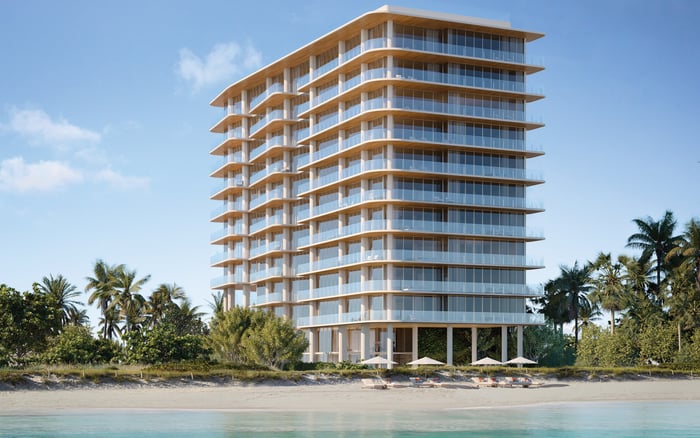
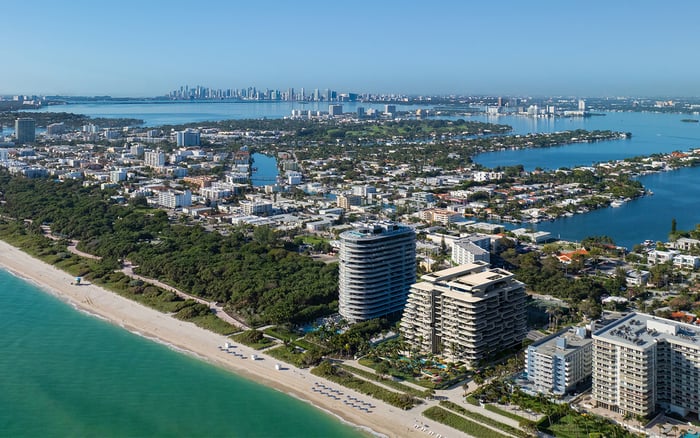
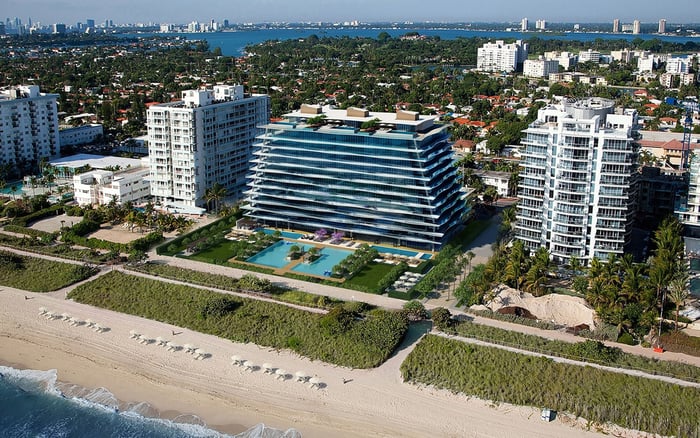
A discreet buyer’s guide to evaluating Ocean House Surfside through family use, privacy, service culture, and long-term resale strength within the Surfside oceanfront corridor.
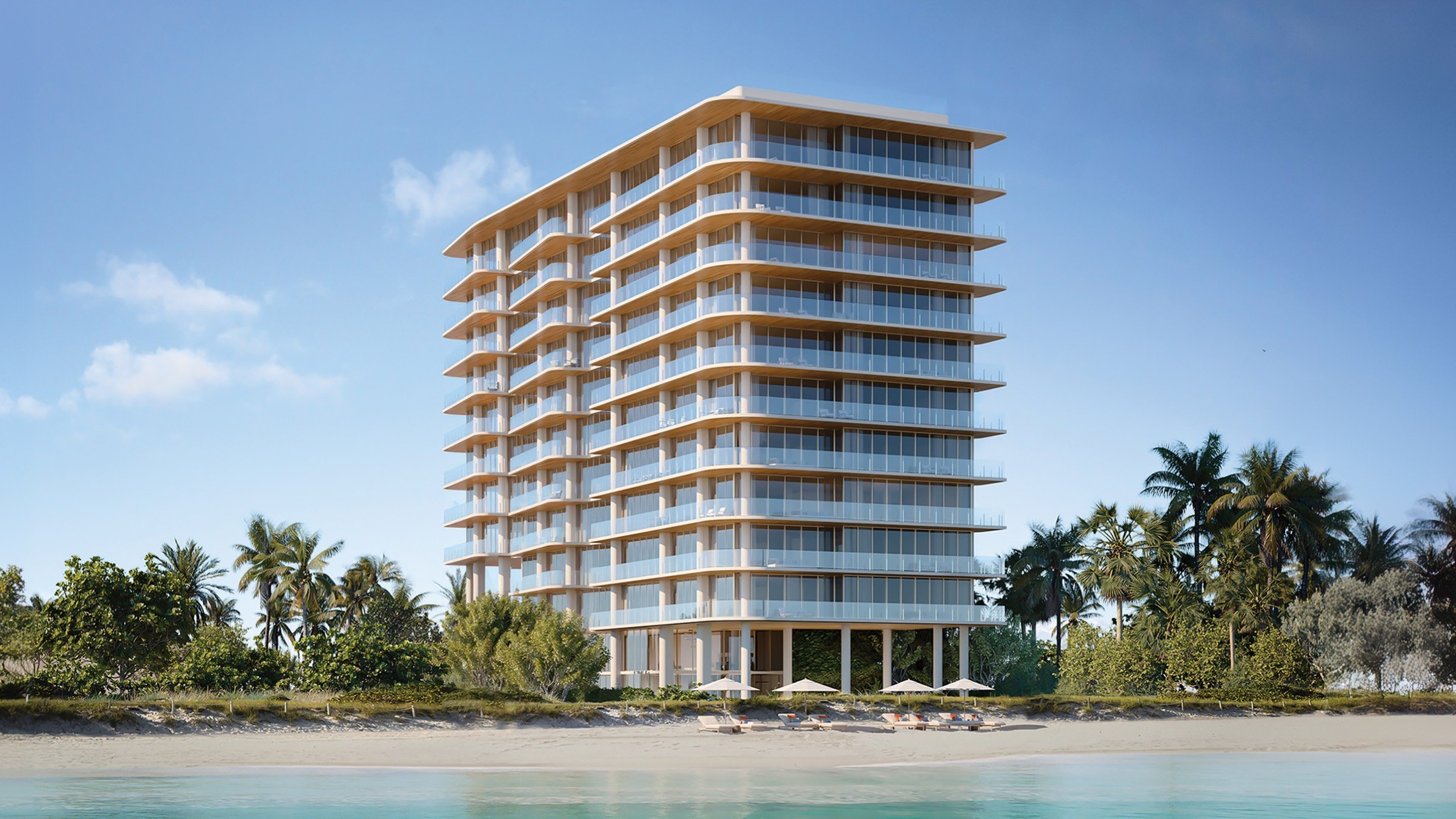
Ocean House Surfside sits in a category where standard condominium shorthand is not enough. For a family considering an oceanfront residence in Surfside, the question is not simply whether the building offers attractive amenities or a compelling price per square foot. The more important test is whether the property can function as a long-term lifestyle platform for children, relatives, household staff, visiting guests, and future buyers who will evaluate those same qualities with equal scrutiny.
That makes Ocean House Surfside a study in culture as much as architecture. A building can have beautiful common areas yet still feel too transient, too exposed, or too loosely managed for a family that values privacy and predictability. Conversely, a quieter boutique environment may offer fewer large-scale resort features while delivering a resident experience that feels more personal, controlled, and enduring.
Surfside has a clear advantage in this conversation. The neighborhood combines beachfront living with a calmer residential character than South Beach, which can matter to families who want the ocean without a constant entertainment backdrop. The practical frame is the Surfside and Bal-harbour oceanfront corridor, where long-term appeal often turns on subtle differences in atmosphere, service, and everyday convenience.
A family-amenity review should begin with a basic inventory, but it should not end there. The sharper question is how amenities are actually used. Is the pool atmosphere compatible with children at certain hours? Do residents appear to know one another, or does the property feel more like a rotating hotel environment? Are guests handled gracefully, or does visitor activity change the tone of shared spaces?
Oceanfront amenities are only as valuable as the rules and customs that govern them. Families should understand how the building treats children, visiting relatives, nannies, tutors, drivers, and household staff. These details determine whether daily life feels effortless or constantly negotiated. The answer is rarely found in a brochure. It is usually revealed in the lobby, at the valet, near the beach path, and during the transition moments when families are actually moving through the property.
This is where the boutique model can be powerful. A smaller resident community may allow staff to recognize children, household routines, guests, and preferences with more personal continuity. That intimacy, however, has trade-offs. Fewer residences can also mean fewer large-scale amenities than a larger resort tower. The right buyer should decide whether breadth of amenity matters more than discretion, familiarity, and calmer daily circulation.
Privacy at Ocean House Surfside should be evaluated in two dimensions. The first is physical design: how residents enter, how guests are received, how service providers move, and whether common areas create unnecessary exposure. The second is operational discipline: whether staff, vendors, deliveries, and household employees are managed in a way that protects resident routines.
For families, these two dimensions are inseparable. Children may move between residence, pool, beach, car, and lobby multiple times a day. Relatives may stay for extended periods. Tutors or wellness providers may come and go on predictable schedules. Drivers and nannies may need access without creating confusion. A strong building culture makes this movement feel natural while preserving privacy for everyone else.
The most revealing question is whether the property feels like a private-club residential environment or a transient resort-style building. Neither model is inherently wrong, but they serve different owners. A buyer focused on long-term family life will usually care less about theatrical arrival and more about quiet competence, controlled access, and the absence of friction.
Service quality is often discussed as a lifestyle benefit, but in the upper tier of the market it is also part of the asset. High-end buyers tend to price in reliability, discretion, and professionalism. A residence can be beautifully designed, but if the building experience feels inconsistent, the future buyer pool may narrow.
At Ocean House Surfside, families should look for signs of staff continuity and operational predictability. Are residents greeted with familiarity rather than performance? Does the team understand the difference between warmth and overfamiliarity? Are visiting relatives managed with ease? Are household staff treated respectfully while still following clear protocols?
These soft variables become especially important when a property is held through multiple family seasons. Children grow older, household routines evolve, relatives visit at different times of year, and the family’s service needs may become more complex. A building that can absorb those changes without drama creates a form of invisible luxury. It is not always photographed, but it is often remembered at resale.
Resale analysis for Ocean House Surfside should include the usual variables, but a sophisticated buyer should also study amenity culture. Does the building encourage long-term family ownership, or does it feel oriented toward short-term turnover? Is the resident mix stable? Are shared spaces treated as an extension of private life, or as a stage for constant activity?
Long-term value depends partly on capital preservation, but also on the reputation a building earns among buyers who compare the Surfside corridor with nearby luxury alternatives. If a building is known for discretion, steady service, and a family-compatible rhythm, that perception can support demand when a residence returns to market. If the culture feels unpredictable, a buyer may discount the experience even when the residence itself is compelling.
This is why price per square foot can be too blunt a tool. It does not capture whether a grandparent feels comfortable visiting for a month, whether a teenager can move through the property with appropriate independence, or whether staff can manage deliveries without disrupting privacy. Those details may not appear in a spreadsheet, but they can shape ownership satisfaction and future liquidity.
A serious family buyer should visit at different times of day. Morning reveals resident routines, staff preparedness, school-day movement, and delivery patterns. Afternoon often shows how pool, beach, and valet areas function under more active use. Evening may reveal guest behavior, lobby tone, and the transition from public to private life.
During each visit, focus less on being impressed and more on being observant. Watch how people move. Notice whether staff members anticipate needs without becoming conspicuous. Ask practical questions about children, relatives, nannies, tutors, drivers, household employees, service providers, and deliveries. A polished answer is useful; a clear operating culture is better.
Also compare the building to the broader corridor rather than judging it in isolation. Surfside’s appeal is tied to its quieter, more neighborhood-oriented feel, and that context matters. A buyer should ask whether Ocean House Surfside reinforces that residential character or competes with it. The best fit is not necessarily the building with the longest amenity list. It is the one whose rhythms match the family’s private life.
Ocean House Surfside should be evaluated as a living system. Amenities, privacy, service, and resale are not separate categories. They interact every day, especially for families with children, relatives, guests, and staff. A building with the right culture can make ownership feel calm and durable. A building with the wrong culture can turn even a beautiful residence into a compromise.
For the ultra-premium buyer, the strongest due diligence is qualitative as well as financial. Observe the building. Test the service model. Understand the rules. Study the resident atmosphere. Then decide whether the property feels like a long-term family address, not merely an impressive oceanfront acquisition.
What is the most important family question at Ocean House Surfside? The key question is whether the building supports daily family life with privacy, predictability, and discretion.
Should buyers focus first on the amenity list? No. The amenity list matters, but the culture of use, house rules, and resident behavior are more revealing.
Why does service quality affect resale? Future luxury buyers often value staff reliability, discretion, and professionalism as part of the ownership experience.
How should privacy be tested during a tour? Watch how residents, guests, staff, deliveries, and service providers move through the property at different times.
Is a boutique building better for families? It can be, especially when a smaller resident community creates familiarity, but it may offer fewer large-scale amenities.
Why compare Ocean House Surfside with the broader corridor? Buyers should understand how it fits within the Surfside and Bal-harbour oceanfront market rather than judging it alone.
What does oceanfront living mean for family routines? It can simplify beach access and daily recreation, but the building must manage shared spaces with discipline.
How can buyers evaluate resident culture? Visit during morning, afternoon, and evening to observe lobby, valet, pool, beach, and guest patterns.
What role do household staff play in due diligence? Buyers should ask how nannies, tutors, drivers, and service providers are handled without compromising resident privacy.
What is the clearest ownership test? The residence should feel like a long-term family platform, not just a beautiful purchase.
For a tailored shortlist and next-step guidance, connect with MILLION.
If branded residences are on your mind — as a home or as an allocation — we would be glad to share what we are seeing, privately.
Begin a quiet conversation