A buyer-focused guide for New York households weighing Coral Gables homes through the lens of airport convenience, privacy, schools, neighborhood rhythm, and daily South Florida living.
For New York buyers considering Coral Gables, airport access is often one of the first practical questions. Understandably so. A buyer may be maintaining business interests in Manhattan, flying family between markets, or moving gradually rather than making a single break. The mistake is allowing the airport to become the organizing principle of the entire search.
A better approach is to treat airport access as a discipline. It should narrow the field, test the rhythm of a property, and expose friction points. It should not reduce the decision to a commute calculation. In South Florida, a beautiful home can disappoint if the daily life around it feels like a waiting room for the next flight. Conversely, a slightly less obvious location may work beautifully if it supports family, entertaining, wellness, school planning, and privacy with fewer daily compromises.
Coral Gables belongs naturally in this conversation because its residential identity is not dependent on travel convenience alone. The buyer who succeeds here tends to ask a more mature question: can the home make flying easy enough while still delivering the South Florida life I actually came for?
New York buyers often speak in averages, but homes are lived in through exceptions. The relevant question is not whether an airport drive sounds manageable on paper. It is whether the drive works on the specific days and hours you are most likely to fly, with the luggage, children, staff, meetings, pets, and weather interruptions that shape real life.
Before selecting a neighborhood, build three travel profiles. First, the business-day profile: early departures, late returns, calls taken from the car, and the need to arrive composed. Second, the family profile: school calendars, visiting grandparents, college-age children, and holiday traffic. Third, the leisure profile: spontaneous weekend travel, long-haul connections, and the difference between checking a bag and traveling light.
The most useful airport question is rarely, “How close is it?” It is, “How much of my life must be rearranged to make travel feel easy?” That answer varies dramatically from one household to another.
Coral Gables works best for buyers who want the airport to be accessible, but not emotionally present. Its appeal is a more composed residential setting, where the day can begin with school routines, private training, coffee meetings, or a garden-facing breakfast rather than the feeling of being on the edge of a transit corridor.
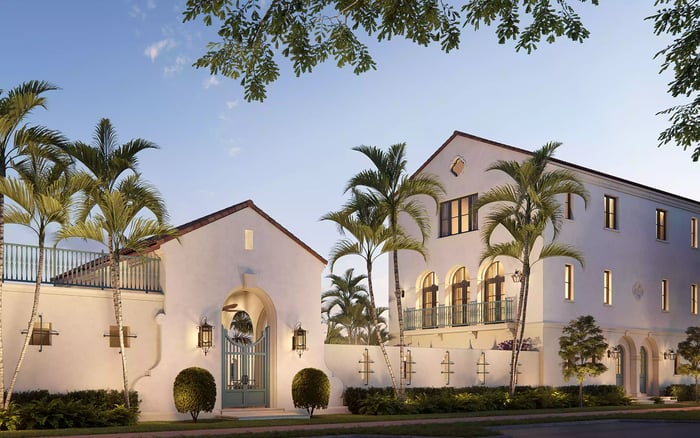
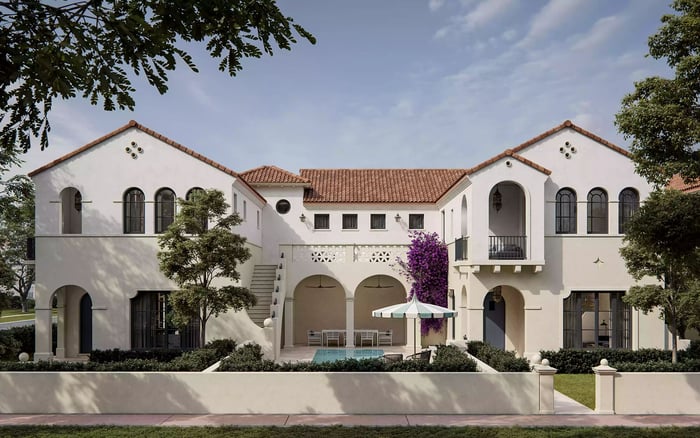
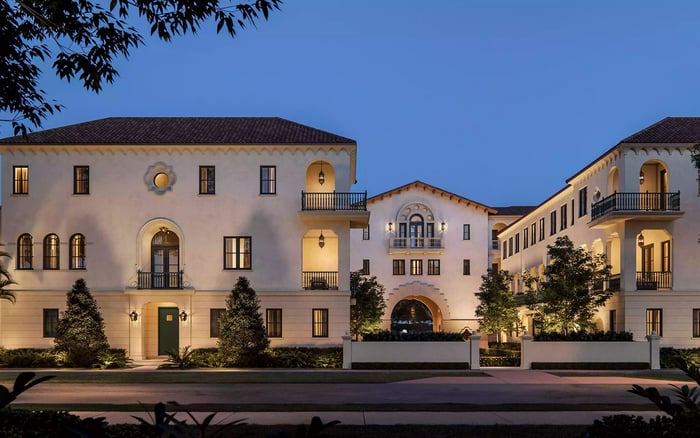
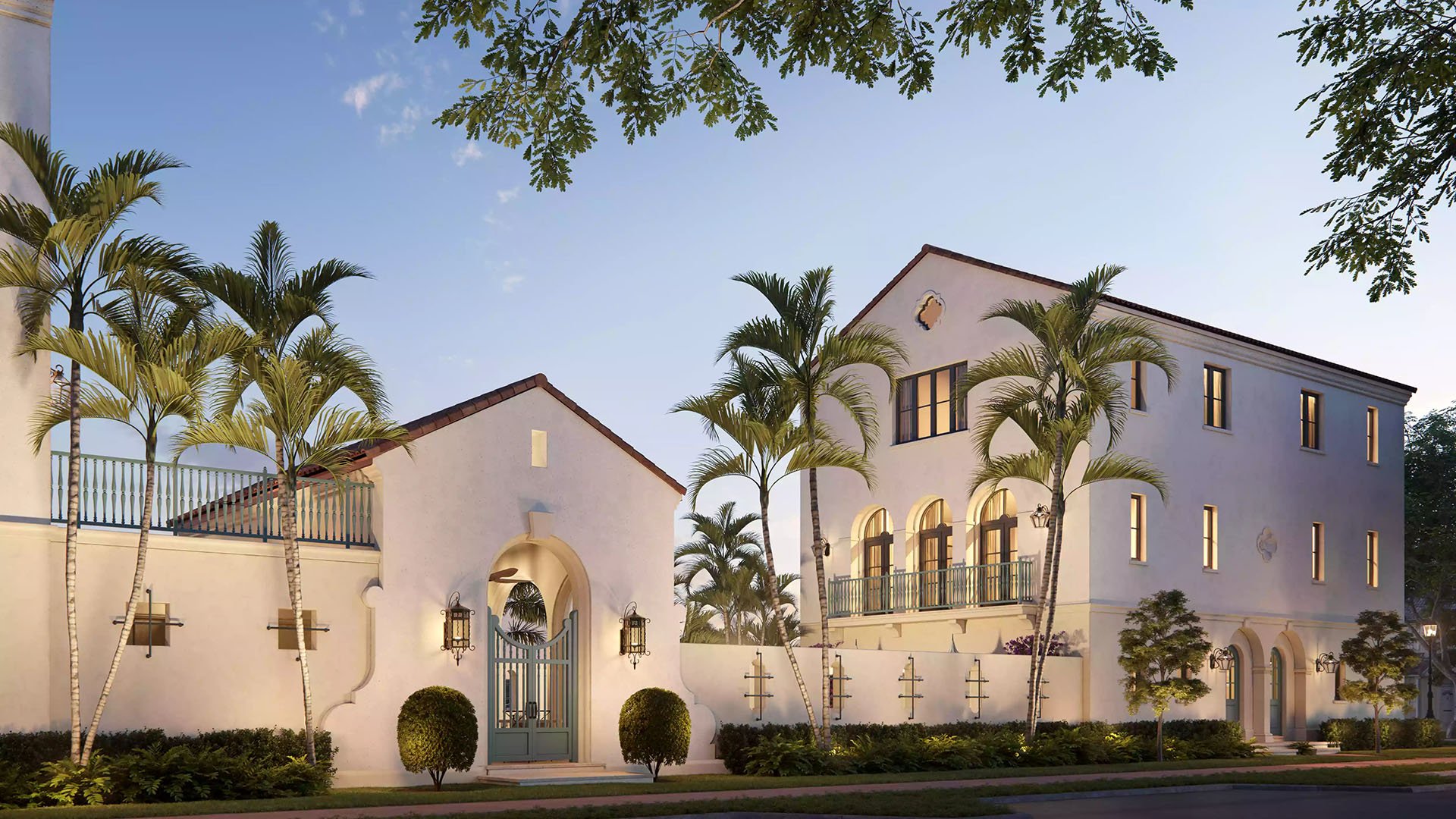
This is where projects such as The Village at Coral Gables enter the conversation. A buyer drawn to this type of address is usually prioritizing scale, neighborhood texture, and the possibility of living in a place that feels intentionally residential. Airport access matters, but it is not the amenity. The amenity is returning to a home environment that does not feel like an extension of the terminal.
Coral Gables also favors buyers who want a more traditional domestic structure. Private-school planning, household staffing, hosting, and multi-generational stays can carry as much weight as flight convenience. If the home will be occupied year-round rather than used only between departures, those lifestyle criteria should sit above a marginal difference in travel time.
The most overlooked part of airport-driven buying is the last mile. A home may appear convenient on a map, yet feel awkward when approached through local turns, entry gates, school traffic, valet patterns, or household routines. The return trip matters even more. After a delayed flight, the buyer is not evaluating theory. The buyer is evaluating relief.
When touring in Coral Gables, run the airport scenario in both directions. Leave from the home at the hour you would realistically fly. Return at the hour you would realistically land. Notice whether the drive ends in calm or in a sequence of small frictions. Is there a graceful place for a driver to wait? Can guests arrive without confusion? Is the garage or motor court intuitive? Does the building or residence allow luggage, deliveries, and household help to move discreetly?
A project such as Ponce Park Coral Gables may appeal to buyers who want the Coral Gables address conversation to include a more contemporary residential format. The question is not simply whether it is convenient. The question is whether the arrival experience supports the way the household actually functions.
A sophisticated search should compare adjacent lifestyle models rather than assume one neighborhood is universally superior. Coral Gables is the home-first option for many buyers. Coconut Grove often enters the discussion when a buyer wants a softer, more tropical rhythm while still remaining connected to the broader Miami residential map. Brickell becomes relevant when the household values vertical living, dining, business proximity, and a more urban cadence.
In Coconut Grove, projects such as Four Seasons Residences Coconut Grove may speak to buyers who want a service-rich residential environment with a neighborhood identity distinct from the central business core. The choice is less about shaving minutes and more about whether the household wants its non-travel days to feel resort-like, village-like, or city-like.
Brickell, by contrast, may suit the buyer whose travel pattern is closely tied to finance, meetings, dining, and a high-service vertical lifestyle. St. Regis® Residences Brickell fits that mental map for buyers who want a more urban base. The tradeoff is philosophical as much as logistical: do you want the energy of the city at your door, or do you want the city to be something you enter selectively?
Lifestyle is the point of the comparison. Airport access is merely one lens through which the daily rhythm becomes visible.
For New York buyers, quiet is often underpriced in the decision process. Not just acoustic quiet, although that matters. The more valuable quiet is operational: fewer decisions, easier arrivals, calmer mornings, and a home that does not constantly remind the owner of what must happen next.
The right property should make travel feel handled. That may involve a building staff that understands recurring departures, a residence with a proper luggage path, a floor plan that separates returning guests from sleeping children, or a location that allows the household to move without constant recalibration. These are not glamorous details, but in the luxury segment they separate a beautiful purchase from a durable one.
For buyers who want Coral Gables but prefer a newer condominium format, Cora Merrick Park can be part of a broader discussion about convenience, privacy, and how much maintenance a household wants to carry. The best decision is not the most dramatic one. It is the one that preserves optionality.
Begin with the home, then pressure-test it against the airport. If the home only makes sense because of travel convenience, keep looking. A South Florida residence should still feel compelling on a week when no one flies at all.
Use four questions. First, what does a normal Tuesday look like when no flight is involved? Second, what does a difficult travel day look like when everything is late? Third, what does the home give back to the household after travel has taken energy away? Fourth, would you still choose this address if airport access were equal across every option?
That final question is clarifying. It forces the buyer to identify the deeper attraction: architecture, neighborhood, privacy, schools, service, entertaining, boating, wellness, or proximity to family. When the answer is clear, airport access becomes a supporting condition rather than a controlling force.
Should New York buyers make airport access the top priority in Coral Gables? It should be a major filter, but not the top priority by default. The home still needs to support daily life when no one is traveling.
Is Coral Gables mainly for buyers who want a quieter residential base? Many buyers consider it for that reason. The broader appeal is a home-first lifestyle with access needs kept in balance.
How should I compare Coral Gables with Brickell? Compare the rhythm, not only the drive. Brickell may feel more urban, while Coral Gables may feel more residential.
How should I compare Coral Gables with Coconut Grove? Look at how each setting supports your non-travel days. Coconut Grove can feel softer and more tropical, while Coral Gables can feel more classically residential.
What is the most important airport test before buying? Test the trip at the hours you actually expect to fly and return. The arrival back home is often the most revealing part.
Should school planning affect the airport-access decision? Yes, especially for full-time households. School routines can matter more than a marginal difference in travel convenience.
Do luxury condominiums work for frequent travelers? They can, particularly when service, security, parking, and arrival logistics are well aligned with the owner’s routine.
Are single-family homes better for this type of buyer? Not always. Single-family homes may offer privacy and space, while condominiums may reduce maintenance and simplify lock-and-leave living.
What should second-home buyers prioritize? They should prioritize ease of arrival, low-friction maintenance, guest comfort, and whether the home feels restorative immediately upon return.
What is the simplest rule for choosing well? Choose the home you would want even during a month with no flights. Airport access should support the lifestyle, not define it.
To compare the best-fit options with clarity, connect with MILLION.
If branded residences are on your mind — as a home or as an allocation — we would be glad to share what we are seeing, privately.
Begin a quiet conversation