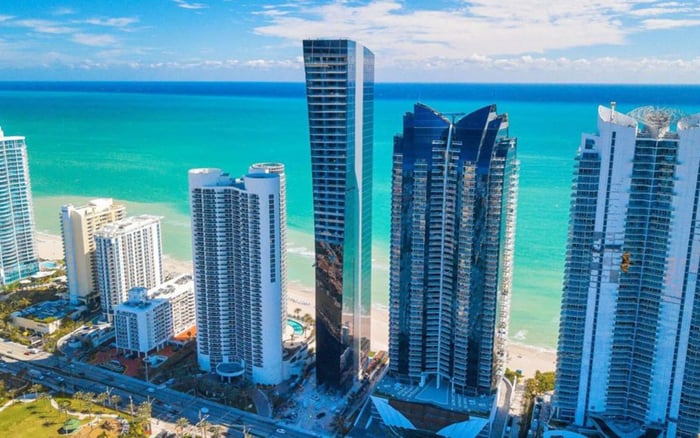
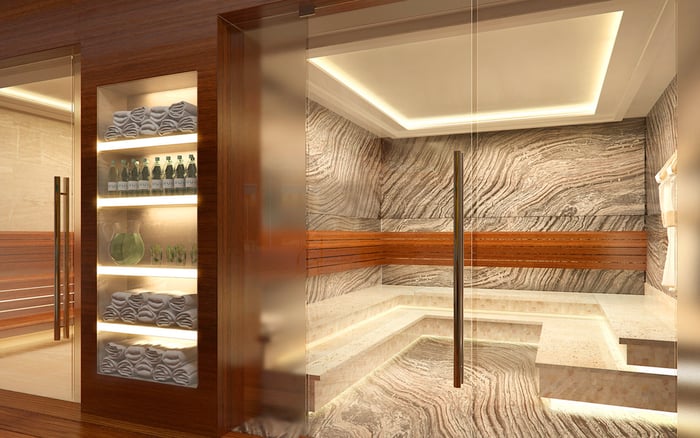
A collector-focused guide to the practical art-delivery questions buyers should ask at Muse Residences Sunny Isles Beach, from service elevators and loading access to glazing constraints and future art movement.
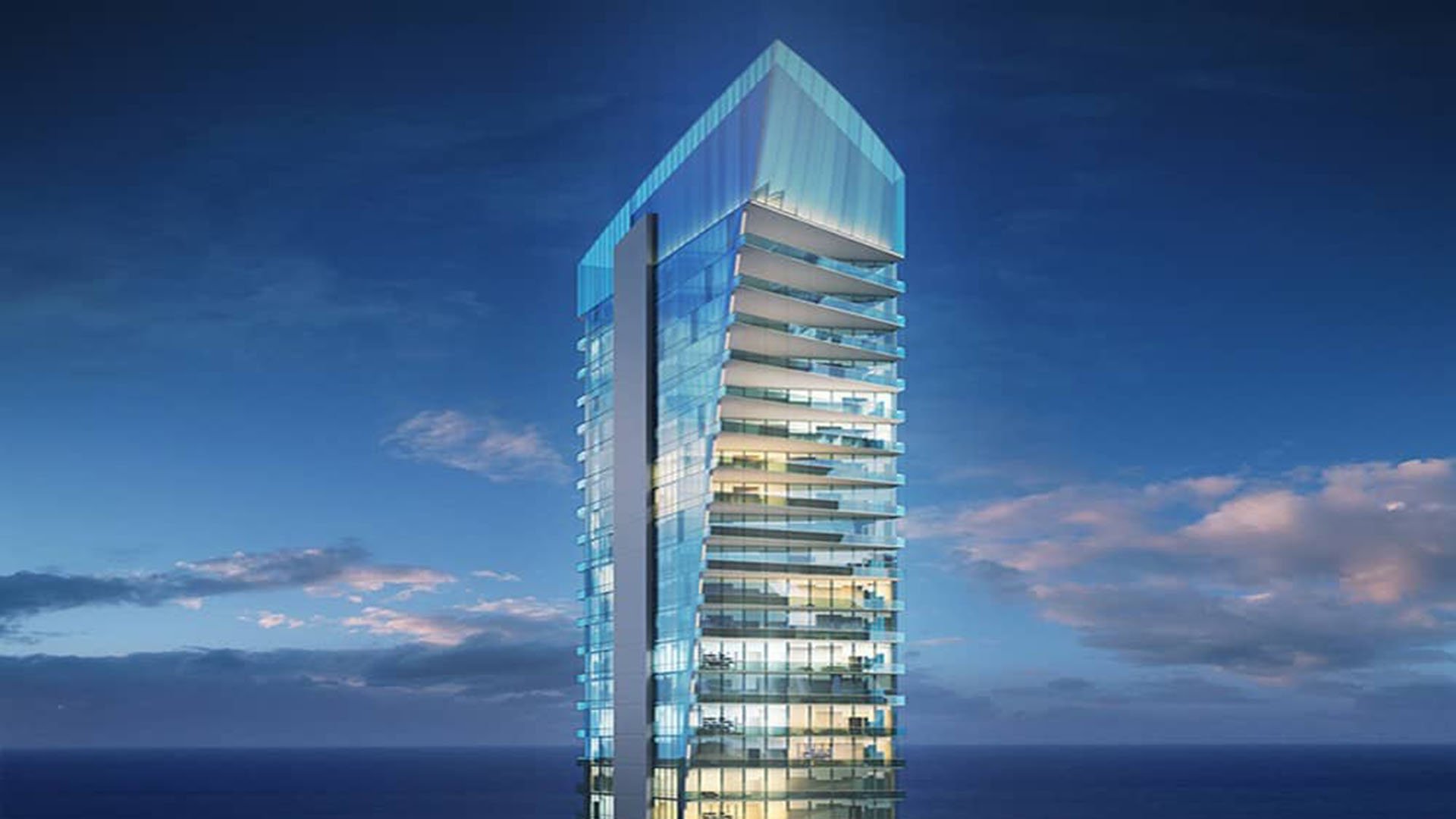
Muse Residences Sunny Isles Beach may speak to buyers who see a residence as more than a place to live. For collectors, however, the essential question is not only whether a room can present a painting, photograph, object, or sculpture beautifully. It is whether the building can physically receive, protect, and move the work without turning each installation into an exceptional operation.
A rendering can suggest scale, proportion, and drama. It cannot confirm whether a crated canvas, framed mirror, pedestal piece, or sculptural object can travel from a delivery vehicle to the residence through the approved service path. That distinction belongs in the purchase conversation before a buyer commits around a collection.
The collector’s lens is practical: what can move through the building’s normal infrastructure safely, repeatedly, and with predictable approval? A residence can look collection-ready in presentation materials while still requiring careful verification of service access, elevator dimensions, common-area rules, and delivery scheduling.
For buyers comparing South Florida residences, this is not a minor operational detail. It can affect acquisition planning, insurance coordination, installation timing, future loans, restoration pickups, and eventual deaccessioning.
The first verification point is the service elevator. Buyers should request the actual cab dimensions, door-opening dimensions, weight limits, protective-padding rules, and any restrictions on the cab’s interior configuration. A work that appears manageable on a floor plan can become difficult if its crate cannot enter, stand, turn, be secured, and exit safely.
Weight matters as much as height or length. Stone, bronze, large framed works, mirrors, and oversized crates may challenge the route differently than ordinary furnishings. An art handler’s concern is not simply whether the object fits at one point. The concern is whether it can move through the full sequence without pressure on the artwork, the crate, or the building finishes.
If a residence offers a private or direct arrival experience, buyers should still clarify whether art deliveries are permitted to use that path or must follow a separate service route. The most elegant resident arrival is not always the permitted delivery route, and that difference can matter for privacy, scheduling, and handling risk.
Art-delivery diligence should begin before the artwork reaches the lobby. Ask how delivery vehicles are staged, whether loading access is covered, what vehicle size can be accommodated, how long a delivery may remain on site, and whether appointments must be reserved in advance.
Then trace the entire route: loading area, service entrance, elevator lobby, elevator cab, corridor turns, threshold conditions, and the unit entry sequence. The route should be reviewed as one continuous path, not as isolated measurements. A generous display wall is not enough if the approach includes a tight turn, low soffit, narrow door, or limited staging area.
Collectors should measure crate dimensions, not only finished artwork dimensions. The crate may be larger, heavier, and less flexible than the piece itself. If a buyer already owns a major work that is central to the purchase decision, the review should be specific to that work rather than a general conversation about large-format art.
In South Florida, exterior systems deserve special caution. Buyers should not assume that a glass panel can be removed, a terrace can serve as an alternate entry point, or a crane can be used for an extraordinary installation. Any such approach may require building approval, technical review, insurance coordination, specialist contractors, and favorable site conditions.
The practical issue is not whether an extraordinary solution is imaginable. It is whether it is actually permitted, insurable, schedulable, and repeatable under the building’s rules. For a collector, uncertainty is not automatically a deal breaker. Unexamined uncertainty is the risk.
Before acquiring a residence around a particular oversized work, buyers should ask whether façade access, temporary panel removal, rigging, or crane delivery is addressed in the building’s procedures. If the answer is unclear, the buyer should treat that uncertainty as a diligence item, not a post-closing inconvenience.
A proper art-delivery review should include move policies, service-elevator specifications, loading procedures, certificate-of-insurance requirements, security protocols, elevator protection rules, and responsibility for damage to common areas. The more valuable the object, the less tolerance there should be for informal coordination.
Collectors should also think beyond the first move-in. Collections change through acquisitions, loans, reframing, restoration, rotation, sale, and deaccessioning. A residence that can accept one carefully planned delivery may still be frustrating if future movement requires exceptional negotiation every time.
The better question is not whether one artwork can get in somehow. It is what size and type of art can move through the standard infrastructure with predictable approvals and professional handling. That answer protects the collection, the residence, and the owner’s time.
Before committing to a residence around a collection, request the condominium rules and regulations, move-in and move-out procedures, service-elevator specifications, loading-area procedures, insurance requirements, security rules, and any policy that could affect rigging, façade access, or unusual deliveries.
Walk the route with the right people whenever possible. An experienced art handler, a building representative, and the buyer’s advisory team can evaluate the route more effectively than a buyer relying on presentation materials alone. Measure the critical points and compare them against actual crate dimensions.
Also confirm whether rules differ for initial move-in, routine deliveries, restoration pickups, and extraordinary installations. A highly managed building process can be a benefit when the buyer understands it in advance.
For a collector evaluating Muse Residences Sunny Isles Beach, the central diligence point is simple: make sure the invisible infrastructure supports the visible design ambition.
Is Muse Residences Sunny Isles Beach suitable for art collectors? It may appeal to collectors, but suitability depends on the verified delivery route, building rules, and service infrastructure for the specific works involved.
What is the first art-delivery item to verify? Start with service elevator dimensions, door openings, weight limits, and whether crated works can safely turn inside the cab.
Why does the loading area matter? The loading area determines how art enters the building, how vehicles are staged, and whether the delivery route is controlled and predictable.
Should buyers measure corridors and doorways? Yes. Corridor widths, ceiling heights, door clearances, and turning radii can determine whether a large work can reach the residence.
Can a terrace be used for oversized art delivery? Buyers should not assume so. Terrace access, façade work, glass removal, or crane use requires specific permission and technical feasibility.
Why is hurricane glazing important? Hurricane-rated exterior systems can limit assumptions about temporary openings, panel removal, and extraordinary installation methods.
What documents should a buyer request? Ask for move policies, elevator specifications, loading procedures, insurance requirements, security rules, and any rigging or façade-access policies.
Do private elevators solve art-delivery concerns? Not necessarily. A private arrival sequence may support discretion, but art deliveries may still be required to use a service route.
Why plan for future art movement? Collections evolve through acquisitions, loans, restoration, reframing, rotation, and sales, so repeat access matters as much as the initial move.
What is the key buyer question? Determine what size and type of artwork can move through the standard infrastructure without extraordinary measures.
When you're ready to tour or underwrite the options, connect with MILLION.
If branded residences are on your mind — as a home or as an allocation — we would be glad to share what we are seeing, privately.
Begin a quiet conversation