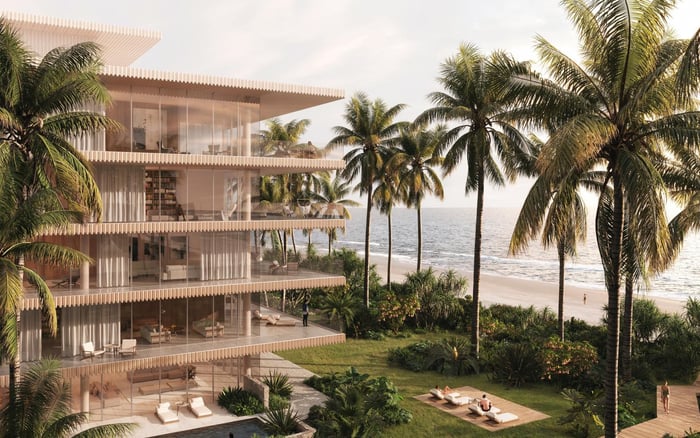
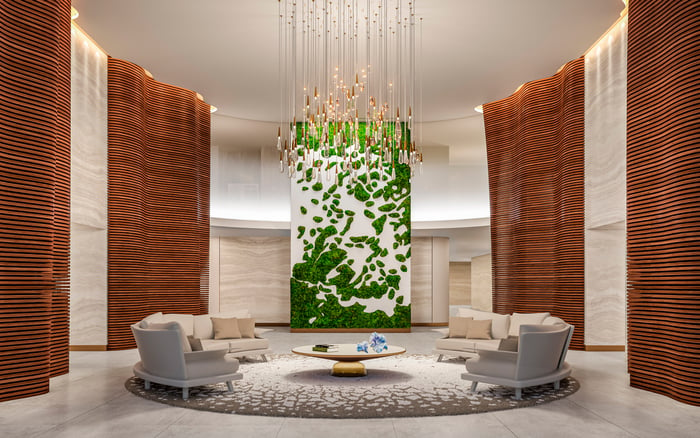
A discreet guide for full-time Boca Raton owners evaluating family-oriented amenities, teen spaces, guest-suite access, and the everyday policies that shape daily life at Mr. C Residences Boca Raton and Alina Residences Boca Raton.

For seasonal buyers, amenities are often evaluated in snapshots: a pool afternoon, a holiday visit, a weekend with relatives. For full-time owners considering Mr. C Residences Boca Raton and Alina Residences Boca Raton, the inquiry should be more disciplined. The question is not simply whether a building feels polished. It is whether the private and shared spaces support school mornings, visiting grandparents, adolescent independence, remote work, dinner guests, pets, and the occasional need for quiet separation.
That distinction matters in Boca Raton. The city attracts buyers who want refinement without surrendering routine. Many are relocating from Miami, Broward, New York, Chicago, or abroad with the intention of living in the residence as a primary home. They are not merely comparing architecture and service culture. They are studying how a building functions at 7:30 a.m., after practice, during exams, and when guests arrive for a long weekend.
With an empty Fact Table, the prudent approach is to avoid assuming the exact amenity inventories or policies at either property. Instead, buyers should use the topic as a framework for due diligence. Family amenities, teen spaces, and guest-suite access can be decisive, but only when the rules behind them are understood.
In a luxury residence, family amenities should be measured by usability rather than novelty. A dramatic lounge is valuable if it accommodates real life: homework at a table, a quiet conversation between parents, a casual birthday gathering, or a place for grandparents to sit comfortably while children swim nearby. A children’s area matters less as a brochure feature than as a space that remains appropriate across ages.
For full-time owners, the first test is scheduling. Ask when shared spaces open, when they close, whether they require reservations, and how many guests may accompany residents. If a room is frequently booked for private events, it may be less useful for everyday family life. If a lounge has age restrictions, supervision requirements, or limits on food and beverage, those details should be weighed before purchase.
The second test is adjacency. Families should study how amenity zones relate to elevators, lobbies, garages, restrooms, and outdoor areas. A pool deck that is beautiful but operationally disconnected from shaded seating, restrooms, or indoor cooling may feel less convenient over time. Similarly, a family room that requires crossing a formal lobby may not function as casually as expected.
The third test is acoustic separation. In full-time buildings, sound management is a luxury. Parents want children to be welcome without feeling exposed, and owners without children want calm preserved. The best amenity planning gives different generations room to coexist.
Teen spaces are not simply larger playrooms. They need flexibility, independence, and enough design sophistication that young residents actually use them. For buyers comparing Mr. C Residences Boca Raton and Alina Residences Boca Raton, this is where questions should become specific.
Can teens gather without constant parental intervention? Is there comfortable seating that encourages conversation rather than only screen time? Is there a place to study, take a call, or meet a tutor? Are hours compatible with school schedules? Is there staff oversight, camera coverage, or a reservation protocol that protects both safety and privacy?
A strong teen environment also relieves pressure inside the residence. Even a generous condominium can feel smaller when children grow older and social patterns change. A well-managed common area gives teens an acceptable place to host friends without turning the family living room into the default venue every afternoon.
Buyers should also think about the transition years. A space that works for a 12-year-old may not work for a 17-year-old. The best answer is not always a room labeled for teens. It may be a library, media lounge, multipurpose salon, club room, or outdoor terrace with rules that allow responsible use.
Guest suites, if offered, can be meaningful for full-time owners. They allow relatives and close friends to stay nearby without requiring a larger residence or constant in-unit hosting. For multigenerational families, that flexibility can influence floor-plan selection and even the decision to buy.
But guest-suite access is only as useful as the policy behind it. Buyers should confirm whether suites exist, who may reserve them, how far in advance reservations open, how many nights are permitted, whether holiday periods are restricted, and whether owners have equal priority or tiered access. Fees, housekeeping protocols, cancellation rules, and guest check-in procedures also matter.
The most overlooked issue is availability. A building may have elegant guest accommodations, yet demand can overwhelm supply during school breaks, holidays, charity weekends, and peak season. Full-time owners should avoid treating shared guest suites as a guaranteed substitute for an extra bedroom unless the reservation history and rules support that assumption.
It is also wise to ask how guests move through the property. A discreet arrival experience, clear access controls, and thoughtful separation from private residential areas can preserve both hospitality and security.
Mr. C Residences Boca Raton and Alina Residences Boca Raton will naturally appeal to buyers who want a refined residential setting in one of South Florida’s most established luxury markets. Yet the right choice for a full-time household may depend less on brand personality and more on daily fit.
A family with younger children may prioritize ease of circulation, shaded outdoor space, service responsiveness, and practical storage. A household with teenagers may focus on supervised independence, study-friendly common areas, and guest policies that support visiting friends or relatives. Empty nesters who expect frequent family visits may view guest-suite access, valet flow, and elevator convenience as more important than children’s programming.
New-construction buyers should remember that early decisions have long consequences. Review draft association documents, amenity rules, reservation systems, pet policies, and any available operating assumptions. Ask how management intends to balance privacy with liveliness. A building that feels serene during a presentation may operate very differently once fully occupied.
Private-school calendars can also shape amenity demand. Exam periods, athletic seasons, winter breaks, and summer travel all affect how family spaces are used. Buyers with school-age children should imagine the building not only during a tour, but during the most ordinary week of the year.
Before committing, request clarity in writing where possible. Ask whether family spaces are dedicated or multipurpose. Ask whether teen use is encouraged, restricted, supervised, or handled case by case. Ask how owners may reserve social rooms, whether outside guests are allowed, and whether private instructors, tutors, chefs, or childcare providers may enter amenity areas.
For guest suites, if applicable, ask about reservation priority, nightly costs, maximum stay, housekeeping, taxes or service charges, cancellation terms, blackout periods, and whether guests may use other amenities while staying. For pool and outdoor areas, ask about guest limits, food service rules, music policies, towel service, and weather-related closures.
These questions are not signs of hesitation. They are signs of serious ownership. In Boca Raton’s luxury market, the most confident buyers are often the most exacting about daily operations.
Do family amenities matter more for full-time owners than seasonal owners? Yes. Full-time owners use shared spaces during ordinary weeks, not just holidays, so hours, access, supervision, and convenience become more important.
Should buyers assume Mr. C Residences Boca Raton has guest suites? Buyers should not assume. Confirm directly through current project materials and governing documents before relying on guest-suite access.
Should buyers assume Alina Residences Boca Raton has teen spaces? Buyers should verify the exact amenity program, age rules, and operating policies before treating any space as teen-oriented.
What is the most important question about teen spaces? Ask whether teens can use the space comfortably and safely without disrupting other residents or requiring constant parental presence.
Why are reservation rules important for guest suites? Availability can be limited during peak periods, so reservation windows, stay limits, fees, and blackout dates determine real usefulness.
How should families evaluate a pool deck? Look beyond aesthetics and study shade, restrooms, guest rules, supervision expectations, seating, and proximity to indoor areas.
Are guest suites a substitute for buying an extra bedroom? Not automatically. Shared guest accommodations, if available, should be treated as supplemental because access may depend on demand and rules.
What documents should buyers review before purchasing? Review association documents, amenity rules, reservation policies, pet policies, and any written guidance on guest access.
Do pets affect family amenity decisions? Yes. Pet rules, elevator etiquette, outdoor access, and cleaning standards can shape daily comfort for families and neighboring owners.
Is one project automatically better for families? Not without verified policies and a household-specific review. The better fit depends on routines, ages, guests, service expectations, and privacy needs.
For a confidential assessment and a building-by-building shortlist, connect with MILLION.
If branded residences are on your mind — as a home or as an allocation — we would be glad to share what we are seeing, privately.
Begin a quiet conversation