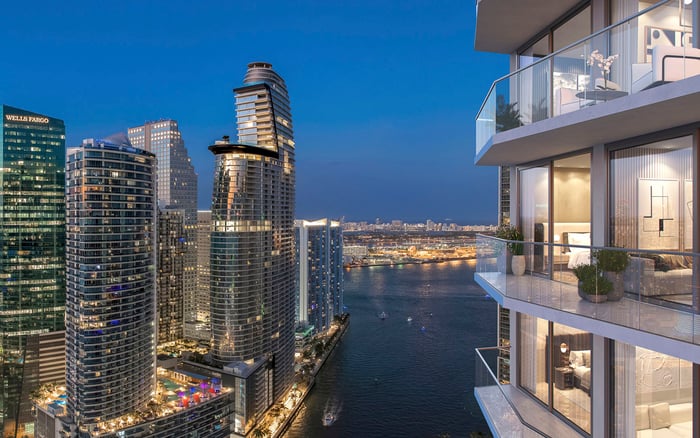
A discreet, buyer-focused guide for New York luxury purchasers evaluating Miami real estate, from neighborhood fit and condo governance to climate diligence, service expectations, and long-term ownership strategy.

For a New York buyer, Miami can feel immediately legible: vertical living, private lobbies, appointment-led hospitality, and a social calendar shaped by proximity. Yet the best purchases are rarely made by translating a Manhattan or Brooklyn framework directly onto South Florida. Miami has its own logic. Light, exposure, building services, water access, parking, privacy, and outdoor living all carry different weight.
The most successful buyers begin by separating emotion from assumption. A dramatic view may matter less than elevator privacy. A glamorous address may be less important than how the building manages guests, deliveries, maintenance, and seasonal occupancy. A large terrace may be exceptional, but only if its orientation, depth, and usability suit the way you actually live.
Miami is not simply a destination purchase. For many luxury buyers, it becomes a primary base, a second home, or a flexible family compound. The question is not only whether the residence is beautiful. It is whether the property can support your calendar, your household, your advisers, and your long-term plans.
New York buyers are accustomed to comparing blocks with forensic intensity. In Miami, the equivalent exercise is broader and more lifestyle-driven. Brickell offers a dense urban rhythm, high-rise living, private amenities, and immediate access to dining and business life. Miami Beach has a more resort-oriented identity, with proximity to sand, design, wellness, and cultural energy. Coconut Grove is quieter, greener, and more residential in feeling. Aventura can appeal to buyers who want space, convenience, and a northern corridor position.
The essential exercise is to map a normal week. Where will you dine on a Tuesday? Where will children go to school? How often will you fly? Will you keep a car, driver, boat, or staff? Do you want to walk downstairs into activity, or return to privacy after a public day? Miami rewards buyers who think in routines rather than postcards.
This is especially important for households moving from New York, where convenience is often measured by subway access, building staff, and neighborhood density. In Miami, convenience may mean valet efficiency, garage access, bridge patterns, marina proximity, school runs, or the ease of moving between the mainland and the beach.
In New York, sophisticated buyers are used to board packages, building financials, and house rules. Miami requires the same seriousness, expressed through a different ownership culture. Before buying, review the condominium documents, budget, reserve posture, insurance structure, rental rules, pet policies, renovation procedures, and approval requirements with qualified advisers.
Luxury should not distract from governance. A building can have a beautiful lobby and still merit exacting review. Ask how capital projects are handled, how assessments are communicated, how service standards are maintained, and how security, valet, housekeeping, and management teams operate during peak season.
For buyers who expect white-glove consistency, staffing is not a minor detail. The difference between a good building and an exceptional one often appears in quiet moments: how quickly an elevator issue is handled, how discreetly guests are received, how packages are managed, and how seamlessly an owner can arrive after weeks away.
Miami’s relationship with sun, wind, water, and humidity shapes the luxury experience. That does not mean a buyer should be cautious to the point of paralysis. It means the physical realities of the environment should be part of the purchase analysis from the first showing.
Balcony orientation, glass quality, mechanical systems, shade, storage, storm procedures, and building maintenance all matter. A residence with brilliant morning light may live differently from one with stronger afternoon exposure. A waterfront home may offer unforgettable views, but it should also be evaluated for insurance, elevation, maintenance, and access considerations.
New York buyers often focus first on interior finish. In Miami, the building envelope and the performance of outdoor areas deserve equal attention. Terraces, summer kitchens, pools, boat facilities, and landscaped spaces can define the ownership experience. They should be reviewed with the same discipline one would bring to a kitchen, primary suite, or art wall.
New-construction can be compelling for buyers who want contemporary layouts, wellness amenities, fresh infrastructure, and a more turnkey transition. It may also require patience, contract discipline, and careful review of deposit structure, delivery expectations, finish packages, and closing obligations.
Resale can offer immediacy, established building culture, and the ability to evaluate a finished residence in real time. It may also require renovation planning, furniture strategy, and a realistic understanding of what can be changed within building rules. In either case, the strongest buyers do not confuse speed with certainty.
A New York seller arriving with liquidity can be attractive in a competitive negotiation, but cash should not replace diligence. A clean offer, thoughtful contingencies, proof of funds, and a decisive timeline can matter. So can restraint. The most expensive mistake is not losing a property. It is buying the wrong one quickly.
Investment thinking in Miami should be grounded in use case, not only appreciation hopes. If the property will serve as a primary residence, quality of life has tangible value. If it will be a seasonal residence, ease of lock-and-leave ownership becomes central. If rental flexibility is important, rules must be examined before the offer, not after closing.
Do not assume that every luxury building welcomes the same rental strategy, guest pattern, or ownership rhythm. Some buildings are designed for quiet permanence. Others are more flexible. The correct fit depends on how you intend to use the property and how much privacy you require.
Buyers should also evaluate carrying costs with care. Monthly obligations, insurance, staff, maintenance, parking, club access, marina considerations, and possible future building work can meaningfully affect the ownership picture. A residence that feels attractively priced at contract can feel different once the full operating profile is understood.
For ultra-premium buyers, privacy is often more valuable than ornament. Study the arrival sequence. Can guests and service providers be separated? Is the garage discreet? Are elevators shared or private? How visible is the residence from neighboring buildings or public areas? How does the building handle high-profile owners without theater?
Security should feel calm, not oppressive. The most refined buildings combine careful access control with hospitality. Staff should know when to appear and when to disappear. For buyers accustomed to the best New York co-ops, private clubs, or full-service condominiums, this dimension will determine whether Miami feels effortless or exposed.
Staffing outside the building is also part of the transition. House managers, drivers, chefs, art handlers, yacht teams, tutors, and wellness professionals may need to be coordinated differently than in New York. A property that supports that ecosystem gracefully will function better over time.
A Miami purchase can move quickly, particularly when a desirable residence aligns with a serious buyer’s needs. Before that moment arrives, assemble the advisory circle: real estate representation, legal counsel, tax guidance, insurance expertise, financing support if relevant, and inspection or construction specialists.
Residency planning should be coordinated carefully. The purchase of a home may be one part of a broader personal, financial, and family transition. Timing, documentation, estate planning, school enrollment, business presence, and travel patterns can all intersect. The residence should support the plan, not force it.
The best approach is disciplined but not rigid. Know your non-negotiables, understand your tolerances, and be prepared to act when a property aligns. Miami rewards clarity. It also rewards patience.
Before submitting an offer, confirm the essentials: the building’s rules, the financial obligations, the physical condition, the insurance environment, the renovation potential, the parking arrangement, the view protection, and the service culture. Then test the softer questions. Does the residence feel private? Does it suit entertaining? Does the morning routine work? Can you arrive from the airport and feel at home within minutes?
For New York buyers, the most valuable shift is psychological. Miami living is less about compressing life into efficiency and more about curating flow. The right property should make daily life easier, not merely warmer. It should offer beauty, yes, but also discretion, resilience, and a sense of personal ease.
Should New York buyers rent before buying in Miami? Renting can help clarify neighborhood rhythm, but strong buyers may choose to purchase directly when their lifestyle requirements are already well defined.
Is Brickell the best fit for former Manhattan residents? Brickell can feel familiar to buyers who want vertical living and urban energy, but it is not the only sophisticated option.
Should I prioritize waterfront views or building quality? Ideally both, but building quality, governance, and service should never be sacrificed for a view alone.
How important is outdoor space in Miami? Outdoor space can be central to the lifestyle, but orientation, privacy, shade, and usability matter as much as size.
Is new-construction always better than resale? No. New-construction may offer modern systems and amenities, while resale may offer immediacy and a proven building culture.
What should I review before buying in a condominium? Review rules, budgets, insurance, reserves, assessment history, rental policies, pet policies, and renovation procedures with advisers.
Can a Miami property work as a second home? Yes, if the building supports lock-and-leave living, reliable management, privacy, and the owner’s seasonal schedule.
Is Aventura a serious option for luxury buyers? Aventura can be relevant for buyers seeking convenience, space, and access to the northern part of the market.
How should investment considerations be weighed? Investment should be evaluated alongside personal use, carrying costs, rental rules, and long-term ownership flexibility.
What is the biggest mistake New York buyers make? The biggest mistake is assuming Miami operates like New York, rather than evaluating lifestyle, climate, governance, and service on their own terms.
To compare the best-fit options with clarity, connect with MILLION.
If branded residences are on your mind — as a home or as an allocation — we would be glad to share what we are seeing, privately.
Begin a quiet conversation