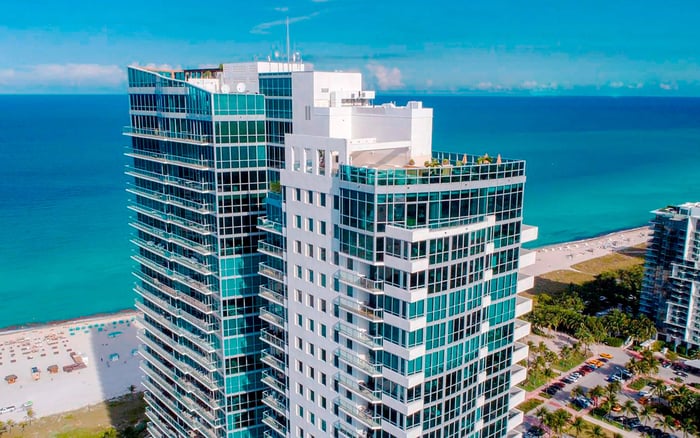
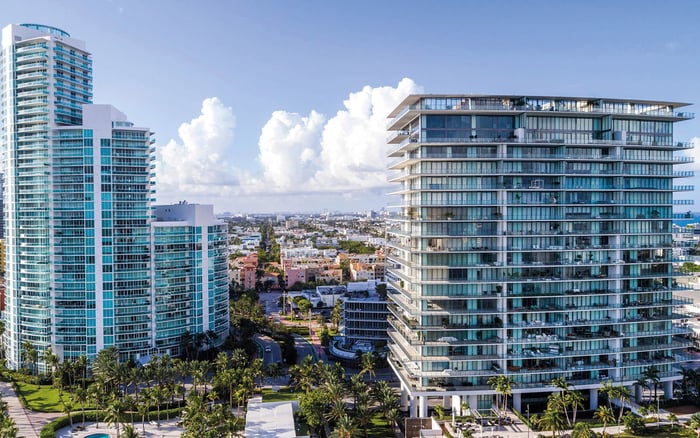
A discreet buyer’s guide to evaluating staff-entry design, service circulation, elevator protocol and privacy before purchasing a luxury residence in South of Fifth.

In South of Fifth, the most valuable luxury is often not visible from the lobby. It is the calm behind the door, the ease with which a household operates, and the quiet separation between private life and service life. Staff-entry design sits at the center of that experience.
For buyers comparing South of Fifth, Sofi and the broader Miami Beach market, the question is not simply whether a residence has a service entrance. The more important question is whether the building and floor plan have been choreographed for discreet movement. A staff-entry door that opens into the wrong corridor, a delivery route that crosses the formal foyer, or an elevator protocol that feels improvised can erode the privacy premium buyers expect.
In a trophy residence, service design should feel invisible, intuitive and consistent with the way the owner actually lives.
Begin with the exact point of entry into the residence. Does the staff entrance connect to a kitchen, laundry room, service gallery, secondary vestibule or utility corridor? Or does it open too close to the main living areas? The answer reveals whether the plan was designed for real household operations or merely labeled for marketing.
Ask to walk the route in person. Stand at the staff-entry door and imagine a private chef arriving with provisions, a housekeeper moving linens, a dog walker returning from the elevator, or an art handler coordinating access. The route should be direct, legible and separated from the formal arrival sequence.
At buildings such as Apogee South Beach, buyers often focus on scale, views and privacy. Apply the same discipline to how people move through the residence when the owner is entertaining, resting or working from home.
A credible staff-entry strategy begins before the apartment door. Ask how staff, vendors and deliveries move from the street, garage, loading area or reception desk to the residence. If the answer depends on multiple handoffs or vague discretion, probe further.
Questions should be practical. Is there a defined building entry for household staff? How are recurring staff members registered? Are groceries, flowers, wardrobe deliveries and catered events handled through the same path? Does the building separate resident arrival from vendor movement during peak hours?
The best routes feel natural to staff and invisible to the resident. They also reduce friction for building personnel, which matters in a boutique or high-touch environment. When evaluating Continuum on South Beach or any comparable address, do not let ocean views distract from the daily mechanics of arrival, clearance and service circulation.
The floor plan should support privacy after service staff enter the home. Look for a buffer between service areas and entertaining spaces. A true secondary zone may include laundry, storage, catering support, staff restroom access, pantry circulation or a discreet path to the kitchen. The point is not to hide people. It is to let the home function gracefully under real conditions.
Pay attention to acoustics. Can conversations in the primary suite be heard from the service corridor? Does the kitchen carry sound into the dining room when staff are preparing for a dinner? Does a secondary door close softly and securely? Luxury is often measured by what does not interrupt the day.
Sightlines are equally important. From the staff-entry door, what is immediately visible? A direct view into the living room, terrace, bedroom corridor or art wall may not suit a privacy-minded buyer. A stronger plan uses turns, vestibules and millwork to create pause and discretion.
Ask whether the residence has access to a service elevator, semi-private elevator or shared elevator protocol. The distinction matters less as a label than as an operating reality. A building may have elegant hardware, but if staff and residents are constantly sharing the same vertical path at sensitive times, the experience can feel less composed.
Clarify how move-ins, maintenance, catering, floral installations and pet care are scheduled. If the building has strict procedures, ask whether they are convenient or cumbersome. If procedures are loose, ask how privacy is protected during busy periods.
Buyers considering The Ritz-Carlton Residences® South Beach may naturally study amenity programming and residence finishes. Direct the same attention to staff movement, because service discipline is part of the ownership experience.
In the ultra-premium market, sophisticated buyers recognize that back-of-house planning affects long-term desirability. A beautiful residence can feel compromised if every delivery disrupts the main entry, or if staff circulation requires awkward coordination. Conversely, a well-planned secondary entry can make a home feel larger, calmer and more adaptable.
This is especially relevant for owners who entertain often, travel frequently, maintain a second home, or rely on household staff. It can also matter for buyers who value security. Separate, trackable movement helps preserve privacy without making the home feel defensive.
When comparing new and established residences across Miami Beach, including addresses such as Five Park Miami Beach, ask your advisor to review not only the floor plan but the building’s actual operating culture. Policies, staffing and architecture should reinforce one another.
Before committing, ask for the floor plan with all entry points identified. Confirm whether the staff-entry route is part of the legal residence layout, a building procedure, or a practical convention. Ask how access is controlled, whether staff credentials can be managed separately, and how visitor logs are handled.
During a showing, request a full service-route walkthrough. Start at the most likely arrival point for staff or vendors, proceed through security, continue to the elevator or corridor, and enter the residence through the secondary door. If the route feels awkward during a quiet tour, it may feel worse during a catered evening or holiday weekend.
Finally, ask how the design serves your specific household. A collector, a host, a family with children, a seasonal resident and an owner with live-in support may all require different circulation patterns. The right South of Fifth residence is the one whose private architecture matches your private life.
Is a staff entrance essential in South of Fifth luxury real estate? It is not essential for every buyer, but it can meaningfully improve privacy, service flow and resale appeal for larger or highly serviced residences.
What is the first staff-entry question I should ask during a showing? Ask to walk the complete route from curb or garage to the secondary entry inside the residence.
Should staff enter through the kitchen? Often that is practical, but the better question is whether the path supports privacy, storage, deliveries and household routines without crossing formal spaces.
How does elevator access affect staff-entry design? Elevator protocol determines how discreetly staff, vendors, deliveries and residents move through the building at the same time.
Can a floor plan look good but function poorly for staff access? Yes. A labeled service door may still create awkward sightlines, noise transfer or inefficient circulation.
What should I ask about deliveries? Ask how groceries, flowers, catered events, packages and wardrobe deliveries are cleared, routed and brought into the residence.
Does staff-entry design matter for owners without full-time staff? Yes. Housekeepers, pet care, maintenance, chefs, drivers and event vendors can all affect daily privacy.
How can I judge privacy from the staff entrance? Stand at the secondary door and note what is visible, audible and accessible from that point.
Should building rules influence my purchase decision? Absolutely. Strong architecture needs clear operating policies to make staff movement feel seamless.
Can staff-entry design affect resale value? It can support desirability among sophisticated buyers who understand how service circulation shapes everyday luxury.
For a tailored shortlist and next-step guidance, connect with MILLION.
If branded residences are on your mind — as a home or as an allocation — we would be glad to share what we are seeing, privately.
Begin a quiet conversation