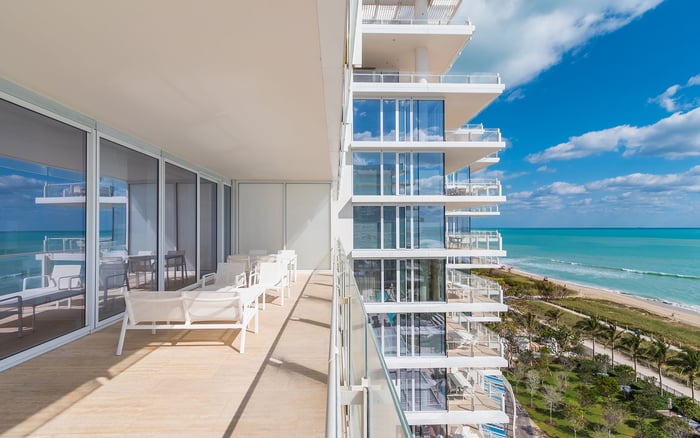
A disciplined residential budget for a move to Fort Lauderdale separates property taxes, condominium dues, service charges and capital obligations. These illustrative benchmarks help family-office buyers frame the right questions before committing.

For a family office moving from Jackson Hole to Fort Lauderdale, the residential decision deserves its own balance sheet. The purchase price defines the acquisition commitment; taxes, association obligations and household services define the annual cost of living well. A waterfront address is easier to evaluate when those obligations are separated rather than compressed into one reassuring estimate.
This guide concerns the family's South Florida residence-not office leases, payroll, entity relocation or business operations. Its tax illustration and condominium fee ranges are planning references, not an all-in budget. The objective is to distinguish recurring commitments from usage-based spending and capital demands before selecting a home.
The most useful comparison is not simply which residence costs less. It is which expenses are predictable, which depend on household preferences and which require liquidity beyond the ordinary annual allowance.
Market value, assessed value and taxable value are distinct concepts. Before estimating the annual tax bill for a Fort Lauderdale residence, establish the property's applicable taxable base rather than automatically treating its purchase price as taxable value.
For Fort Lauderdale, a 2025 planning benchmark of 18.4545 mills applied to an assumed $5 million taxable base produces approximately $92,273 annually. This is not a forecast derived solely from a $5 million purchase price, and a dated benchmark should not substitute for a current parcel review.
An additional approximately 0.97 mills applies to properties within the Downtown Development Authority zone. Confirm the actual taxing district and applicable charges for the Broward property under consideration. A lower millage figure does not necessarily mean a lower bill when the taxable bases differ.
For larger waterfront luxury condominiums and penthouses in Fort Lauderdale, a broad planning range is roughly $1,500 to $5,000 or more monthly, equivalent to $18,000 to $60,000 or more annually. These amounts are useful for initial screening, not for approving an acquisition.
Building insurance, common-area maintenance, security and amenities are common association-fee inclusions. Some buildings also include utilities or internet. The question is not merely how much the monthly fee is, but which expenses it replaces and which remain payable separately.
Illustrative dues figures for Selene East Tower span $1,373 to $5,404 monthly, or $16,476 to $64,848 annually, with internet among the inclusions. Figures for Pier Sixty-Six span $3,238 to $6,326 monthly, or $38,856 to $75,912 annually; inclusions cover common areas, grounds maintenance and structural maintenance. Neither range is an association-certified budget for a selected unit.
When evaluating Sixth & Rio Fort Lauderdale, request the proposed unit's own dues statement and approved budget rather than importing a neighboring building's cost assumptions. Apply the same discipline to every address on the shortlist.
Combining the illustrative Fort Lauderdale tax figure of approximately $92,273 with the broad luxury-dues range produces a tax-and-dues subtotal of approximately $110,273 to $152,273 or more annually. This is a calculation using planning assumptions, not a quote for any particular residence.
The subtotal excludes separately payable insurance, utilities, repairs, household staffing and discretionary services. It also excludes special assessments and service charges outside dues. The presence of building insurance in an association budget does not establish that every owner-level insurance need is covered.
For decision-making, organize the residential ledger into recurring taxes and dues, separately contracted household expenses, usage-based services and capital obligations. Assign each charge once. This makes residences with different service packages more comparable and shows which portions of annual spending remain within the family's control.
Service charges and gratuities belong on different lines in the household ledger. Record mandatory charges from the written schedule; treat discretionary gratuities as a separate household policy. Do not assume one replaces the other without written clarification.
For a buyer considering Four Seasons Hotel & Private Residences Fort Lauderdale, request a clear schedule distinguishing services included in association dues from those billed separately. This is a diligence requirement, not a statement about the property's current charges.
Ask for written valet, dock and amenity fee schedules wherever applicable. Clarify billing frequency, usage conditions and any automatic service charge before setting spending authority for household staff. There is no defensible universal annual gratuity allowance to apply here. Base the allowance on the family's intended service use and confirmed property policies.
Structural reserve studies and reserve-funding obligations under post-Surfside legislation can affect condominium carrying costs. Funding pressure may appear through higher recurring dues, separate special assessments or both. A low monthly payment alone does not establish long-term affordability.
Separate operating expenses from reserve contributions in the association budget. If reserve contributions are already included in dues, do not count them again as a second annual expense. Nor should a planned contribution be confused with growth in the reserve balance: capital spending can reduce that balance even while owners continue contributing.
No fixed reserve-growth percentage or dues-escalation forecast belongs in this comparison. For St. Regis® Residences Bahia Mar Fort Lauderdale or another shortlisted property, request the applicable reserve documentation rather than assuming a funding outcome from the address or brand. Have qualified advisers confirm current legal applicability and obligations for the specific condominium.
Before committing, obtain the unit's current dues statement, approved association budget, reserve study, reserve balances and assessment notices. Reconcile those materials with written service schedules and the property's tax assumptions. Have advisers distinguish what is currently payable, what has been approved and what remains contingent.
The strongest residential budget is not the smallest number. It is the one that makes recurring commitments clear, avoids duplicate charges and keeps capital exposure visible. That clarity allows lifestyle preferences to guide the choice without obscuring its financial consequences.
Explore your Fort Lauderdale residential options with MILLION.
If branded residences are on your mind — as a home or as an allocation — we would be glad to share what we are seeing, privately.
Begin a quiet conversationNo. It addresses residential household costs in South Florida, not office leases, payroll, entity relocation or business operating expenses.
No; it excludes separately payable insurance, utilities, repairs, household staffing and discretionary services. Special assessments and service charges outside dues also remain separate.
No. That illustration applies a 2025 benchmark of 18.4545 mills to an assumed $5 million taxable base, not automatically to a $5 million purchase price.
Properties within the Downtown Development Authority zone have an identified additional approximately 0.97 mills. Confirm the selected property's actual district and current applicable charges before budgeting.
For larger waterfront luxury units and penthouses in Fort Lauderdale, a broad planning range is $1,500 to $5,000 or more monthly. That equals $18,000 to $60,000 or more annually, subject to unit-specific confirmation.
Common inclusions are building insurance, common-area maintenance, security and amenities. Some buildings include utilities or internet, but each unit's documents should establish the actual coverage.
No. They are illustrative ranges and should not replace the selected unit's current dues statement and approved association budget.
Record mandatory charges from written property schedules and keep discretionary gratuities separate. Set the gratuity allowance using the family's intended service use and confirmed property policies rather than a universal figure.
Identify them separately for analysis, but do not add them twice if they are already included in dues. Review special assessments separately and distinguish contributions from changes in the reserve balance.
Obtain the current dues statement, approved budget, reserve study, reserve balances and assessment notices. Also request applicable written valet, dock and amenity fee schedules.