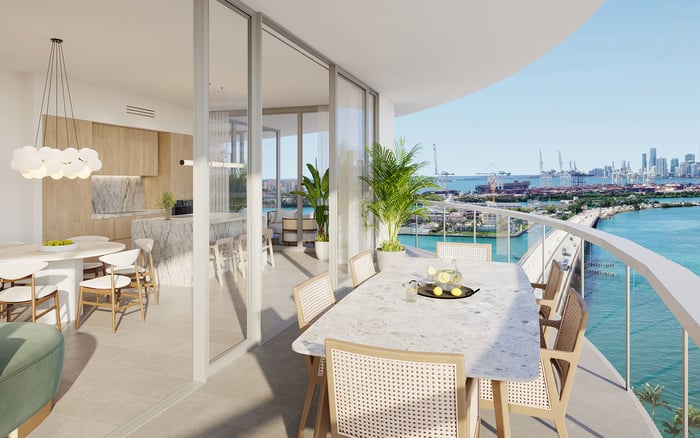
For buyers considering a move from Monaco to a Miami Beach second residence, the most useful comparison is an ordinary day. Test door-to-door routines, building operations and ownership obligations before deciding whether an address genuinely suits your life.

For a buyer coming from Monaco and considering Miami Beach, the meaningful comparison begins beyond the apartment. It starts with the scale of an ordinary day: leaving home for breakfast, meeting friends, receiving guests and returning without turning a simple outing into an itinerary. A second residence should support the life its owner intends to lead, not merely provide an impressive setting.
Keep the search focused on the Miami Beach addresses under consideration rather than treating the wider South Florida region as a single neighborhood. Define the destinations that matter to you, then assess how each candidate residence connects them. Familiar routines in Monaco can provide a personal benchmark without becoming assumptions about how life in Miami Beach will work.
Citywide population and density figures cannot establish the privacy, noise, service quality or walkability of a particular residence. Those experiences require evaluation at the address and building level.
A buyer considering Five Park Miami Beach should assess the actual arrival sequence and intended daily destinations, rather than treating a general impression of the city as a promise of seclusion. Observe the residence entrance and the routes you expect to use. Separate what you experience during a viewing from what remains to be verified.
The number of people who live in a place does not fully describe the activity experienced during a stay. Nor should a citywide average predict conditions outside a particular entrance at a particular hour.
When evaluating Setai Residences Miami Beach, visit at the times you expect to use the residence. Observe the approach, wait for a vehicle if that is part of your routine, and repeat an outing after dinner. The purpose is not to label an address busy or quiet, but to understand whether its rhythm matches yours.
Consider the experience of guests as well as owners. Test where a visitor would arrive and ask how access would be arranged. Do not assume the process matches the one you use at your existing home.
The strongest comparison is a rehearsal, not a map measurement. Select the outings that would define a normal stay: a morning walk, an appointment, dinner, a shopping trip and a guest arrival. Time each from the residence door to the destination, including time spent in elevators, parking or waiting for collection.
A general commuting statistic would not answer these questions. Your second-home routine needs its own assessment, based on the destinations and departure times you actually expect to use.
If The Perigon Miami Beach enters the shortlist, apply the same door-to-door test you would use when assessing your routine in Monaco. Consistency makes the comparison useful: identical tasks, realistic departure times and an honest assessment of how much planning each outing requires.
Geography sets the context; the building determines much of the ownership experience. Before deciding that a Miami Beach residence offers an easier second-home arrangement, establish how it would function during both occupancy and absence.
Ask who receives deliveries, how guests enter, what happens when an owner arrives outside normal staffing hours, and how maintenance access is authorized. Inspect the route from vehicle to residence rather than treating parking and elevators as separate features. Request the relevant rules in writing instead of relying on a viewing-day impression.
For a candidate such as The Ritz-Carlton Residences® Miami Beach, verify its arrangements against your requirements. The name alone cannot establish that a particular unit or operating model suits your household. Assess the proposed residence, not an imagined citywide standard of service.
A comparison of geography cannot answer questions about ownership costs or value. It does not establish apartment size, amenity quality or maintenance expense. Those conclusions require property-specific evidence.
For each candidate, review service charges, insurance, parking arrangements, elevator provision and any anticipated capital work. Investigate flood exposure and applicable insurance terms rather than assuming a waterfront setting has a uniform risk profile. If occasional letting forms part of the plan, confirm rental restrictions, including the rules that apply to the particular property.
Tax treatment requires a separate professional review. Do not treat a second-residence purchase as proof of residency or a predetermined tax outcome; ask qualified advisers to assess your circumstances.
The most revealing shortlist compares versions of the same life. Decide how often you will visit, how much movement you want during each stay, whether guests will use the home independently and how much administration you are willing to retain. Then test each residence against those expectations.
For a buyer arriving from Monaco, the goal is not to reproduce an entire destination in Miami Beach. It is to identify the address where a preferred routine works in practice and the obligations remain clear when the owner is away.
For a considered Miami Beach second-residence search shaped around your daily life, explore MILLION.
If branded residences are on your mind — as a home or as an allocation — we would be glad to share what we are seeing, privately.
Begin a quiet conversationUse your existing daily routine as a personal benchmark. Identify the destinations and building arrangements that a Miami Beach residence would need to support.
No. Evaluate privacy, noise and arrival conditions at the specific address rather than drawing conclusions from citywide figures.
Resident numbers alone do not describe what you will experience outside a building. Visit at the hours you expect to arrive, leave and entertain.
Include elevators, parking and any wait for a vehicle, not just the trip between map locations. Repeat the test at realistic departure times.
A commuting average is not a substitute for testing your own outings. Assess the journeys you expect to make during a normal stay.
Verify the particular unit and building arrangements against your household's needs. Do not infer service provisions from the name alone.
Ask about deliveries, guest entry, arrival procedures and maintenance access. Request the relevant rules in writing.
Review service charges, insurance, parking arrangements and anticipated capital work. Investigate property-specific flood exposure and applicable insurance terms.
Confirm the restrictions that apply to the specific property. Do not assume that a proposed rental arrangement is permitted.
Do not treat the purchase as proof of residency or a predetermined tax result. Obtain professional advice based on your individual circumstances.