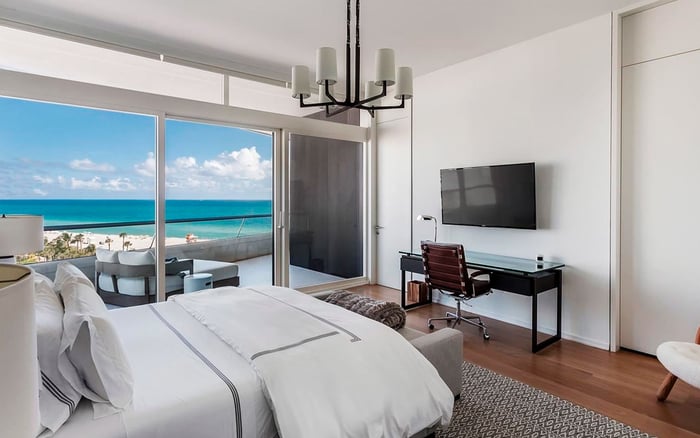
A Miami Beach residence should perform as elegantly during Art Basel as on an ordinary weekend. This buyer checklist connects the event calendar with documented amenity capacity, reservation priority, guest allowances, and practical arrival planning.

A Miami Beach residence can be an address, a retreat, and a base for the cultural calendar. For buyers who arrive around major events, however, the decisive luxury is not simply an impressive amenity collection. It is being able to use those amenities when the household and its guests are in residence.
The event calendar should therefore sit beside the floor plan during due diligence. Art Basel Miami Beach 2026 is scheduled for December 4-6. The Miami Marathon, South Beach Wine & Food Festival, and Air & Sea Show also belong to Miami Beach’s recurring major-event cycle. Each offers a useful date for testing the proposed ownership experience, without assuming that any particular building becomes crowded or restrictive.
Whether considering The Perigon Miami Beach or another residence, separate the appeal of the address from the evidence supporting access. Public-event timing establishes when to ask questions. It does not establish a building’s capacity, guest policy, or reservation performance.
Create a personal calendar with three columns: intended residence dates, nearby events, and regional events you plan to attend. Use the public-event calendar to align programming with those stays.
Greater Miami’s spring lineup includes the Miami Open, Formula 1 Miami Grand Prix, Miami Beach Pride, Miami Film Festival, and PARAISO Miami Swim Week. Ultra Music Festival closes Miami Music Week. These are not interchangeable geographic references: a regional event should not automatically be treated as activity taking place beside the residence.
The announced 2026 World Cup programming illustrates why location matters. Miami Beach’s June and July program included plans for watch parties and beachfront activities, with an opening-match watch party and Carlos Vives concert announced for 10 Street Beach. City-produced celebrations also include the Fourth of July, Juneteenth, and New Year’s Day. Use these occasions to frame access questions, not to presume road closures or building restrictions.
“Owner-only” is a phrase to clarify, not a complete operating policy. Request the declaration, bylaws, house rules, amenity and club policies, reservation procedures, and recent board minutes. Ask which document defines eligibility for each facility and how changes are communicated.
The definition should address household members, tenants, registered visitors, staff, and hotel guests where applicable. Establish whether an owner must accompany visitors, whether access changes when a residence is leased, and whether different spaces follow different rules.
For a buyer evaluating Setai Residences Miami Beach, the question is not whether the name implies a particular access arrangement. It is which written provisions govern the residence under consideration. Apply the same discipline to every candidate; no project’s eligibility rules should be inferred from branding.
Capacity deserves a facility-by-facility review. Request approved occupancy and operating limits for each major amenity actually offered, then compare those figures with the residence count and permitted guest access. Distinguish the number of people allowed in a space from the number of reservations available during your preferred hours.
For a pool, ask how seating, visitor access, and any reservable areas are managed. For other shared spaces, establish whether appointments, staffing, private functions, or maintenance affect availability. These are questions to investigate, not conditions to assume.
A numerical capacity comparison is a screening tool, not a guarantee of comfort. The more useful follow-up is evidence of actual use: request 12 months of reservation utilization, denied requests, wait-list counts, and peak-event schedules where maintained. If operating history is unavailable, ask management to distinguish projected arrangements from established practice.
An owner-priority promise needs a working definition. Does it mean earlier booking access, reserved inventory, or priority after a cancellation? Ask when inventory is released, how far ahead owners can reserve, and how many simultaneous bookings a household may hold.
Then examine wait-list sequencing, cancellation deadlines, no-show penalties, and limits on repeat reservations. Clarify how the system treats residents who book immediately at release versus those arriving for shorter stays. Assess fairness against your intended pattern of use, not merely the existence of a booking system.
When comparing Five Park Miami Beach with another candidate, use an identical reservation questionnaire. Request written support for any promised priority in official association or purchase materials. A consistent comparison helps distinguish a desirable policy from an appealing but undefined assurance.
Request numerical guest limits for every relevant facility. Establish whether each allowance applies per residence, household, day, or reservation, and whether children count toward the total. Ask whether overnight visitors and day visitors are treated differently.
A residence suited to a quiet couple’s weekend may not meet the same household’s needs when hosting friends during Art Basel. Clarify guest registration, accompaniment requirements, visitor fees or deposits if any, and whether a private gathering requires separate approval.
Ask specifically whether major-event periods trigger tighter guest caps, blackout dates, shorter booking windows, deposits, or additional screening. Do not assume these measures exist. Equally, do not assume an ordinary-week allowance remains unchanged during every event. A useful answer identifies the rule, its trigger, and who has authority to alter it.
Ask management to model a stay with four to six guests during Art Basel or Formula 1. This is a planning scenario, not a suggested entitlement. Specify arrival times, desired amenity sessions, visitors joining for the day, and deliveries expected during the stay.
The exercise should cover permitted bookings, valet access, guest registration, deliveries, and any applicable road closures. Request a clear distinction between confirmed arrangements and those that depend on later schedules or approvals.
A buyer considering 57 Ocean Miami Beach can use the same rehearsal without presuming anything about that project’s policies. The goal is to establish whether the actual rules accommodate the intended stay-and identify compromises before committing to a purchase.
Bring the findings together in a comparison sheet covering access eligibility, capacity, booking rules, guest allowances, event-period provisions, and operating history. Keep confirmed terms separate from discretionary accommodations and unresolved questions.
Before purchase, request written support for the owner priority, guest access, and reservation arrangements that materially influence your decision. If those terms are essential, have the relevant documents reviewed rather than relying on conversational assurances. The strongest fit is a residence whose documented access supports the calendar you intend to keep.
Explore Miami Beach residences through MILLION with your event calendar and access checklist in hand.
If branded residences are on your mind — as a home or as an allocation — we would be glad to share what we are seeing, privately.
Begin a quiet conversationArt Basel Miami Beach 2026 is scheduled for December 4–6. Buyers can use those dates to model a stay and request the applicable amenity and guest rules.
No. Public-event timing does not establish building-specific capacity, demand, or reservation performance.
The policy should identify eligible users, including household members and visitors, and clarify any owner-accompaniment requirement. Ask whether eligibility differs by facility.
Request the declaration, bylaws, house rules, amenity and club policies, reservation procedures, and recent board minutes. Seek written support for access promises that influence the purchase.
Request approved occupancy and operating limits for each major facility, then compare them with residence count and permitted guests. Review actual utilization where available rather than treating capacity alone as proof of availability.
Its practical meaning depends on release times, advance-booking windows, available inventory, and simultaneous-booking limits. Wait-list sequencing and cancellation rules also deserve review.
Ask for numerical limits by facility and establish whether they apply per residence, household, day, or reservation. Clarify treatment of children, overnight visitors, and day visitors.
No such assumption should be made. Ask whether event periods activate guest caps, blackout dates, deposits, shorter booking windows, or additional screening.
The regional calendar includes events that are not necessarily beside a Miami Beach residence. Separate nearby activity from regional occasions when planning stays and access questions.
Ask management to model a stay with four to six guests, covering amenity reservations, visitor registration, valet access, deliveries, and any applicable road closures. Treat the guest count as a scenario to test, not an assumed allowance.