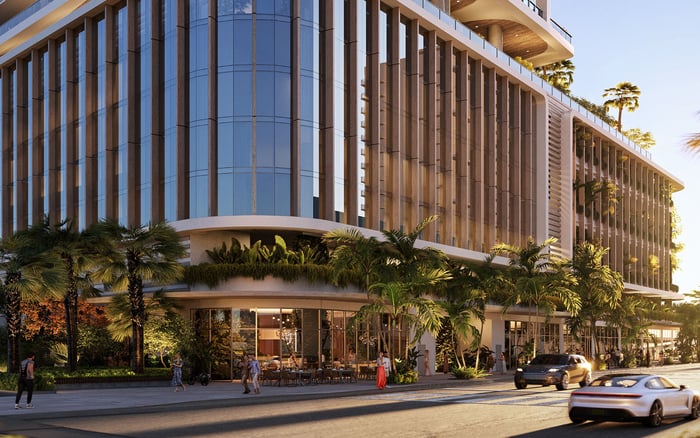
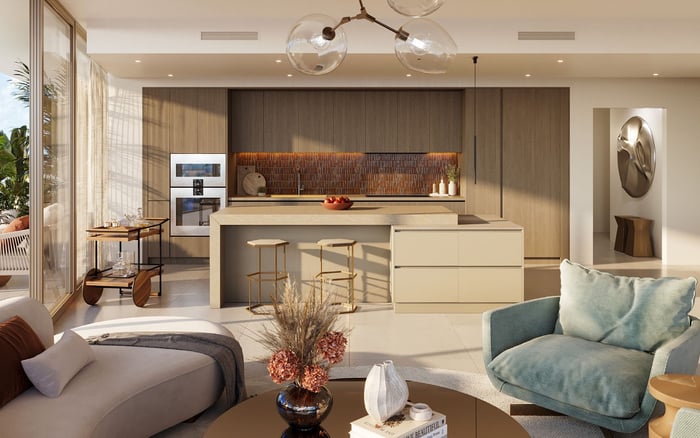
Miami Tropic Residences invites a collector’s reading of the Design District: cultural access outside the home, a selective display inside it, and careful due diligence around everything a valuable collection requires.
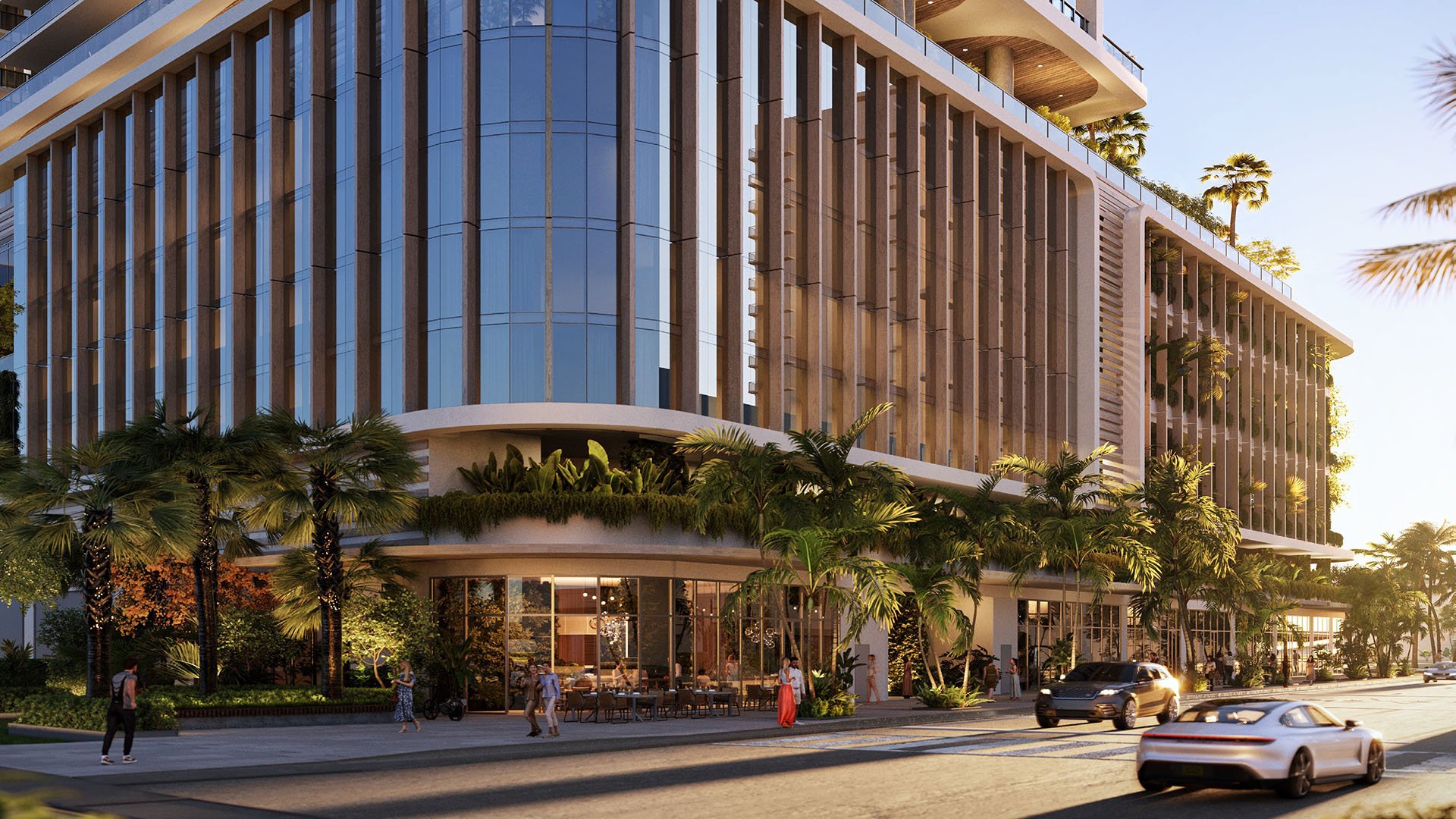
For a collector, the most persuasive luxury address is not necessarily the one with the most display wall. It may be the one that makes looking at art an ordinary part of the week. A residence can hold a few carefully chosen works while the surrounding neighborhood offers exhibitions, sculpture, architecture and encounters with design.
That is the useful lens through which to consider Miami Tropic Residences. Within the broader Miami Design District orbit, the condominium’s appeal rests on cultural proximity-not a promise of private galleries, collection storage or specialist conservation services within the building.
The distinction matters. Living near art and accommodating an entire collection are separate objectives. Keeping them separate allows a buyer to judge the residence on its merits, without expecting its amenity program to do the work of a museum or professional storage facility.
Historical project details describe a 329-residence condominium associated with developer Terra and chef Jean-Georges Vongerichten, with residences ranging from one to four bedrooms and initial pricing around $1.6 million. Those figures are reference points, not confirmation of current inventory, specifications or purchase terms.
For collectors, bedroom count and headline pricing are only the beginning. More revealing questions concern usable wall space, furniture placement, daylight and the relationship between circulation and display. A larger floor plan does not automatically provide a better setting for a particular painting or sculpture.
Before committing, review the specific residence rather than extrapolating from a general project presentation. Consider the furniture plan and a preliminary hanging plan together. The goal is a comfortable home with art, not a sequence of rooms whose daily use has been subordinated to it.
North of downtown Miami, the Design District combines galleries, design showrooms, dining, shopping and creative businesses. Its value to a collector lies in that mix: an exhibition visit can sit alongside a design appointment or lunch, rather than require a separately organized cultural excursion.
The Institute of Contemporary Art, Miami offers exhibitions, a permanent collection and a sculpture garden within an approximately 37,500-square-foot facility. Free year-round admission supports repeat visits, allowing a collector to return to an exhibition rather than treat it as a single appointment during art-fair season.
Outside, sculpture-filled plazas and distinctive architecture extend the experience. The district’s art and design landscape includes works associated with Zaha Hadid, John Baldessari, Marc Newson, Urs Fischer and Buckminster Fuller. Cultural engagement here need not begin at a gallery door.
For a prospective Miami Tropic buyer, however, neighborhood appeal needs a practical test. Travel the actual route from the property to the venues you expect to use, at the times you would use them. Proximity on a map is no substitute for understanding your own routine.
The district’s high-end design showrooms give collectors access to interior-design resources alongside exhibitions. That combination can help frame the right questions about accommodating art without visually overfilling a residence.
Begin with the works you want to live with now. Identify their dimensions, preferred viewing positions and any handling or display guidance supplied by your specialists. Then assess the residence against those needs, including wall construction, proposed lighting and seating placement.
Buyers also considering Casa Bella by B&B Italia Downtown Miami can apply the same exercise to each candidate residence. Compare actual floor plans and documented building rules, rather than assume a design-oriented identity establishes art-specific capabilities.
Ask what can be altered, what requires approval and what must remain untouched. Review glazing, environmental conditions and lighting with appropriate professionals; attractive interiors alone do not establish suitability for a collection.
One possible ownership strategy pairs a selective home display with independently arranged professional off-site storage. The appeal is straightforward: the residence can remain composed and livable while the collector retains the option to change what is on view.
This is an ownership strategy, not a verified Miami Tropic service. Dedicated art-storage vaults, museum-grade residential climate control, private gallery suites and art-handling partnerships are not established features here. Nearby museums and galleries likewise confer no right to store or exhibit a resident’s works.
If rotation is part of the plan, investigate it before purchase. Ask prospective storage and handling providers about access procedures, transport arrangements, environmental management and emergency planning. Ask your insurer how coverage would apply across the residence, the storage location and transit between them.
The practical question is whether rotation can happen smoothly enough to remain enjoyable. A display strategy that requires difficult scheduling or repeated installation approvals may be less appealing in daily life than it appears on paper.
Wynwood offers a contrasting setting of former industrial spaces, murals, galleries, studios and loft-style residences. Its proximity to the Design District allows a collector to explore both that mural-and-studio environment and the district’s more curated luxury setting.
A buyer considering Frida Kahlo Wynwood Residences alongside Miami Tropic should test both neighborhoods through ordinary visits. Neither an evocative project name nor a neighborhood’s cultural identity establishes a building’s collection-management services.
Compare the places you would genuinely return to. The relevant measure is not how many cultural destinations appear nearby, but whether they suit your interests and can become part of a repeatable week.
The final review should follow an artwork’s journey from vehicle to wall. Confirm loading access, delivery booking procedures, freight-elevator dimensions, doorway clearances and installation restrictions. Ask who authorizes handlers and whether building requirements affect the proposed installation.
Then review security, insurance responsibilities, hurricane procedures and responses to water intrusion. Seek written answers where they affect ownership decisions, and have the relevant specialists evaluate the arrangements for the works involved.
Miami Tropic’s strongest collector proposition is cultural access without the obligation to turn every room into a repository. A carefully chosen home display, independently planned storage where needed and a neighborhood worth revisiting can form a coherent way to live with art.
Explore a collector-focused residential search with MILLION.
If branded residences are on your mind — as a home or as an allocation — we would be glad to share what we are seeing, privately.
Begin a quiet conversationIts positioning within the broader Design District orbit makes access to museums, galleries, public art and design resources a relevant consideration.
Previously disclosed details describe 329 residences. Buyers should confirm project particulars before relying on them.
Residences have been described as offering one to four bedrooms, with initial pricing around $1.6 million. These are historical reference points, not current availability or purchase terms.
Dedicated art-storage vaults and specialist art-handling partnerships are not established features. Any off-site storage strategy should be arranged and evaluated independently.
No such rights are established. Nearby cultural venues provide viewing opportunities, not an entitlement to house or exhibit a resident’s collection.
It offers exhibitions, a permanent collection and a sculpture garden. Free year-round admission supports repeat visits outside art-fair season.
Wynwood offers murals, studios, galleries and former industrial spaces. The Design District combines cultural venues with high-end showrooms, shopping and dining.
A selective display supported by independently arranged professional off-site storage is a possible strategy. It is not a verified Miami Tropic service.
Confirm loading access, freight-elevator dimensions, doorway clearances and installation rules. Review the specific residence and proposed installation with appropriate specialists.
Ask how coverage applies at home, in storage and during transit. Review security, hurricane procedures and water-intrusion responses for the arrangements being considered.