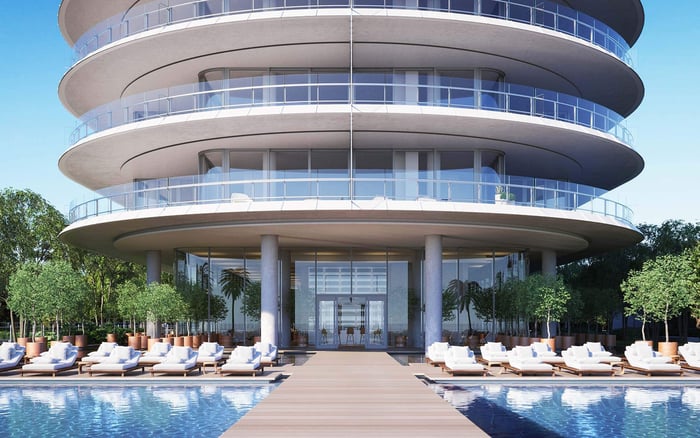
Miami Beach offers a more clearly documented range of concierge medical options, while Surfside’s appeal centers on hospitality-led wellness. For buyers planning long-term ownership, the decisive questions concern clinical continuity, contractual service access and the residence’s ability to accommodate changing needs.

For a luxury buyer planning beyond the next season, wellness is more than a beautiful spa. It is the ability to maintain a preferred routine, reach a trusted physician and remain comfortable at home as needs evolve. Miami Beach and Surfside offer different starting points, but neither a municipality nor a residential brand can substitute for a personal care plan.
Miami Beach has a more clearly documented range of concierge medical options in this comparison. Surfside’s residential offering is illustrated by hospitality-led wellness, particularly the advertised services at Surf House at The Surf Club. That distinction is useful, not definitive: it neither establishes a municipality-wide ranking nor means that Surfside lacks private medical arrangements.
A sound purchase decision separates three layers: clinical care, everyday residential support and the home’s physical suitability. A property may excel at one without resolving the others.
Miami Beach offers several identifiable options for buyers seeking preventive medicine and ongoing primary care. The Agatston Center focuses on preventive cardiology and primary care. PrivaMedis is listed at 4308 Alton Road, Suite 310, on Mount Sinai Medical Center’s campus, with four board-certified internists providing concierge primary care. Mount Sinai’s concierge program is listed with eight physicians offering preventive primary care and cardiology.
These options make Miami Beach a logical starting point for buyers who want to investigate a physician relationship before selecting a residence. They do not establish current enrollment availability, suitability for a particular condition or guaranteed appointment access. Those questions require a direct conversation with the practice.
The evaluation should be personal: who handles after-hours concerns, how specialist referrals are coordinated, whether house calls are available and how care continues during time away. For a seasonal owner, continuity across residences deserves as much attention as the local office address. Hospital proximity is not a promise of faster emergency response.
At The Ritz-Carlton Residences® Miami Beach, a medical membership illustrates how residential service and clinical access have intersected. In 2021-2022, condominium purchases were advertised with an included one-year Agatston Center membership covering primary and cardiology care. The complimentary first year carried an advertised value of $12,000.
The advertised package included executive physicals, same-day visits, house calls, physician access by phone, text and email, and coordination of specialist referrals and hospital services. The residential offering also described a 24/7 personal wellness assistant supporting nutrition, fitness, mindfulness, sleep and relaxation.
The critical distinction is duration and scope. This was an introductory benefit, not lifetime medical coverage, and buyers should not assume the historical offer remains available. A prospective purchaser should obtain written confirmation of current eligibility, resale applicability, household coverage, renewal pricing and additional service charges.
A wellness assistant is not a physician, home nurse or assisted-living service. Review the residential promise and the medical agreement separately, with responsibility for each service clearly identified.
For buyers drawn to The Surf Club Four Seasons Surfside, the relevant distinction is between the broader destination and the rights attached to a particular residence. Surf House at The Surf Club, identified at 8995 Collins Avenue, has been marketed as a preconstruction offering with a Four Seasons service affiliation.
Its advertised services include 24/7 concierge and valet, housekeeping and in-residence spa treatments. Advertised amenities include a wellness center, a spa with steam room, sauna and hot tub, a rooftop pool, a residents’ club room, a garden and private beach access. Access to The Surf Club amenity campus and Thomas Keller’s Surf Club Restaurant is also described.
These offerings serve a different priority from a concierge medical practice: supporting daily routines through hospitality and recreation. Buyers should confirm delivery status, operating arrangements, fees and contractual access rights rather than treating advertised services as verified operations.
None of these amenities, on its own, establishes clinical coverage, nursing support or an aging-in-place program. Buyers who prefer Surfside can evaluate the residence and a separate medical relationship in parallel, without expecting the residential concierge to perform a clinician’s role.
The surrounding market offers useful context, provided municipal boundaries remain clear. The Well Bay Harbor Islands is outside both Miami Beach and Surfside and is marketed with more than 22,000 square feet of wellness amenities.
Its advertised facilities include a fitness and wellness center, rooftop pool, tea lounge, bathhouse, halotherapy steam, cold plunge and treatment rooms. Residential services include a wellness concierge, organic cleaning, in-home plant design and maintenance, and curated wellness products.
This illustrates how comprehensively wellness can be incorporated into a residential offering. It does not make those facilities neighborhood amenities available to every nearby homeowner. Any external membership or access arrangement must be confirmed independently; treatment rooms are not proof of a particular medical service.
For long-term ownership, the essential questions become architectural and operational. Neither the Miami Beach medical examples nor the Surfside hospitality offering establishes that a particular unit or building can accommodate changing mobility or care requirements.
Begin with the route from arrival to the residence. Assess step-free access, door clearances, bathroom layouts, shower thresholds and space for mobility equipment with an appropriate accessibility professional. Ask whether future adaptations would require association approval and whether the proposed residence can accommodate them.
Then examine building operations. Request information on elevator reliability, backup-power coverage and procedures during service interruptions. Clarify rules for caregiver registration, overnight stays, visiting clinicians and deliveries, along with any restrictions affecting in-home support. Review emergency procedures without assuming that a staffed lobby provides medical response.
Finally, separate recurring costs: association charges, optional hospitality services, physician memberships and any future home-care arrangement. The objective is to understand what remains available when a complimentary term ends or personal needs change.
Within this comparison, Miami Beach is the stronger starting point for investigating documented concierge medical choices. Surfside merits consideration when hospitality-led wellness is the residential priority, with clinical care arranged and evaluated separately. Neither conclusion determines which individual residence will serve a household best.
Before committing, assemble three distinct files: the physician’s service agreement, the residence’s contractual service rights and an accessibility and operations review. The right home is one whose everyday pleasures remain compatible with a credible long-term plan.
Explore residences aligned with your wellness priorities and long-term ownership goals with MILLION.
If branded residences are on your mind — as a home or as an allocation — we would be glad to share what we are seeing, privately.
Begin a quiet conversationMiami Beach has more documented concierge medical options in this comparison. That does not establish a comprehensive ranking or mean Surfside lacks private medical arrangements.
The Agatston Center, PrivaMedis and Mount Sinai Medical Center’s concierge program are identified options. Buyers should confirm enrollment availability and individual care suitability directly.
A one-year Agatston Center membership covering primary and cardiology care was described with condominium purchases in 2021–2022. Marketing valued the complimentary first year at $12,000.
No. Current availability, resale eligibility, household coverage, renewal pricing and additional charges require written confirmation.
Advertised offerings include a wellness center, spa, in-residence spa treatments, housekeeping and 24/7 concierge and valet. Delivery status and contractual service access should be confirmed.
A wellness concierge or assistant should not be equated with a physician, home nurse or assisted-living service. Clinical responsibilities need a separate, explicit agreement.
Neither; it is in Bay Harbor Islands. It is marketed with more than 22,000 square feet of wellness amenities, but nearby ownership does not automatically confer access.
Review step-free access, door clearances, bathrooms, adaptation options, elevator reliability and backup-power coverage. Also clarify caregiver policies and emergency procedures.
No. Proximity alone does not establish emergency-response performance and should not replace a household emergency plan.
Review the physician’s service agreement, contractual residential service rights and an accessibility and building-operations assessment. Separate recurring membership and care expenses from introductory benefits.