Ocean House Surfside’s planned arrival amenities and access controls offer a framework for discreet hosting. Buyers should distinguish advertised services from written operating rules, especially for event-week guests, valet demand, private elevators, and reserved gatherings.

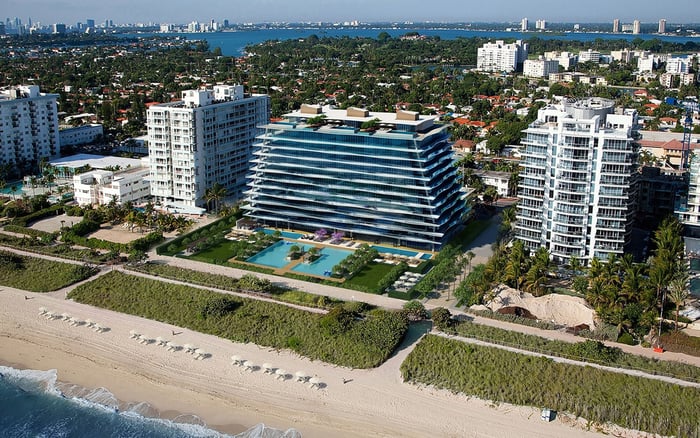
For a buyer who intends to entertain, the journey from curb to residence deserves as much scrutiny as the floor plan. At Ocean House Surfside, the advertised collection of 25 oceanfront residences promises an intimate residential setting. The future residences are listed at 9309-9317 Collins Avenue, Surfside, FL 33154. That scale is part of the appeal, but it does not establish how quickly guests will be admitted during a concentrated arrival period.
The planned service package includes 24/7 front-desk reception, concierge service, and valet. These are meaningful commitments to availability-not guarantees of event-week waiting times or unrestricted guest access. For an owner hosting dinner during a busy week, the distinction matters: a staffed entrance is not the same as a clearly defined admission procedure.
The essential buying question is not simply whether the building offers service, but whether its eventual operating rules will support the buyer’s preferred way of living and entertaining.
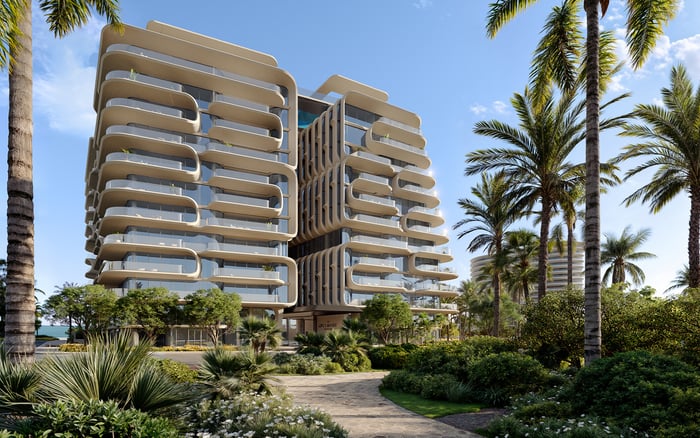
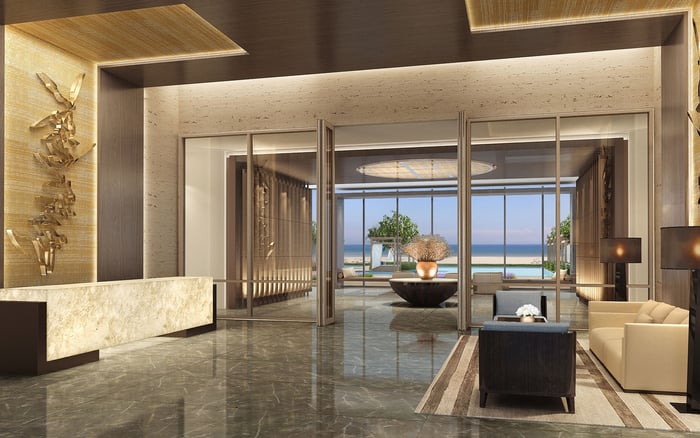
The advertised arrival sequence begins with a landscaped entrance and covered porte-cochère, followed by a double-height lobby with a custom stone reception desk. Together, these planned elements provide a sheltered drop-off setting and a reception point. They do not confirm a dedicated event entrance or a separate route for caterers.
Beyond reception, the project specifies electronic fob-controlled access throughout the building, with private keyed elevators and vestibules serving residences. These features make the distinction between welcoming a guest into the lobby and authorizing access to a residence especially important.
A private elevator is an access feature, not a published guest-admission protocol. Buyers should ask who may authorize a visitor’s movement beyond reception, whether an owner must be present, and how access is handled when the host is occupied upstairs. A concierge desk alone answers none of those questions.
For anyone also considering Arte Surfside, the same diligence principle applies: compare written access arrangements rather than assuming that residential privacy translates into identical hosting privileges.
The advertised access infrastructure does not establish a formal event-week preclearance policy. Mandatory guest rosters, identification checks, QR credentials, and guest limits are not specified. Buyers should treat each as a question to resolve, not an existing requirement or promised convenience.
A practical discussion with the sales team or future management should establish whether names must be submitted in advance, how late additions are handled, and whether owner confirmation is required at arrival. Equally important is the treatment of guests who arrive without their host, change vehicles, or bring an additional companion.
Ask whether visitors must be escorted beyond the lobby and whether temporary credentials, if offered, would expire after an event. If a roster is contemplated, clarify who receives it, what information is necessary, and how changes are communicated. These are diligence questions, not descriptions of established Ocean House procedures.
The goal is discretion without ambiguity. Written instructions allow hosts to tell guests what to expect while preserving the building’s intended access controls.
The advertised garage includes 24-hour valet service and electric-vehicle charging stations. Those service hours establish availability, not vehicle-storage capacity, overflow parking, queue targets, or dedicated event loading windows.
For an event-week gathering, assess arrivals and departures separately. Ask whether staggered arrival times can be coordinated, where rideshare vehicles should stop, and how catering vans would be accommodated. Confirm parking duration and whether visitor vehicles may remain after an event ends. Clarify charging availability rather than treating it as an automatic guest entitlement.
Retrieval deserves its own conversation. A dinner can produce a concentrated departure even when arrivals were spread across an hour. Buyers should ask how simultaneous gatherings would be handled and whether service expectations can be documented. The advertised 24/7 commitment establishes no specific retrieval time.
The covered porte-cochère provides shelter at drop-off; it does not, by itself, resolve curbside congestion. The distinction is between the quality of the arrival setting and the operating plan for managing demand within it.
The planned Residents’ Club Room includes lounge seating, a television, a library, and a communal dining table for reserved private events. A summer kitchen also appears among the resident-exclusive amenities. These features suggest possibilities for entertaining, but they do not establish unrestricted use or suitability for a particular guest count.
Before relying on either space, request the applicable occupancy limits, reservation process, approval requirements, and permitted hours. Ask about deposits, insurance, vendor registration, noise restrictions, and responsibility for cleaning or damage. Each belongs in a written hosting framework, not a verbal assumption.
The advertised mailroom and package-receiving services should be considered separately from event logistics. Receiving a parcel does not establish a procedure for catering deliveries, floral installations, equipment staging, or post-event collection. Confirm the permitted route, timing, and supervision for each proposed vendor.
A buyer comparing Ocean House with Fendi Château Residences Surfside should apply these questions independently at each property. One residence’s event permissions should never serve as a proxy for another’s.
At the offer stage, buyers should translate lifestyle priorities into specific requests for written clarification. If frequent entertaining is essential, identify the intended gathering format and ask which documents govern guest access, amenity reservations, valet use, vendors, and elevator authorization. Have counsel review any proposed contractual treatment of material requirements.
As closing approaches, revisit those questions as operating documents become available. Distinguish advertised amenities from adopted rules, and proposed staffing arrangements from confirmed operations. Planned features do not establish completed construction, current staffing, or an operating history.
For a first gathering after ownership, a reasonable sequence to discuss is a guest roster, concierge confirmation, porte-cochère arrival, valet handoff, and authorized interior access. This is a proposed sequence, not a verified Ocean House policy. Management’s written procedure should determine the actual instructions sent to guests and vendors.
The strongest ownership experience combines a considered setting with clearly understood boundaries. At Ocean House, the buyer’s task is to establish how the planned reception, valet, and access features will work together before making event-week hosting part of the purchase decision.
For a discreet perspective on South Florida ownership and buyer diligence, explore MILLION.
If branded residences are on your mind — as a home or as an allocation — we would be glad to share what we are seeing, privately.
Begin a quiet conversationThe future residences are listed at 9309–9317 Collins Avenue, Surfside, FL 33154.
The project is marketed as a boutique collection of 25 oceanfront residences.
Yes, the planned service package includes 24/7 front-desk reception and concierge service. This does not confirm current staffing or established operations.
No. Advertised valet availability does not establish queue targets, vehicle-storage capacity, overflow arrangements, or retrieval times.
The project specifies electronic fob-controlled building access, along with private keyed elevators and vestibules serving residences.
A formal event-week preclearance policy is not established in the advertised details. Buyers should confirm any roster, identification, owner-confirmation, or escort requirements in writing.
The landscaped entrance includes a covered porte-cochère for sheltered vehicle drop-off. It does not establish a dedicated event entrance or loading procedure.
The Residents’ Club Room is described as including a communal dining table for reserved private events. Reservation terms, occupancy limits, approvals, and permitted hours need confirmation.
The advertised mailroom and package-receiving services do not establish catering or event-delivery procedures. Vendor routes, timing, and supervision should be confirmed separately.
Request written guest-access, parking, elevator, vendor, and event-reservation rules. Revisit those requirements as operating documents become available before closing.