Miami Art Week is an unusually revealing moment for primary-residence buyers. Beyond galleries, dinners and waterfront views, it exposes the rhythms that matter most: traffic tolerance, privacy, daily convenience, building culture and the difference between a glamorous address and a livable one.
Miami Art Week is often treated as a social calendar, but for serious primary-residence buyers it is more valuable as a live diagnostic. The week compresses the region’s pleasures and pressures into a short span: dinners, openings, collectors, visiting family, private drivers, valet queues, school-night logistics, marina schedules and the simple question of whether the home still feels calm when the city is at full volume.
A buyer seeking a long-term South Florida base should resist choosing from the atmosphere of the week alone. A residence must perform on quiet Tuesdays as confidently as it does on celebratory Saturdays. The right address is not simply the one closest to the most desirable room in December; it is the one that supports the rhythm of your household in March, June and September. The useful question is not, “Where is everyone tonight?” It is, “Where would I want to wake up every morning?”
Before comparing towers, islands or waterfront corridors, define the household. Will this be a year-round primary residence, a blended work-and-family base, or a gradual transition from seasonal ownership? Long-term buyers should map the ordinary week first: school drop-off, private aviation or commercial airport access, wellness routines, domestic staff movement, pet care, grocery patterns, boating, beach use, restaurant frequency and tolerance for visitors.
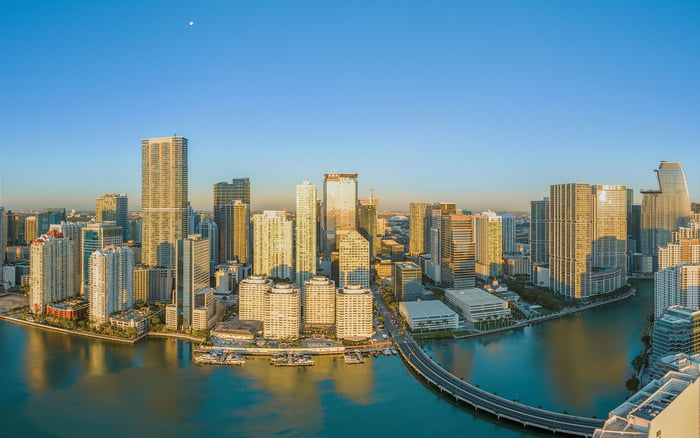
This is where Brickell can be compelling for buyers who value an urban center, walkable dining and a high-rise residential routine. A building such as 2200 Brickell belongs in the conversation for clients evaluating a city address through the lens of daily convenience rather than occasional spectacle. The key is to separate energy from friction. Some buyers thrive on proximity; others discover that proximity without quiet is not luxury.
During Art Week, access becomes seductive. The ability to move quickly to dinners, museums, galleries, beaches and private homes can feel like the ultimate residential advantage. Yet long-term ownership requires another layer: exposure. How visible is the arrival experience? How often do nonresidents move through the building? How does the lobby feel when the city is saturated with guests? Is the porte cochère elegant under pressure, or does it become a point of daily irritation?
For primary-residence buyers, privacy is not only about security. It is about psychological ease. A discreet building culture, efficient parking sequence, controlled elevator access, thoughtful staff boundaries and well-managed guest protocols often matter more over time than a dramatic view from a room used mainly at sunset. Ask how the property functions when every residence has guests, deliveries and cars arriving within the same hour.
Miami Beach is a mosaic of lifestyles, not a single residential answer. For some buyers, the draw is ocean air, architectural character and immediate access to dining and culture. For others, the same magnetism can feel too public for primary life. During Art Week, this contrast becomes especially visible: the beach can feel glamorous, activated and internationally fluent, but also exposed to surges in movement.
A buyer considering The Perigon Miami Beach should think beyond the name and evaluate how that part of the beach fits a daily pattern. How does the household move to the mainland? How often will children, staff, trainers or guests need to cross bridges? Does the beach lifestyle remain restorative when schedules intensify? Long-term residents should choose the version of Miami Beach that matches their appetite for social energy, not merely the week’s most photogenic itinerary.
Coconut Grove is often considered by buyers who want an older, greener, more residential feeling while remaining connected to Miami’s cultural and financial core. Its appeal for primary use lies in the way daily life can feel less transactional: shaded streets, neighborhood routines, waterfront proximity and a softer sense of arrival. During Miami Art Week, the Grove can also remind buyers that the best base is sometimes adjacent to the action rather than inside it.
Residences such as Four Seasons Residences Coconut Grove merit consideration for buyers testing the Grove as a long-horizon address. The question is not whether the neighborhood is quieter than the most active corridors. It is whether that quiet will continue to feel like privilege after the novelty of the purchase has passed.
South Florida buyers increasingly think in corridors rather than single cities. If your life includes Broward, Palm Beach, equestrian commitments, private clubs, marine access, family offices or a quieter coastal cadence, Miami may be only part of the answer. A primary residence should reduce the number of compromised days. If every week requires northbound movement, a base farther up the coast may be more rational than a Miami address chosen for occasional convenience.
Fort Lauderdale offers a different blend of waterfront living, city access and marine culture. A buyer studying Riva Residenze Fort Lauderdale should ask how the address supports commuting, boating, entertaining and a calmer daily tempo. Farther north, West Palm Beach continues to attract buyers who want a polished urban core with proximity to Palm Beach’s social and cultural orbit. The Ritz-Carlton Residences® West Palm Beach may be relevant for those evaluating whether Palm Beach County better fits their long-term center of gravity.
For a primary residence, the condominium’s rules, reserves, staff culture and maintenance philosophy deserve as much attention as finishes. Art Week can reveal whether a building is designed for residents or for constant entertaining. Study guest registration, valet capacity, private event policies, pet rules, service elevator management, package flow, short-stay restrictions and the tone set by the board or management team.
The most satisfying primary residences often feel boring in the best possible sense: predictable, orderly, calm and well maintained. A dazzling building that permits too much transient energy may be entertaining for a season and exhausting for a life. Conversely, a quieter property with disciplined governance can feel increasingly luxurious with time.
Do not evaluate travel times only on a serene morning. During Miami Art Week, move between the places that will actually define your life: the airport you use most, your preferred school corridor, your office, your club, your doctor, your trainer, your marina, your family’s favorite restaurant and the beach or park you will visit when no one is watching. If the routine feels strained during a busy week, decide whether the inconvenience is exceptional or structural.
Primary-residence buyers should also test arrival from multiple directions. A home can look perfect on a map and feel compromised if bridges, causeways, valet design or garage circulation turn small errands into negotiations. Luxury is the ability to move through the day with minimal friction.
Art Week has a way of intensifying desire. The city feels cosmopolitan, the rooms are beautifully lit and the right dinner can make an address feel inevitable. Yet the best South Florida base is chosen with patience. It should accommodate changing family needs, evolving work habits, healthcare preferences, aging parents, college-age children, staff support and the possibility that leisure priorities will shift.
A long-term buyer should ask three final questions. Does this location make my ordinary life more elegant? Does this building protect my privacy and time? Would I still choose this home if there were no event calendar at all? If the answers remain clear after the week’s glamour fades, the decision is likely grounded in more than momentum.
Should Miami Art Week influence where I buy a primary residence? Yes, but as a stress test rather than a sales trigger. Use the week to observe traffic, privacy, building operations and how each neighborhood feels under pressure.
Is Brickell better for full-time living than Miami Beach? It depends on whether you prefer an urban high-rise rhythm or a more coastal lifestyle. Brickell often favors convenience, while Miami Beach favors atmosphere and ocean access.
Why consider Coconut Grove for a long-term base? Coconut Grove can appeal to buyers seeking greenery, neighborhood texture and a calmer residential mood. It may suit households that want proximity without constant intensity.
When does Fort Lauderdale make more sense than Miami? Fort Lauderdale may suit buyers whose lives involve Broward, boating or a quieter coastal routine. It can also reduce friction for households regularly moving north and south.
Should West Palm Beach be on a Miami buyer’s shortlist? Yes, if your social, family or professional life extends into Palm Beach County. West Palm Beach can offer a different pace while remaining connected to South Florida.
What should I observe in a building during a busy week? Watch valet flow, lobby privacy, guest handling, staff composure and elevator efficiency. These details often predict the quality of daily life.
Are branded residences always better for primary use? Not automatically. Brand standards can be meaningful, but governance, layout, location and resident culture are more important for long-term comfort.
How important is airport access for primary-residence buyers? Very important if travel is part of your weekly life. Test the route at realistic times rather than relying on ideal conditions.
Should I prioritize view or neighborhood? A view is powerful, but neighborhood fit usually affects more hours of the day. The best choice balances outlook, access, quiet and routine.
What is the most common mistake during Art Week house hunting? Buyers sometimes confuse event-week excitement with livability. A primary residence should feel compelling after the city returns to its normal rhythm.
For a confidential assessment and a building-by-building shortlist, connect with MILLION.
If branded residences are on your mind — as a home or as an allocation — we would be glad to share what we are seeing, privately.
Begin a quiet conversation