A discreet buyer’s guide for Manhattan owners considering Fisher Island as a seasonal pied-à-terre, with emphasis on lifestyle fit, privacy, ownership structure, family logistics, and long-term strategy.
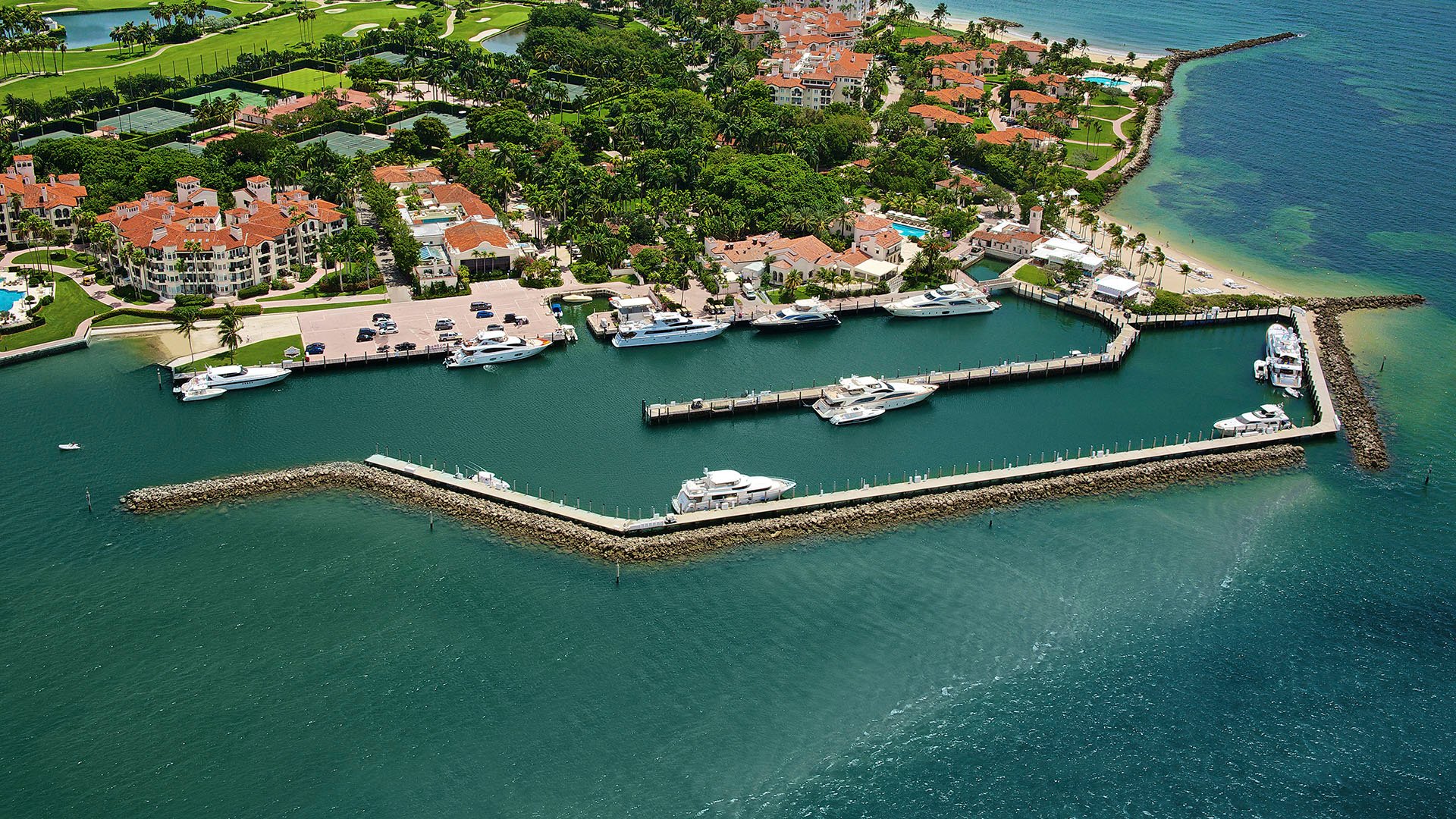
For a Manhattan owner considering Fisher Island, the most useful starting point is not square footage, view line, or finish package. It is rhythm. A seasonal pied-à-terre succeeds when it fits how a household actually moves: arrival days, family visits, entertaining patterns, work calls, staff support, medical appointments, school calendars, yacht use, golf weekends, and the quiet desire to be unreachable without feeling remote.
Fisher Island appeals to a particular kind of New York buyer because it offers a privacy-first seasonal life without requiring a complete withdrawal from Miami. The island is not simply another waterfront address. It is a different operating system, one that rewards planning and punishes impulse. If your South Florida life is centered on restaurants, galleries, late dinners, and spontaneous cross-town plans, Miami Beach or Brickell may feel more frictionless. If your priority is discretion, routine, and a sense of enclosure, Fisher Island becomes far more compelling.
The question, then, is one of fit. A pied-à-terre is not a vacation home in miniature. It is a strategic extension of a primary life elsewhere.
The cleanest Manhattan-to-Fisher-Island brief begins with a calendar. Some buyers want a winter base for long, deliberate stays. Others want a flexible second address for holidays, family gatherings, business travel, and recovery weeks after a demanding New York season. Those are very different homes.
A buyer who plans to live primarily inside the residence should think carefully about kitchen scale, storage, office privacy, staff circulation, and guest separation. A buyer who expects to spend most days outside the residence may prioritize lock-and-leave ease, building service, and simple arrival routines. This is the heart of second-home planning: the property should support the season you intend to live, not the season imagined during a perfect showing.
The most sophisticated buyers also define what they do not want. They may not want hotel energy. They may not want an address that feels too public. They may not want a property that requires a large household staff for a three-month stay. Luxury, in this context, is the absence of operational drag.
On Fisher Island, the practical decision often turns on the balance between convenience and autonomy. Condominium living can appeal to Manhattan buyers because the mental model is familiar: secure building, managed common areas, vertical privacy, and a residence that can be closed with relative ease when the season ends. Buyers drawn to this path often review buildings such as Palazzo del Sol and Palazzo della Luna as part of a broader conversation about service, views, residence scale, and maintenance expectations.
A larger residence or estate-style setting is a different proposition. It may offer a more expansive family rhythm, stronger separation between generations, and a greater sense of permanence. It can also require more deliberate thinking around staffing, vendor access, property oversight, and year-round care. For buyers considering that end of the island’s lifestyle spectrum, The Links Estates at Fisher Island belongs in the conversation as a reference point for how a seasonal residence can feel more like a compound than an apartment.
Between these poles is the hybrid buyer: someone who wants the privacy language of Fisher Island and the ease of a contemporary full-service building. In that case, a project such as The Residences at Six Fisher Island may be compared against resale opportunities, alternative floor plans, and the household’s tolerance for pre-completion timing or future transition.
Fisher Island should not be chosen simply because it is exclusive. It should be chosen because its version of exclusivity serves the household. Manhattan buyers accustomed to walking downstairs into restaurants, galleries, private clubs, and cultural commitments may discover that Miami Beach offers a more familiar urban-resort rhythm. A buyer who wants beach proximity and a more immediate social grid may compare Fisher Island with established Miami Beach options, including The Perigon Miami Beach, before deciding how much privacy is worth relative to convenience.
Brickell occupies another lane entirely. It can make sense for buyers whose South Florida time is connected to business, finance, dining, and a denser skyline lifestyle. A residence such as The Residences at 1428 Brickell represents a very different pied-à-terre thesis: more urban, more immediate, and less retreat-oriented. The comparison is useful because it clarifies the emotional brief. Fisher Island is not the answer to every Manhattan buyer. It is the answer when privacy, water, service, and controlled pace outrank daily urban spontaneity.
This is where a disciplined buyer’s-guide approach matters. The best acquisition is not the one that photographs most dramatically. It is the one that will still feel intuitive after the novelty of the first season has passed.
For Manhattan buyers, legal and financial planning should begin before the property search becomes emotional. Seasonal use can intersect with domicile planning, estate strategy, insurance, liquidity management, and entity ownership. These matters should be reviewed with the buyer’s own tax, legal, and estate advisers before any offer is made.
The same discipline applies to carrying costs. A seasonal pied-à-terre should be underwritten like a long-term asset, not a lifestyle impulse. Buyers should evaluate association expenses, staffing, maintenance, insurance, renovation limitations, storage, transportation routines, and the cost of keeping a residence ready when no one is in residence. The higher the standard of arrival, the more important the unseen systems become.
Resale strategy also deserves attention. A highly personal residence can be wonderful to occupy yet narrower to resell. A better approach is to separate private taste from durable value: light, outdoor space, views, layout logic, building quality, privacy, and the ease with which the next owner can imagine their own season unfolding there.
A Fisher Island pied-à-terre should be evaluated by the people who will live in it, not only by the principal buyer. Adult children, grandchildren, visiting friends, wellness staff, assistants, and household managers can all change the functional brief. A residence that feels serene for two may feel strained when holiday guests arrive. A home that entertains beautifully may not support remote work or quiet recovery.
Ask practical questions. Where do guests sleep without disturbing the owners? Can one person take a call while another hosts lunch? Is there enough storage for seasonal wardrobes, sports equipment, and personal items that should not travel back and forth? Does the terrace or outdoor space support the way the household actually uses South Florida light?
The goal is not to maximize every feature. It is to identify the few features that matter every time the front door opens.
Is Fisher Island a good fit for Manhattan buyers seeking a seasonal pied-à-terre? It can be, especially when privacy, quiet routine, and a resort-like seasonal rhythm matter more than immediate urban access.
Should I buy on Fisher Island before comparing Miami Beach? No. A careful comparison with Miami Beach helps clarify whether you value seclusion or neighborhood immediacy more.
Is Brickell a realistic alternative to Fisher Island? Yes, but it serves a different lifestyle, with a more urban rhythm and stronger connection to business and dining patterns.
What should I decide before touring properties? Decide how long you will stay each season, who will visit, what services you expect, and how much management you want.
Is a condo better than an estate-style residence? A condo may offer simplicity, while an estate-style residence may offer more privacy and family flexibility.
How important is tax planning for a seasonal buyer? It is essential. Domicile, ownership structure, and estate planning should be reviewed with qualified advisers before purchase.
Should resale value affect a lifestyle purchase? Yes. Even deeply personal homes benefit from durable fundamentals such as layout, light, privacy, and ease of ownership.
Can a Fisher Island home work for multigenerational use? It can, provided the residence has enough separation, storage, guest capacity, and daily-life flexibility.
What is the biggest mistake Manhattan buyers make? They buy for the fantasy season rather than the real calendar, household pattern, and operational needs.
When should I involve an adviser? Early. The right adviser helps compare lifestyle fit, property type, long-term strategy, and negotiation priorities.
When you're ready to tour or underwrite the options, connect with MILLION.
If branded residences are on your mind — as a home or as an allocation — we would be glad to share what we are seeing, privately.
Begin a quiet conversation