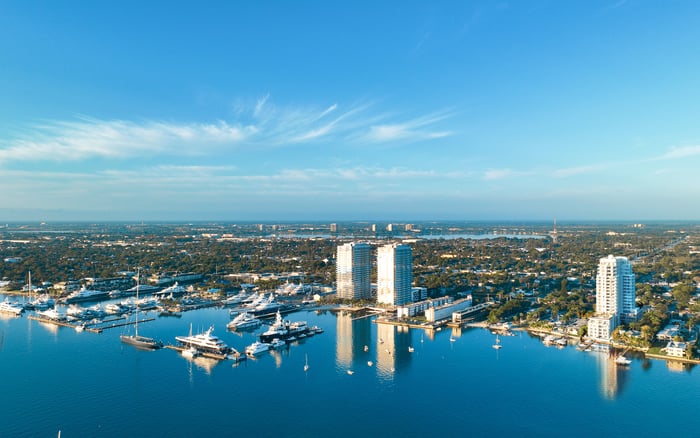
For Madrid-based buyers evaluating Palm Beach, mortgage interest strategy is less about finding a single headline rate than designing leverage around currency, liquidity, tax exposure, closing costs, and long-term ownership plans.

For a Madrid family buying in Palm Beach, the mortgage conversation should not start with the lowest quoted rate. It should start with the balance sheet. Euro income, euro assets, a dollar purchase price, U.S. advisory needs, Florida closing costs, estate planning, and the intended holding period all shape the right financing structure.
At the high end, the buyer is often acquiring a dollar asset with financing needs that may require a more tailored review than a standard domestic purchase. That matters for international families with complex income, private-company wealth, portfolio assets, or multi-jurisdictional planning lives. The question is not simply, “What is the rate?” It is, “What does this debt allow the family to preserve, hedge, defer, or simplify?”
The strongest strategy treats mortgage interest as one variable inside a broader ownership plan. Liquidity, currency timing, lender requirements, future refinancing options, and exit expectations should be modeled together before a buyer commits to a structure.
A Madrid buyer purchasing a dollar residence has two linked exposures: interest-rate exposure and EUR/USD exposure. A euro-based buyer who wires cash into dollars makes a currency decision immediately. A buyer who borrows in dollars against a Palm Beach property may reduce the immediate need to convert euros, but still assumes dollar debt service and dollar refinancing risk.
There is no universal answer. A buyer with substantial dollar assets may prefer dollar leverage because the asset and liability are more closely aligned. A buyer whose wealth remains overwhelmingly euro-based needs a deliberate currency plan before choosing a U.S. mortgage structure. Even a beautiful residence, whether a waterfront condominium at Palm Beach Residences or a larger seasonal base, should be modeled as part of a global balance sheet rather than as an isolated purchase.
The most disciplined families make this decision before contract execution. They know which currency will fund deposits, closing costs, reserves, renovations, and debt service. That preparation can protect negotiation leverage, because sellers and developers respond to certainty.
A fixed-rate mortgage offers payment certainty because the interest rate remains unchanged during the loan term. For a family using Palm Beach as a long-term residence, that stability can be valuable, especially when lifestyle planning matters more than rate speculation.
Adjustable-rate mortgages work differently. They may begin with an initial fixed period and later reset according to the loan terms. For high-net-worth buyers, the central question is whether the expected ownership period, liquidity event, or refinancing window occurs before the reset. If the buyer expects to sell a Madrid asset, receive a business distribution, or restructure holdings within several years, an adjustable structure may be considered. But the reset date must be treated as a firm planning milestone, not a footnote.
Interest-only mortgages can also be attractive at the high end because required initial payments may be lower during the interest-only period. They can preserve liquidity for portfolio investments, business capital, or renovation plans. Still, principal repayment is deferred, not eliminated. For a residence near The Ritz-Carlton Residences® Palm Beach Gardens, the question is whether the family wants lower near-term carrying costs or faster equity amortization.
Discount points and lender credits should be evaluated against the expected holding period, refinancing plan, and liquidity priorities. At the high end, both can be rational, but neither should be judged by the first-year payment alone.
A family likely to refinance, repay, or sell within a shorter horizon may not prioritize paying more upfront for a lower rate. A buyer holding for a longer period may see value in reducing the rate if the breakeven analysis supports it. Conversely, lender credits may make sense when the priority is preserving liquidity at closing, though the higher ongoing cost must be incorporated into the total model.
New-construction purchases add another layer. Deposit schedules, completion timing, and future financing conditions should be coordinated well before closing. A buyer considering Mr. C Residences West Palm Beach, for example, should think about whether the preferred debt structure is available at contract signing, at completion, or only once the residence is ready to close.
Mortgage interest treatment can be nuanced, especially for international buyers and high-value residences. A buyer should not assume that a large luxury mortgage automatically creates a proportionally large tax advantage. The real value of leverage may be liquidity preservation, estate planning, currency management, or investment optionality rather than tax benefit alone.
Florida ownership also requires a disciplined closing-cost review. Financing-related charges, title structure, insurance, reserves, and advisory costs should be included in the acquisition model from the beginning. These items should not be left until the final days before closing.
For a Madrid buyer, the right answer often depends on how U.S. ownership interacts with Spanish assets, family succession goals, and future sale plans. The mortgage term sheet should be reviewed alongside tax, legal, and estate guidance rather than in isolation.
Palm Beach ownership can become more than a second-home decision. Buyers who may spend meaningful time in Florida should evaluate residency objectives, ownership structure, and long-term family planning before signing. That analysis belongs beside the mortgage term sheet, not behind it.
International owners should also plan the exit before the acquisition. A future sale, transfer, or inheritance event can be affected by how the residence is titled and how debt is structured. As a result, leverage, title structure, insurance, trust planning, and family governance should be reviewed together.
For buyers drawn to Alba West Palm Beach or a nearby private residence, the ownership wrapper can be just as important as the rate. Entity, trust, or individual ownership may each raise different privacy, succession, financing, and compliance questions, particularly for cross-border families.
Some Madrid buyers prefer borrowing against investment portfolios rather than placing a mortgage on the Palm Beach property. Securities-backed lending may be flexible, and it may avoid certain real estate financing timelines. But it is not a mortgage substitute in risk terms.
Portfolio borrowing introduces collateral risk. If market values decline, the lender may require additional collateral or force sales. That risk may be acceptable for a deeply liquid family, but it should be stress-tested against market volatility and currency movement. Mortgage debt is secured by the property. Portfolio debt is tied to financial assets that can move daily.
For cross-border buyers, the most elegant solution is often layered: some cash, some mortgage debt, and a clear liquidity reserve in the right currency. Brickell buyers often use this same playbook when comparing urban branded residences with Palm Beach privacy. The discipline is transferable, even when the lifestyle objective is different.
Before making an offer, a Madrid-to-Palm Beach buyer should ask five questions. First, which currency will fund the purchase and debt service? Second, how long will the family likely hold the property? Third, is the mortgage intended to preserve liquidity, support estate planning, manage currency exposure, or all three? Fourth, what happens if rates reset or currency moves against the family? Fifth, does the title structure align with residency, inheritance, and eventual sale plans?
The best financing is not necessarily the cheapest on day one. It is the structure that keeps the family in control through rate cycles, currency cycles, and life changes.
Should Madrid buyers finance in euros or dollars? It depends on the currency of income, assets, reserves, and planned debt service. Because the residence is a dollar asset, currency matching should be reviewed early.
Are Palm Beach luxury mortgages usually more customized? They often require a tailored review because high-end buyers may have complex income, assets, and ownership goals. International documentation can also require more preparation.
Is a fixed-rate mortgage safer than an adjustable-rate mortgage? A fixed rate offers payment certainty. An adjustable rate may fit a shorter hold or planned liquidity event, but the reset date must be managed.
Can interest-only financing make sense at the high end? Yes, if the goal is liquidity preservation during the initial period. Principal is deferred rather than forgiven, so the repayment plan still matters.
Are mortgage points worth paying? Points can be useful when the expected holding period is long enough to justify the upfront cost. Shorter horizons may favor flexibility instead.
Should tax benefits drive the mortgage decision? Not by themselves. Mortgage strategy should be reviewed with tax, legal, estate, liquidity, and currency considerations together.
Why do closing costs matter in the financing model? Closing costs affect the total cash required to complete the purchase. They should be modeled early so the buyer can plan reserves and funding sources.
Should foreign buyers plan the exit before buying? Yes. Future sale, transfer, or inheritance planning can influence title structure, leverage, and documentation from the start.
Is portfolio borrowing better than a mortgage? It can be flexible, but it introduces collateral-call risk. A mortgage and a securities-backed loan should be stress-tested separately.
When should a Madrid buyer start the financing discussion? Ideally before making an offer or signing a contract. Early planning helps align currency, liquidity, title, and lender expectations.
For a confidential assessment and a building-by-building shortlist, connect with MILLION.
If branded residences are on your mind — as a home or as an allocation — we would be glad to share what we are seeing, privately.
Begin a quiet conversation