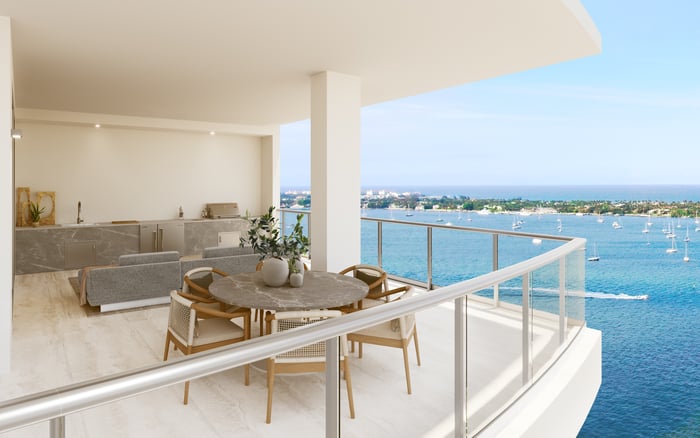
Long-term condominium ownership requires clarity about post-storm entry, safety restrictions, maintenance responsibility, and contractor authority. For Palm Beach buyers, the essential distinction is between statutory powers and the building-specific documents that govern their use.

The enduring appeal of a Palm Beach residence rests on more than its interiors. For a long-term owner, particularly one who spends part of the year elsewhere, confidence also depends on what happens after a storm: who may enter, what they may inspect, and who can authorize the professionals needed to contain damage.
For buyers considering Palm Beach Residences, these questions belong alongside a review of design and lifestyle. The framework discussed here reflects general Florida condominium principles, not any named property's procedures. Property-specific authority and obligations require review of the declaration and applicable policies.
The central distinction is straightforward: permission to investigate a qualifying condition is not unlimited permission to inspect or renovate a private home. A disciplined ownership review treats inspection authority, building-access restrictions, and repair authorization as separate questions.
Florida condominium law gives a condominium association an irrevocable right to enter units during reasonable hours for specified maintenance, repair, replacement, and damage-prevention purposes. That right includes work involving common elements and portions of a unit the association must maintain under the declaration.
After a storm, water intrusion or another condition threatening common elements or neighboring residences can justify inspection under the damage-prevention authority. The question is not simply whether a storm occurred, but which condition requires attention and how the proposed entry relates to the association's responsibilities.
Owners should ask management to identify the reason for entry and the intended scope. Inspecting a suspected moisture pathway is different from conducting an unrelated review of interior finishes. The statutory right is purpose-specific, not blanket permission to examine an owner's home for any reason.
Where access is disputed, building-specific legal review matters. Owners should not read the statute as unrestricted authority to force entry or perform any work a contractor proposes.
The declaration matters because the access statute expressly refers to unit components the association is obligated to maintain. Buyers therefore need to understand the boundaries between common elements, association-maintained portions of the residence, and owner-maintained finishes.
The same diligence applies when comparing Alba West Palm Beach with other West Palm Beach options. The useful comparison is not an assumed difference in storm performance, but how clearly each property's documents define maintenance obligations and decision-making authority.
An inspection record should distinguish those three responsibility categories. An unresolved issue should remain pending document or professional review rather than be assigned casually to an owner or the association.
Inspection access does not, by itself, settle every payment or repair question. Before permanent restoration begins, buyers should ask how findings become approved work and how responsibility disputes are handled.
A residence left unoccupied for part of the year is not automatically an abandoned unit. Seasonal absence alone does not establish abandonment; the association must apply the statutory criteria rather than treat every vacant home as abandoned.
For a qualifying abandoned unit, the association may enter to inspect, undertake necessary repairs, address mold or deterioration, restore utilities, and preserve the unit and adjoining common elements. Except in an emergency, that entry generally requires at least two days' notice delivered or mailed to the owner's address in association records.
The two-day provision is not a universal notice rule for every post-storm inspection. It belongs to the abandoned-unit framework. Owners should ask which authority is being used rather than assume all access requests follow the same procedure.
For seasonal owners, practical preparation includes keeping contact details current and clarifying how management should communicate with a designated representative. These are recommended arrangements, not substitutes for statutory requirements.
Association entry into a residence and an owner's ability to return to the building are separate questions. During a qualifying declared emergency, Florida condominium law permits restrictions on entry or occupancy based on advice from emergency-management officials, public-health officials, or licensed professionals.
An apparently intact interior does not establish that the building is safe to enter. Professionally identified hazards elsewhere on the property can support restrictions. Owners should ask which safety condition supports the restriction and what review will inform the next access decision.
Those emergency powers do not erase access rights. Restrictions affecting owners, tenants, guests, agents, and invitees remain subject to statutory exceptions and safety conditions. A disputed restriction warrants building-specific legal review, not a categorical assumption that access is either always permitted or always prohibited.
Buyers evaluating Forté on Flagler West Palm Beach can use this distinction as a due-diligence question without assuming a particular emergency policy applies there.
A prudent response prioritizes life-safety hazards and damage containment before permanent restoration. Appropriately qualified professionals should be engaged through written scopes that identify the task, pricing terms, and authority to approve changes.
Owners should ask who can authorize an initial inspection, who can approve containment work, and who must approve a larger repair. These are recommended governance questions, not claims about a particular building's contracts. Urgency should not blur the distinction between investigating a condition and commissioning work beyond the original scope.
A recommended access protocol records the reason for entry, owner notification, personnel attending, entry and exit times, photographs, and any moisture readings. This documentation helps owners understand what was observed and what was done while preserving the boundary between inspection and repair.
For buyers considering Mr. C Residences West Palm Beach, vendor authorization deserves the same scrutiny as unit-entry procedures. Neither a project name nor its presentation establishes its post-storm operating rules.
A post-storm condition inspection should not be treated as a substitute for a required structural milestone inspection. Condominium and cooperative buildings three stories or taller in unincorporated Palm Beach County are subject to the milestone-inspection framework, with inspections performed by a Florida-authorized licensed architect or engineer.
That jurisdictional distinction matters. The unincorporated-county framework should not be described as the Town of Palm Beach's inspection procedure. Buyers should establish the property's jurisdiction and applicable requirements before drawing conclusions about compliance.
Disaster-recovery assistance can include permits, inspections, and status checks. The practical ownership question is which approvals apply to the proposed work-not whether an initial storm visit resolves every subsequent requirement.
Long-term confidence comes from defined authority, accurate records, and a clear path from observation to approved action. Explore considered residential options and ownership priorities with MILLION.
If branded residences are on your mind — as a home or as an allocation — we would be glad to share what we are seeing, privately.
Begin a quiet conversationFlorida law permits entry during reasonable hours for specified maintenance, repair, replacement, and damage-prevention purposes. A qualifying threat to common elements or neighboring units can justify a post-storm inspection.
No. The right is purpose-specific and does not authorize unrelated interior inspections or any work a vendor proposes.
The declaration identifies unit components the association must maintain. Those obligations help determine the scope of authorized entry and maintenance responsibility.
No. Seasonal absence alone does not establish abandonment, and the association must apply the statutory abandonment criteria.
The general two-day notice provision discussed here applies to entry into abandoned units, except in an emergency. It should not be treated as a universal rule for all post-storm entry.
It may inspect, make necessary repairs, address mold or deterioration, restore utilities, and preserve the unit and adjoining common elements.
Yes, qualifying emergency restrictions can reflect professionally identified hazards elsewhere in the property. Restrictions remain subject to statutory exceptions and safety conditions.
It should document the reason for entry, owner notification, attending personnel, entry and exit times, photographs, and any moisture readings.
A recommended approach prioritizes life safety and damage containment, then engages appropriately qualified professionals. Written scopes should clarify pricing and change-order authority.
No. A post-storm condition inspection should not be presented as a substitute for a required structural milestone inspection.