For part-time owners in Sunny Isles Beach, arrival privacy depends on the entire route home. Evaluate curb exposure, parking rights, dock access, service circulation, and management procedures before treating security amenities as proof of discretion.

For a part-time owner in Sunny Isles Beach, a discreet arrival requires more than a handsome porte cochère or a familiar concierge. It depends on the full journey from vehicle or vessel to residence door, including every shared space and staff handoff along the way.
Controlled access does not necessarily mean concealed arrival. A credentialed elevator may restrict movement while leaving its waiting area visible to guests. A gated garage may still require owners and contractors to cross the same lobby. Evaluate four routes independently: curb, garage, dock, and service circulation.
The aim is not to eliminate hospitality. It is to establish where assistance is optional, where it is essential, and whether the arrangement works when you arrive with luggage, family, or an unexpected change of schedule.
Tour the approach during evening and weekend activity, not only during a quiet appointment. Observe valet queues, rideshare staging, pedestrian sightlines, and the distance from the vehicle door to controlled entry. Record what happens during your visit without treating a single observation as a permanent measure of performance.
Ask whether residents may bypass the principal drop-off and whether that alternative remains available after hours. Trace the luggage route as carefully as your own: an unobtrusive entrance offers less discretion if bags must cross the busiest public space.
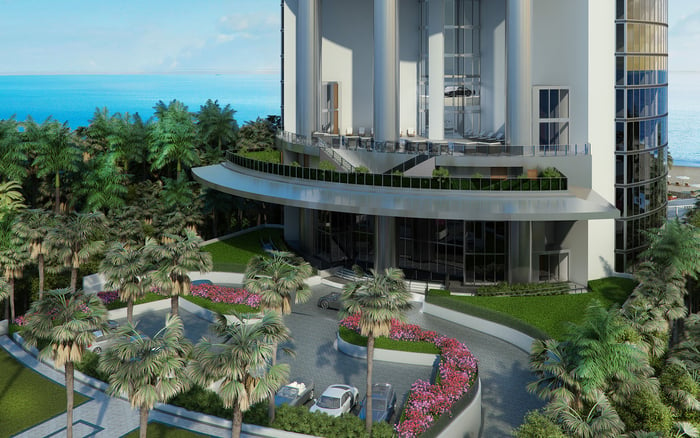
If Jade Signature Sunny Isles Beach is on your shortlist, conduct the same curb-to-door walkthrough rather than inferring the arrival arrangement from the project's identity.
Distinguish access rules from visibility. Who may enter the forecourt is one question; who can observe a resident waiting there is another. Both require answers grounded in the layout and operating procedures.
Start with the parking allocation. Confirm whether spaces are deeded or assigned, whether self-parking is permitted, and where guests and valet vehicles circulate. Then walk from the exact space offered with the residence to the elevator you would use.
Parque Towers at St. Tropez, at 300 Sunny Isles Boulevard, is marketed with biometric access control and 24-hour security. Advertised parking options include valet, garage, open, guest, and secure parking. These descriptions do not establish which garage or elevator access points use biometrics, or whether every owner follows the same route.
Similarly, private two-car garages are advertised for select residences at 16047 Collins Avenue. That does not establish a direct connection to a controlled lift. Verify the garage allocation and inspect the intervening doors, corridors, and elevator landing for the specific residence.
When evaluating Bentley Residences Sunny Isles, distinguish the parking offering from the documented route. Ask management to demonstrate credential requirements and explain the authorized alternative when the usual access method is unavailable.
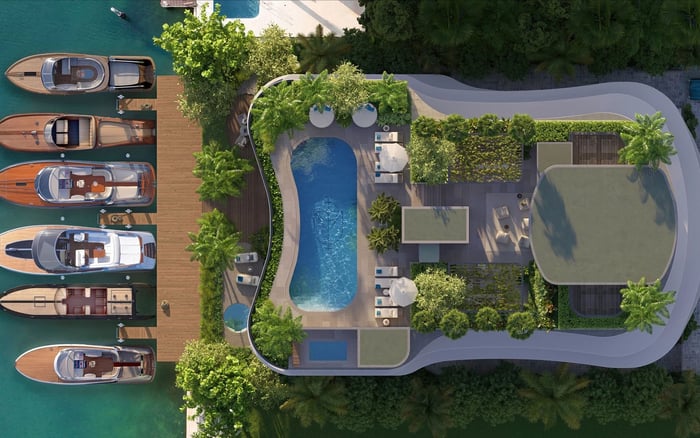
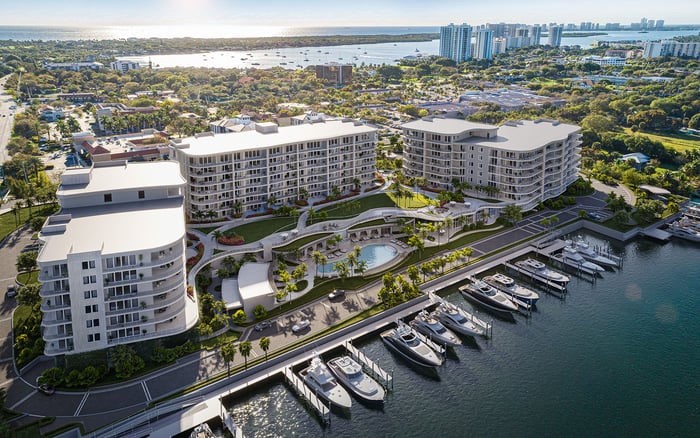
A marina can enrich ownership without providing an independent entrance home. Advertised amenities at Arlen House include a marina, boat docks, and a boat ramp, alongside several parking arrangements, concierge service, and 24-hour gated security. Those amenities alone do not establish a private dock-to-residence route.
St. Tropez is marketed with marina access, a community dock, concierge service, valet parking, and 24-hour security. The practical question is what happens after disembarkation: which gate residents use, where crew or visitors wait, and whether the route joins a public-facing lobby.
Confirm boat-slip rights separately from residential ownership. Establish the operator, resident access rights, visitor and crew rules, and gate controls before relying on waterborne arrival.
The RMF-2 residential district permits wet dockage or moorage for private, noncommercial pleasure craft associated with permitted residential uses. That permission is not a promise of dock availability. New docks involve city, environmental-resource, and applicable drainage-district approvals; further approvals may also be required. Confirm current requirements and district applicability before assuming a dock can be added or altered.
Request the routes for deliveries, contractors, moving trucks, waste removal, and luggage handling. Do not assume a separate freight elevator or service corridor exists. If residents and service personnel share a landing, establish whether scheduling or access policies manage that overlap.
Sunny Isles Beach's off-street loading standards require direct access from a street or alley and arrangements for safe truck access to the building served. A loading space is defined as a grade-level area at least 10 feet wide by 25 feet long, with 14 feet of vertical clearance.
Within the Mixed Use-Resort District, loading provisions require vehicles entering and leaving Collins Avenue to move forward. These are circulation requirements, not guarantees of resident privacy. Confirm current rules and their applicability before drawing building-specific conclusions.
During the walkthrough, identify where the loading route meets residential circulation. A separate loading area is only part of the answer; the delivery's journey beyond it matters just as much.
Ask management to demonstrate a realistic arrival, not simply describe the concierge offering. Include an owner arriving with luggage, a guest arriving separately, and an authorized contractor needing access while the residence is vacant.
Clarify who approves each admission, how authorization is withdrawn, where packages wait, and what vacant-residence monitoring is provided. Obtain written procedures rather than assuming security coverage includes residence checks or contractor supervision.
For a comparison that includes Regalia Sunny Isles Beach, keep the scenarios identical across properties. Consistent questions reveal differences in operating arrangements without treating branding as evidence.
Lifestyle fit depends on these details. Decide whether your preferred routine relies on self-directed access, staff assistance, or a combination. Then verify that the building supports it when you are absent as well as present.
Request site plans, parking allocations, dock rules where relevant, service-routing plans, elevator-access policies, and relevant condominium meeting minutes. Reconcile those documents with the walkthrough and ask management to explain any differences.
For each route, record shared spaces, credential checkpoints, staff handoffs, and unresolved questions. Keep advertised features separate from demonstrated operations. A secure lobby, marina, or private garage should never substitute for understanding the complete journey.
The strongest choice is the residence whose access rights, physical layout, and daily procedures align with your expectations. For part-time ownership, discretion should be repeatable-not dependent on a carefully arranged viewing.
Explore your Sunny Isles Beach residential options with MILLION.
If branded residences are on your mind — as a home or as an allocation — we would be glad to share what we are seeing, privately.
Begin a quiet conversationNo. Access controls restrict entry or movement, but shared waiting areas and visible approaches can still expose an arrival to other people.
Visit during evening and weekend activity to observe valet queues, rideshare staging, and sightlines. Treat each visit as an observation rather than a guarantee of typical conditions.
Confirm deeded versus assigned spaces, self-parking rights, guest arrangements, and the allocation attached to the specific residence. Walk from that space to the residential elevator.
Its advertised biometric access control does not establish which garage or elevator access points use it. Confirm the relevant checkpoints with management.
No. Verify the intervening doors, corridors, and elevator landing for the exact residence rather than inferring a direct connection from the garage description.
Not necessarily. Confirm resident access rights, gate controls, crew rules, and the full route from disembarkation to the residential elevators.
The district permits wet dockage or moorage for private, noncommercial pleasure craft associated with permitted residential uses. This does not establish dock availability or eliminate approval requirements.
The city defines a grade-level space at least 10 feet wide by 25 feet long, with 14 feet of vertical clearance. Confirm current requirements and applicability to the property.
Rehearse luggage handling, separate guest arrivals, contractor admission during an absence, and package receipt. Clarify what vacant-residence monitoring is actually included.
Request site plans, parking allocations, applicable dock rules, service-routing plans, elevator-access policies, and relevant condominium meeting minutes. Compare them with the residence-specific walkthrough.