A buyer-focused guide to separating trust or LLC ownership from household access at Casa Bella, with practical questions on private elevators, staff circulation, vendor permissions, and absence management.
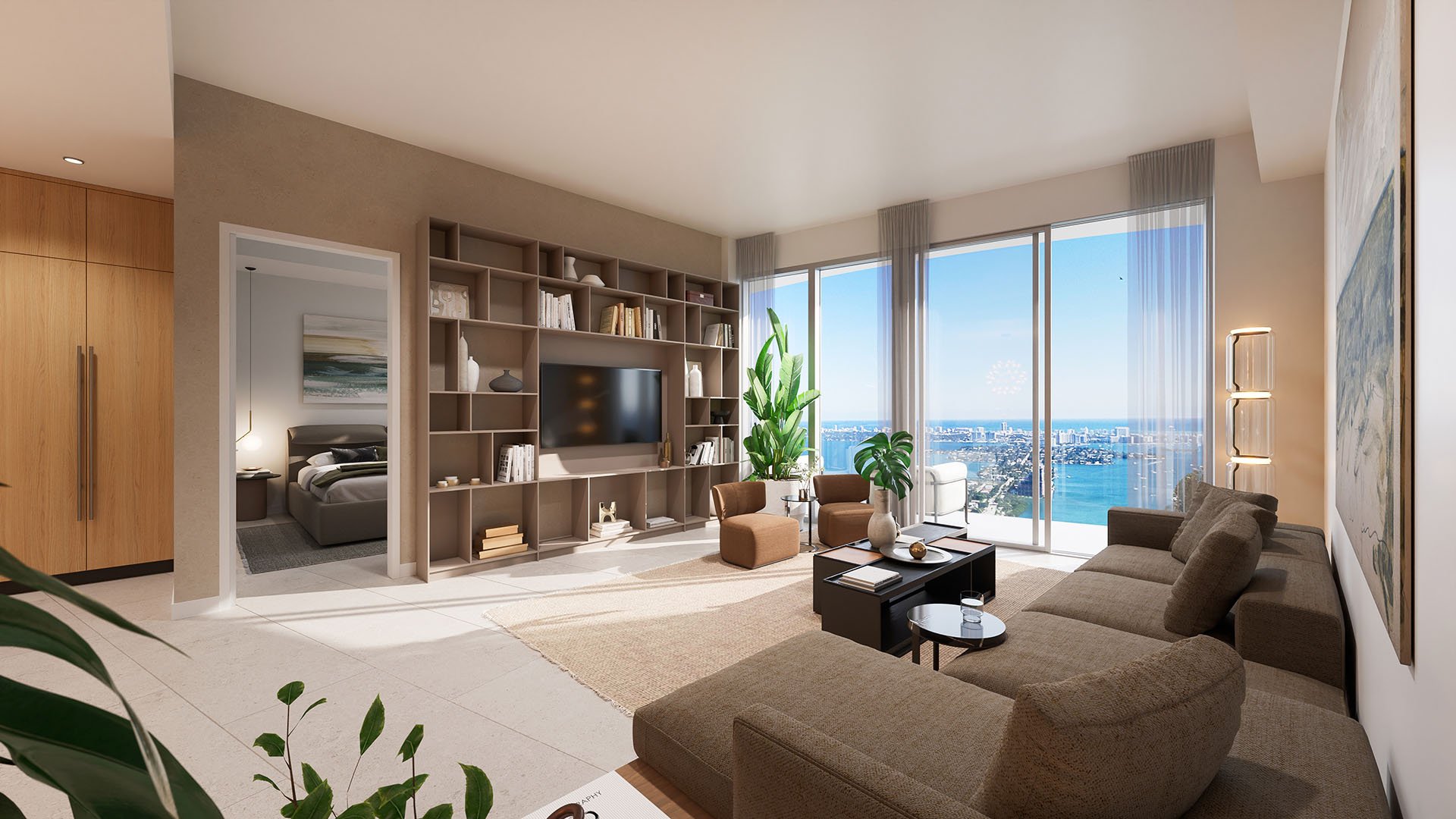
For a household accustomed to discreet service, privacy is more than an elevator opening into a private vestibule. It is also the choreography of arrivals: a housekeeper before breakfast, groceries before the owner lands, a technician admitted while the residence is unoccupied. At Casa Bella by B&B Italia Downtown Miami, those questions warrant a separate review alongside any proposed trust or LLC purchase.
The development is in Downtown Miami’s Arts & Entertainment District and is described as 56 stories with 319 residences, including one- to four-bedroom homes and a penthouse collection. Its advertised privacy features and household services offer a starting point, not a complete operating manual.
The essential distinction is simple: legal ownership and operational access are separate matters. Project-specific eligibility for trust or LLC ownership remains unconfirmed, as do staff-entry procedures and separate service circulation. Neither an ownership structure nor private-elevator marketing should be treated as permission for household employees to enter independently.
Casa Bella’s advertised residential features include two private elevators, a private vestibule, and biometric elevator access controls. These features address the resident’s arrival experience. They do not establish a separate staff corridor, dedicated staff entrance, freight elevator, or independent vendor route.
For buyers who require household work to remain out of view, the decisive document is a circulation plan. Request one that identifies resident, staff, vendor, restaurant, loading, and valet movements. Then trace an ordinary visit from the curb to the residence door, noting every point where authorization is required.
A ground-level restaurant open to the public is also described for the project. Its presence raises a specific diligence question; it is not evidence of a privacy problem. Ask where restaurant patrons and deliveries travel and whether those paths intersect with residential access.
If Aston Martin Residences Downtown Miami is also on the shortlist, apply the same circulation questions there. Compare documented routes and permissions rather than assuming private arrival features imply equivalent service arrangements.
Before committing to a trust or LLC structure, request the declaration, bylaws, rules, resident handbook, and ownership-application requirements. Have Florida counsel review them alongside the purchase agreement and title requirements. Seek written clarity on the proposed purchaser and the individuals who will occupy or administer the residence.
For a trust purchase, ask counsel and the title company to address trustee authority, vesting, financing, required disclosures, and potential homestead treatment. Do not assume a preferred estate-planning structure has already been accepted for this condominium.
For an LLC purchase, the review should cover entity status, authorized signers, supporting resolutions, financing, insurance, and any required occupant or beneficial-owner disclosures. Ask who may communicate with management and authorize household access on the entity’s behalf.
Keep those authorizations explicit. Signing authority for the purchase and authority to admit household vendors are distinct roles. Ask how each would be documented and changed. Entity ownership should not be treated as a shortcut around building access rules.
Casa Bella advertises 24/7 security and valet parking, together with a multilingual on-site team available at any hour. Those offerings do not establish the screening, credentialing, escort requirements, access hours, or elevator permissions that apply to private household employees.
Build the inquiry around the people who will actually use the home. For a recurring housekeeper, nanny, or pet-care provider, ask whether registration is required, what credentials are issued, and whether access can be limited to approved days or hours. Confirm how biometric controls apply to authorized nonresidents; do not assume employee enrollment is available.
Next, address exceptions: an employee arriving early, a replacement caregiver, or a household manager seeking entry while the owner is abroad. Request the approval process for each circumstance, including who receives notifications and who can revoke authorization.
Buyers also considering Cipriani Residences Brickell can carry this household-specific brief into their Brickell comparison. The useful question is whether documented procedures accommodate the household’s routine-not whether a service description sounds comprehensive.
The advertised household-service menu includes housekeeping, butler services, and “While You’re Away” assistance. It also lists pre-arrival grocery shopping and delivery, dry cleaning and laundry, nanny and childcare assistance, pet care, courier services, and personal IT support.
Treat these as offerings to clarify, not verified current operations or services necessarily included in association fees. Request pricing, availability, booking terms, and an explanation of who performs each service. Ask whether providers are building employees or independent vendors and whether concierge-arranged providers follow different entry procedures from the owner’s established household team.
For contractors, seek written requirements covering approval, insurance, work hours, escorts, and elevator restrictions. For furniture and large deliveries, request reservation procedures, loading hours, dimensional limits, deposits, and protective measures.
Use a pre-arrival grocery order as a practical test. Ask who accepts it, whether anyone may enter the residence to put it away, and what authorization is needed when the owner is absent. A delivery offering alone does not answer those questions.
For a residence used intermittently, request an absence protocol before relying on advertised assistance. It should identify the household’s authorized contact, distinguish routine visits from urgent access, and explain how instructions are recorded and withdrawn.
Ask management to walk through three proposed scenarios: a scheduled cleaning, an unexpected repair, and a delivery arriving outside its approved window. These are planning exercises, not representations of Casa Bella’s rules. Their purpose is to identify decisions a broad service menu leaves unanswered.
Reconcile the property address as part of the same administrative review. The project lists 1400 Biscayne Boulevard, while 1444 Biscayne Boulevard has been identified as a sales-gallery address. Counsel and the title company should confirm the address and legal description applicable to the purchase rather than carry a gallery address into closing or insurance paperwork.
The strongest review produces three clear records: confirmation that the proposed ownership structure is acceptable, a circulation plan, and written access procedures. Together, they let the buyer assess whether the residence supports the intended household routine without confusing architectural privacy with operational permissions.
If independent staff entry or separated service circulation is essential, resolve it before relying on the home for that purpose. Ask counsel how any material requirement should be addressed in the transaction. The aim is a residence whose documented arrangements support the quiet ease its buyer expects.
For a discreet conversation about matching South Florida residences to your household’s priorities, connect with MILLION.
If branded residences are on your mind — as a home or as an allocation — we would be glad to share what we are seeing, privately.
Begin a quiet conversationProject-specific trust ownership eligibility is not confirmed. Have Florida counsel review the governing documents, purchase requirements, trustee authority, and title arrangements.
LLC eligibility remains unconfirmed. Request the ownership-application requirements and review entity status, signing authority, financing, insurance, and required disclosures with counsel.
Do not assume it does. Ownership approval and operational access should be reviewed separately, with written confirmation of who may authorize staff entry.
Separate staff corridors, dedicated staff entrances, freight elevators, and independent vendor routes are not established. Request a circulation plan before relying on service separation.
Casa Bella advertises two private elevators and a private vestibule for residences, with biometric elevator access controls. These features do not establish vendor permissions.
Absent-owner staff-entry procedures remain unconfirmed. Ask about registration, credentials, authorization, escort requirements, elevator permissions, and revocation of access.
Advertised offerings include housekeeping, butler services, absence assistance, grocery shopping and delivery, laundry, childcare assistance, and pet care. Availability, pricing, and provider arrangements require confirmation.
Fee inclusion is not established. Request a written breakdown of included services, separately charged offerings, and booking terms.
A ground-level restaurant open to the public is described for the project. Buyers should ask how patron and delivery routes relate to residential access without assuming that a conflict exists.
The project lists 1400 Biscayne Boulevard, while 1444 Biscayne Boulevard has been identified as a sales-gallery address. Have counsel and the title company reconcile the address and legal description with the transaction documents.