A practical framework for evaluating arrival privacy in North Bay Village, from curbside sightlines and garage access to dock circulation, service routes, and access management during extended absences.
For a part-time resident, arrival privacy means moving from vehicle or vessel to residence with few unnecessary encounters, clear access controls, and predictable assistance. A handsome entrance may contribute to that experience, but it cannot establish it. The real test is the complete route, including the less photogenic passages between parking, elevators, and the front door.
In North Bay Village, begin with four arrival settings: curb, garage, dock, and service corridors. In each, trace how residents, guests, deliveries, and staff move. For buyers also considering Miami Beach, these questions provide a consistent basis for comparison without assuming that one address is inherently more discreet.
Treat advertised amenities as prompts for inspection, not conclusions. Valet service, covered parking, a private marina, and round-the-clock security do not, alone or together, establish a private garage-to-residence journey.
Use site plans and floor plans to identify loading spaces, valet areas, pick-up and drop-off points, dwelling layouts, parking dimensions, and drive aisles. These categories form a useful checklist for understanding how an arrival is intended to work.
Request the applicable approved plans and compare them with an authorized walkthrough. Mark every transition: sidewalk to entrance, garage to elevator lobby, dock gate to residential circulation. Ask where access credentials are required and where different users share space.
When considering Continuum Club & Residences North Bay Village, apply the same plan-and-route review rather than inferring circulation from the project’s presentation. Distinguish what is proposed, what is approved, and what can actually be inspected. A drawing can clarify intended separation; it cannot demonstrate everyday operating discipline.
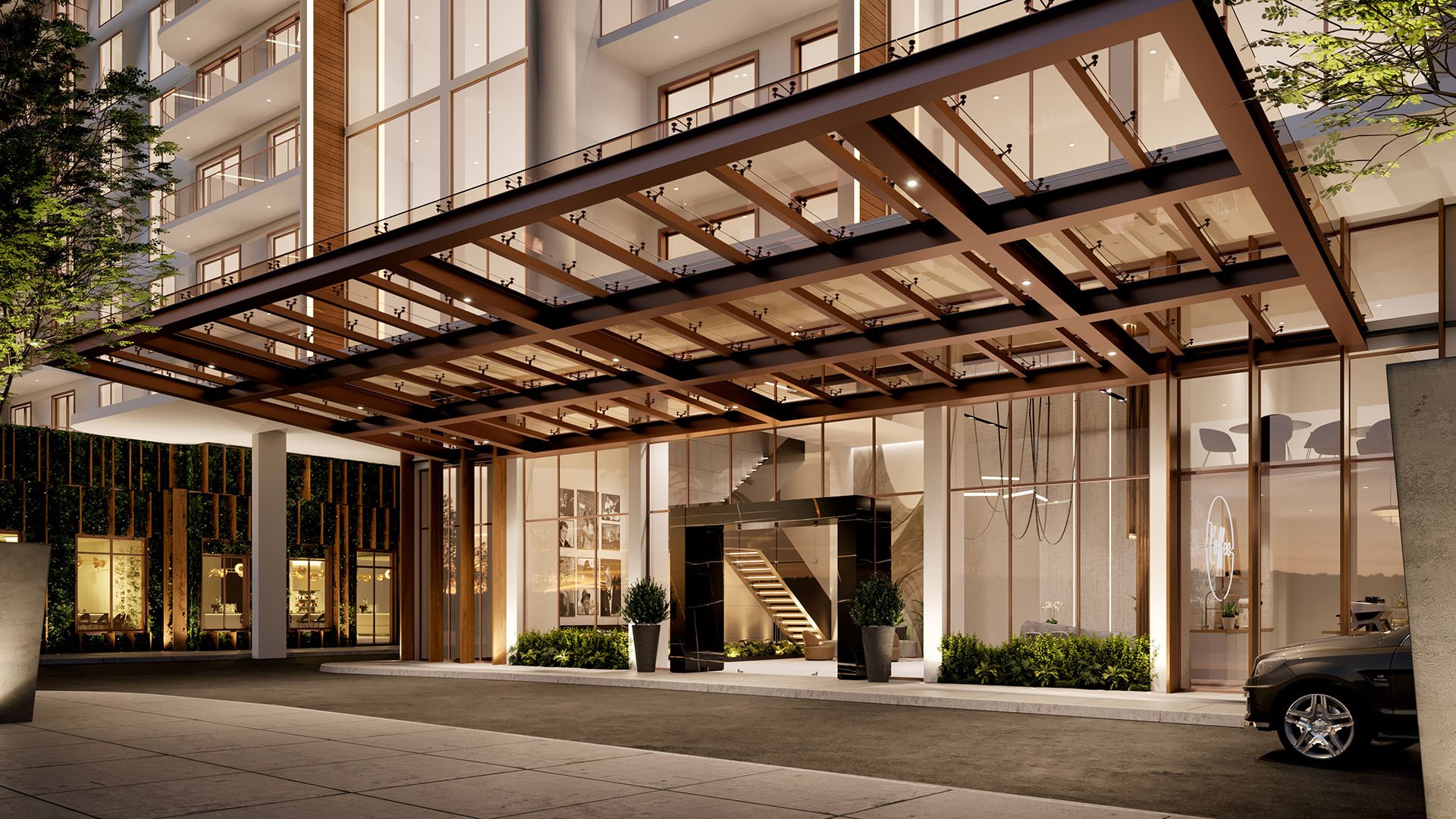
A covered drop-off protects against weather. Privacy requires a separate assessment of visibility from the street, neighboring buildings, pedestrian approaches, and waiting vehicles.
During an authorized visit, observe where passengers stand while luggage is unloaded and where drivers wait. Check whether rideshare staging overlaps with resident arrivals, valet queues obstruct the entrance, or guests pause in spaces residents must cross. Repeat the exercise in the evening, when lighting may change visibility.
For a buyer evaluating Shoma Bay North Bay Village, these are questions to resolve through plans and inspection, not assumed characteristics of the property.
Where a property advertises private garages, ask a precise follow-up: what is the actual route from the relevant garage to the residence? Do not infer a direct or exclusive connection from the phrase “private garage.”
Confirm parking rights for the particular unit, including the documented assignment and any applicable use restrictions. Ask whether self-parking is available, who holds vehicle keys, how garage entry is controlled, and where occupants unload belongings. Walk from the assigned space to the residential elevator, noting any shared staging areas.
A parking space near the lobby may simplify arrival. Proximity, however, does not resolve questions about sightlines or shared circulation. Evaluate convenience and privacy separately, then decide which compromises suit your routine.
A dock arrival deserves the same scrutiny as a curbside arrival. Establish whether a slip is owned, assigned, leased, or available under another arrangement, then review the relevant agreement. Confirm who may use dock gates and trace the route from vessel to residence.
Do not treat a private-dock designation as proof of a particular slip’s availability or a secluded dock-to-unit route. Ask separately about crew access, provisioning, maintenance, and neighboring sightlines.
If screening or a dock alteration would be necessary to meet your privacy expectations, confirm current requirements, zoning applicability, and property-specific approvals with qualified advisers. Do not treat a proposed alteration as automatically permissible or rely on it before the approval questions are resolved.
The service route deserves as much attention as the principal entrance. Ask management to trace packages, grocery deliveries, trash removal, contractors, and household staff from entry point to destination.
Determine whether service elevators are genuinely separate or the same elevator serves different users at scheduled times. Check where deliveries wait, who authorizes access beyond reception, and whether maintenance staging intersects with the resident route. Shared circulation is not necessarily disqualifying, but it should be understood before purchase, not discovered afterward.
Before assuming an alteration can create separation, establish which condominium permissions and permits would be required. Have qualified advisers assess any proposed changes against applicable requirements. A proposed improvement is not a substitute for an acceptable existing arrangement.
For part-time owners, privacy also depends on what happens during an absence. Request written procedures for retained keys and fobs, contractor authorization, package handling, and vacancy checks. Establish who can approve entry and how that approval is recorded or withdrawn.
If Tula Residences North Bay Village is on your shortlist, include these operating questions alongside the architectural review without presuming a particular service offering.
Separate routine access from exceptional access. Standing permission for household staff should not leave uncertainty about unrelated vendors. Before returning, confirm that temporary permissions have ended and that luggage, groceries, or other expected deliveries have an agreed destination.
Review condominium rules, parking assignments, dock agreements, and relevant board minutes together. Compare what they establish with weekday, evening, and weekend arrivals. Where a completed route cannot yet be inspected, leave its operating performance unresolved in your due diligence.
Create a simple assessment for each arrival setting: visibility, shared space, access control, and assistance required. Record what the documents establish, what the visit demonstrates, and what still needs written clarification. Do not reduce privacy to a single amenity or security label.
The right residence is not necessarily the one with the most elaborate entrance. It is the one whose arrival routes and absence procedures fit the way you intend to live.
Explore South Florida residences with MILLION and bring these arrival-privacy questions to your next property conversation.
If branded residences are on your mind — as a home or as an allocation — we would be glad to share what we are seeing, privately.
Begin a quiet conversationTrace the complete journey from curb, parking space, or dock to the residence. Identify sightlines, shared areas, access controls, and points where assistance is required.
No. Valet service does not establish screened unloading, discreet waiting areas, or a separate route to the residential elevator.
Review the unit’s parking rights, assignment, self-parking options, and entry controls. Walk the route from the assigned space to the elevator and identify shared staging areas.
No. Confirm the specific garage-to-residence route through applicable plans and an authorized walkthrough rather than inferring an exclusive connection from the description.
Confirm the slip’s ownership or use arrangement, availability, and governing agreement. Review dock access controls and separate arrangements for crew, provisioning, and maintenance.
No. Neighboring sightlines, gate access, and shared routes between the dock and residence require separate evaluation.
Confirm current requirements, zoning applicability, and property-specific approvals with qualified advisers. Do not assume screening or a dock alteration will be permissible.
Trace delivery, trash, contractor, and staff routes with management. Establish whether service elevators are separate or shared and where service traffic intersects with resident circulation.
Request written procedures for retained keys and fobs, contractor approvals, package handling, and vacancy checks. Clarify who may authorize entry and how temporary permissions are withdrawn.
Weekday, evening, and weekend visits let you compare queues, lighting, staging, and shared circulation. Check those observations against plans and governing documents.