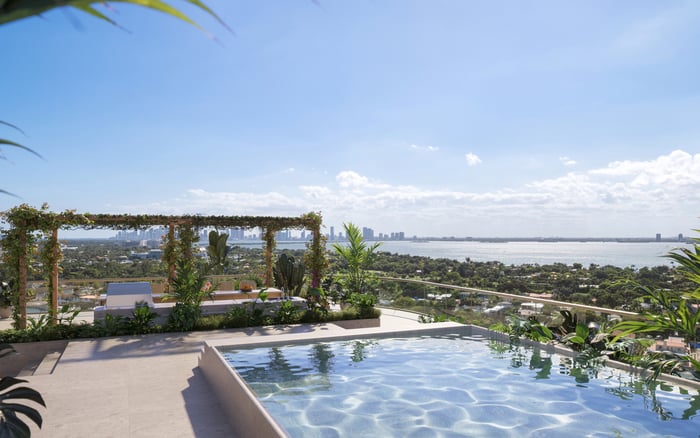
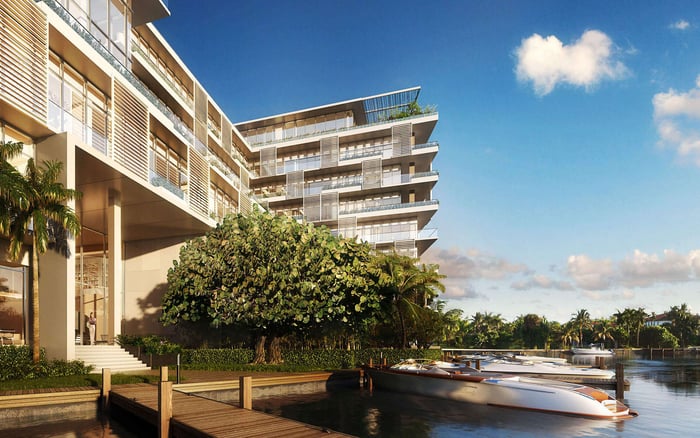
A disciplined framework for evaluating residence lines at The Perigon, translating orientation, acoustic conditions, environmental exposure, and privacy into a more precise offer.
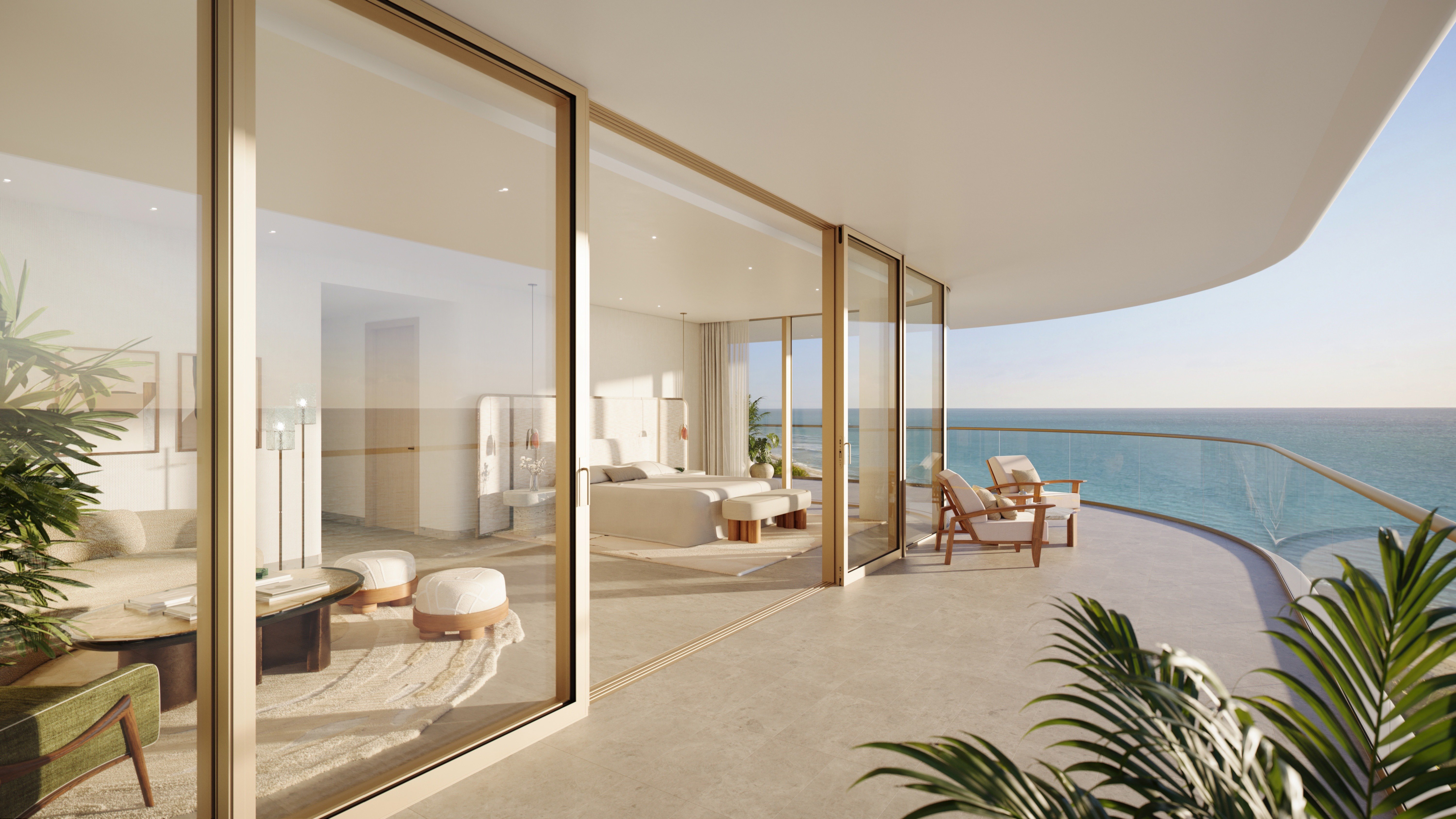
At The Perigon Miami Beach, line selection begins with a defining geographic fact: the Atlantic Ocean lies to the east, while Collins Avenue frames the western side of the Mid-Beach site. That relationship shapes the residential experience, but orientation alone does not determine value.
The strongest analysis weighs four variables together: view quality, noise risk, environmental exposure, and privacy. Two residences with comparable interior area and finishes can merit different offers when their horizon width, terrace conditions, acoustic profile, or sightlines diverge. For buyers considering Miami Beach oceanfront opportunities, the line is not a secondary detail. It is central to the asset.
Direct east-facing residences generally establish the closest visual relationship with the beach, dunes, and open-water horizon. This orientation can justify a premium when the ocean frontage is broad and uninterrupted, but the label “ocean-facing” is not sufficient. Floor height, terrace depth, structural columns, horizon width, and potential obstructions all affect what the owner will actually see.
Corner residences may combine Atlantic views with city, waterway, or sunset perspectives to the west. North- and south-oriented lines can deliver compelling oblique coastal views, although they differ from the frontal ocean exposure of a due-east residence. The building’s sculpted, curvilinear form is intended to widen view angles and create substantial outdoor areas, making the precise placement of furniture, glazing, columns, and terrace edges especially relevant.
Stand at the principal seating area, in the primary bedroom, and at the outer edge of the terrace. A water view that appears expansive from one position may narrow considerably from another. Buyers comparing the broader beachfront market might also examine 57 Ocean Miami Beach, but each residence should ultimately be judged from its own rooms and outdoor spaces.
Western exposure can carry greater traffic and service-noise risk, particularly when bedrooms or terraces face Collins Avenue. Traffic, however, is only one consideration. Service activity, mechanical equipment, amenity decks, and neighboring properties may also influence the acoustic environment.
Test the residence with doors both closed and open. Listen from sleeping areas as well as entertaining spaces, and do not assume that a higher floor automatically eliminates sound. The relevant question is not whether some urban or coastal noise exists, but whether its timing, intensity, and location interfere with how the residence will be used.
Apply the same discipline when comparing established Miami Beach addresses such as Faena House Miami Beach. Building-level prestige cannot substitute for inspecting the exact exposure under consideration.
Environmental exposure determines whether outdoor space becomes part of daily life or remains largely visual. Assess sunlight, heat gain, glare, wind, and terrace usability by orientation and time of day.
West-facing areas can offer sunsets over the urban landscape and Indian Creek, but afternoon sun may make terraces hotter and brighter. That tradeoff can appeal to a buyer who entertains at sunset, yet prove less attractive to someone seeking shaded afternoon use. East-facing spaces may offer a different daily rhythm, while corner and oblique orientations can create more complex patterns of light and wind.
Do not reduce this analysis to a compass point. A deep terrace, a column, or the curvature of the facade may alter exposure within the same residence. Buyers considering alternatives such as The Ritz-Carlton Residences® Miami Beach should apply the same room-by-room test rather than make broad assumptions based on neighborhood.
Assess privacy from the beach, neighboring towers, public amenity areas, adjacent terraces, and internal service routes. Lower-floor oceanfront residences may retain a meaningful relationship with the water while remaining more visible from the beach or common areas than residences above.
Walk toward the glazing from several interior positions. Consider whether curtains would be required during the day or evening, and whether nearby terraces create direct lateral sightlines. A beautiful view corridor can coexist with compromised privacy, so each warrants a separate value adjustment.
The practical principle is consistent: privacy is experiential, not merely dimensional. Ceiling height, finish quality, and interior scale do not erase an exposed bedroom or frequently overlooked terrace.
Broad, uninterrupted ocean frontage can support a premium. Conversely, traffic noise, severe glare, compromised privacy, or obstruction risk can justify a more conservative bid. The adjustment should reflect the durability of the condition. A permanent orientation differs from a concern that may be mitigated through shading, glazing, landscaping, or interior planning.
Before making an offer, inspect the exact residence and terrace at multiple times of day. Confirm how morning light enters, how western sun affects comfort, when service or traffic noise becomes noticeable, and whether evening interiors are visible from surrounding vantage points. Also verify whether a valued view corridor depends on neighboring parcels remaining unchanged.
The result should be a line-specific offer, not a generic price derived from interior area alone. Comparable residences can warrant materially different judgments when their view corridors, terrace orientations, noise conditions, and privacy profiles diverge.
Which orientation generally has the strongest ocean relationship? Direct east-facing residences generally offer the closest connection to the beach, dunes, and open-water horizon.
Are corner residences necessarily more valuable? Not automatically. Wraparound ocean, city, waterway, or sunset perspectives must be weighed against exposure, privacy, and acoustic conditions.
Does a higher floor guarantee a better view? No. Height matters, but horizon width, terrace depth, columns, and obstructions also shape view quality.
Which side carries the greatest traffic-noise concern? Western exposures may carry more Collins Avenue noise, especially where bedrooms or terraces face the roadway.
What other noise sources should a buyer test? Review service activity, mechanical equipment, amenity decks, and neighboring properties at relevant times.
What is the principal tradeoff with western exposure? Sunset views may come with stronger afternoon heat and glare, potentially affecting terrace comfort.
Why can lower oceanfront floors feel less private? They may be more visible from the beach, public areas, or surrounding vantage points despite retaining water views.
How should terrace quality be assessed? Test usable depth, wind, shade, glare, columns, sightlines, and the view from typical seating positions.
Can similar residences justify different offers? Yes. View corridors, terrace orientation, noise, exposure, and privacy can distinguish otherwise comparable homes.
What should be verified before submitting an offer? Visit the exact residence at multiple times and examine whether valued views depend on neighboring parcels remaining unchanged.
For a discreet conversation and a curated building-by-building shortlist, connect with MILLION.
If branded residences are on your mind — as a home or as an allocation — we would be glad to share what we are seeing, privately.
Begin a quiet conversation