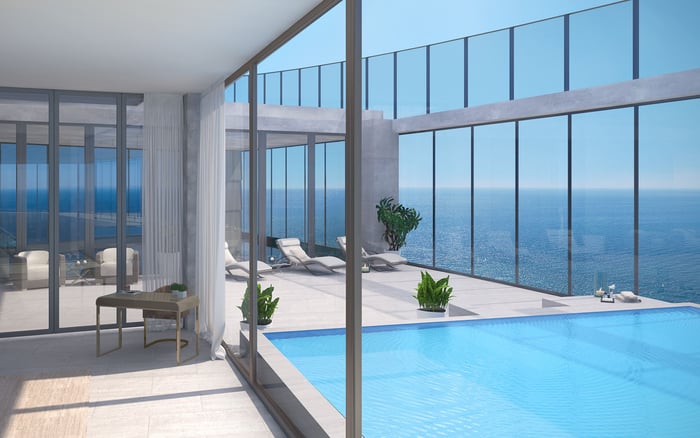
A family-centered framework for evaluating long-term ownership at Muse Residences, from shared use and operating oversight to succession planning and eventual resale.

Legacy ownership works best when a family defines the residence’s purpose before debating legal structures or design choices. Will it serve as a winter base for one generation, a gathering place for several households, or a second home that may eventually pass to children? Each answer calls for a different approach to scheduling, expenses, stewardship, and resale.
Muse Residences Sunny Isles Beach offers a compelling physical setting for that conversation. The boutique oceanfront condominium stands along Collins Avenue in Sunny Isles Beach, with a relatively low-density design and only a small number of residences per floor. Private or semi-private elevator access can make each arrival feel more like entering a private home than passing through a conventional tower corridor.
That privacy may be especially valuable for families hosting several generations. Typical residences offer two to four bedrooms and generous floor plans, while deep oceanfront terraces and broad expanses of glass frame Atlantic views and natural light. Some homes extend from east to west, offering the possibility of both sunrise and sunset exposures. Still, every residence warrants individual consideration because layouts, views, finishes, and technology can vary.
A family charter need not be elaborate, but it should be written. It can identify who may reserve the home, how peak weeks are allocated, whether guests may stay without an owner present, and who approves extended visits. It should also distinguish personal belongings from items intended for shared use.
The goal is not bureaucracy, but the prevention of avoidable friction around a desirable residence. A rotating holiday calendar, a defined booking window, and a procedure for resolving conflicts can preserve fairness without sacrificing spontaneity. Families should also decide whether the home will remain primarily private, accommodate occasional entertaining, or host larger gatherings.
Muse’s contemporary interiors, European cabinetry, stone finishes, and high-end appliance packages create a polished setting for hosting. Its oceanfront pool area, beach service, fitness facilities, spa features, and resident social spaces add convenience without diminishing the property’s intimate character. Families drawn to a quieter setting may also compare the ownership experience with Jade Signature Sunny Isles Beach as they determine which environment best serves multiple generations.
Governance should answer four questions: who decides, who pays, who supervises, and what happens when family members disagree. One person might serve as the operating lead, but major decisions should carry clear approval thresholds. These could include renovations, furnishing replacement, extended occupancy, leasing if permitted, or an eventual sale.
Create an annual operating plan that separates predictable carrying costs from discretionary improvements and emergency expenditures. Families can then determine whether contributions are equal, tied to ownership percentages, or based on use. A reserve held at the family level may help cover interior repairs or technology replacement, but it should remain distinct from the condominium association’s finances.
Before formalizing any plan, buyers should review the current declaration, bylaws, budgets, reserve information, insurance records, and board minutes. These materials may affect use, transfers, leasing, renovations, and costs. The available property facts do not establish applicable rules, reserve positions, assessments, or transfer procedures, making current documents and professional review essential.
A legacy residence must perform when the family is present and remain manageable when vacant. Muse incorporates home-automation capabilities for audiovisual systems, climate, and lighting. Remote-control and monitoring technology can help families oversee the residence between visits, subject to the configuration and condition of the individual unit.
Assign responsibility for vendor access, preventive maintenance, storm preparation, deliveries, and post-visit inspections. Controlled entry, direct residential access, and advanced parking systems can support secure, convenient arrivals, but they do not replace a documented care routine. Families considering other low-density coastal options, including Regalia Sunny Isles Beach, should apply the same unit-level scrutiny rather than assume a building’s positioning resolves operational questions.
Technology also requires a succession plan. Maintain an inventory of devices, account administrators, warranties, service providers, and access permissions. Review it after any ownership change and whenever the family designates a new steward.
A residence becomes a legacy asset only if future family members want to use and maintain it. Muse’s quiet, curated amenity program may retain strong appeal for owners who value privacy, beach access, and a residential atmosphere. Younger relatives, however, may eventually prefer a more active, hotel-style environment.
That preference should be discussed candidly rather than treated as disloyalty. Families can schedule periodic reviews of actual use, anticipated needs, and willingness to fund the property. Comparing Muse with The Ritz-Carlton Residences® Sunny Isles can help clarify whether the family prefers intimate residential calm or a different service proposition. The aim is not to declare a universal winner, but to test the durability of the family’s own priorities.
Ownership through a trust, LLC, or another structure can carry legal, tax, financing, liability, and estate-planning implications. Qualified Florida legal and tax advisers should assess the family’s circumstances, particularly when non-U.S. family members are involved. The condominium documents should also be reviewed for provisions affecting transfers or entity ownership.
A sound resale plan begins well before a listing. Preserve plans, approvals, warranties, technology records, and a clear history of improvements. Avoid highly personal alterations unless the family accepts that they may narrow the future buyer pool. Because views, exposure, condition, and layout vary by residence, the individual home will remain central to marketability.
Families should agree on triggers for reconsidering ownership, including persistently low use, changing financial priorities, major capital needs, or limited next-generation interest. A pre-agreed decision process can turn an emotional moment into an orderly choice while preserving the option to hold when the family’s conviction remains strong.
Is Muse suited to multigenerational family use? Typical two- to four-bedroom residences and generous floor plans can accommodate extended-family visits, subject to the needs of the family and the layout of the specific home.
What gives Muse a private residential character? Its low-density format and private or semi-private elevator access reduce reliance on conventional shared corridors.
Should a family create written use rules? Yes. A concise charter can address scheduling, guests, expenses, household standards, and conflict resolution.
Can owners monitor a residence while away? Integrated technology may enable remote oversight of climate, lighting, and other systems, depending on the individual residence’s configuration.
Which condominium records deserve review? Review the declaration, bylaws, budgets, reserves, insurance records, board minutes, and any current notices with qualified advisers.
Does the available information establish leasing rules? No. Current condominium documents should be examined before a family assumes that leasing is permitted or appropriate.
Is a trust or LLC automatically the best ownership structure? No. The appropriate structure depends on legal, tax, estate, financing, and family considerations that require professional advice.
How often should the family revisit its plan? Review use, costs, stewardship, and next-generation interest regularly and after any material family or ownership change.
What can support future marketability? Maintain the residence carefully and retain records of improvements, approvals, warranties, and installed technology.
When should a family consider selling? Reassess ownership when use declines, priorities change, capital needs emerge, or future generations no longer value the residence.
When you're ready to tour or underwrite the options, connect with MILLION.
If branded residences are on your mind — as a home or as an allocation — we would be glad to share what we are seeing, privately.
Begin a quiet conversation