For a London buyer pursuing Fisher Island, the strongest offer is not necessarily the one funded permanently with cash. It is the one engineered to give the seller cash-like certainty while preserving the buyer's liquidity, valuation discipline, and cross-border control.
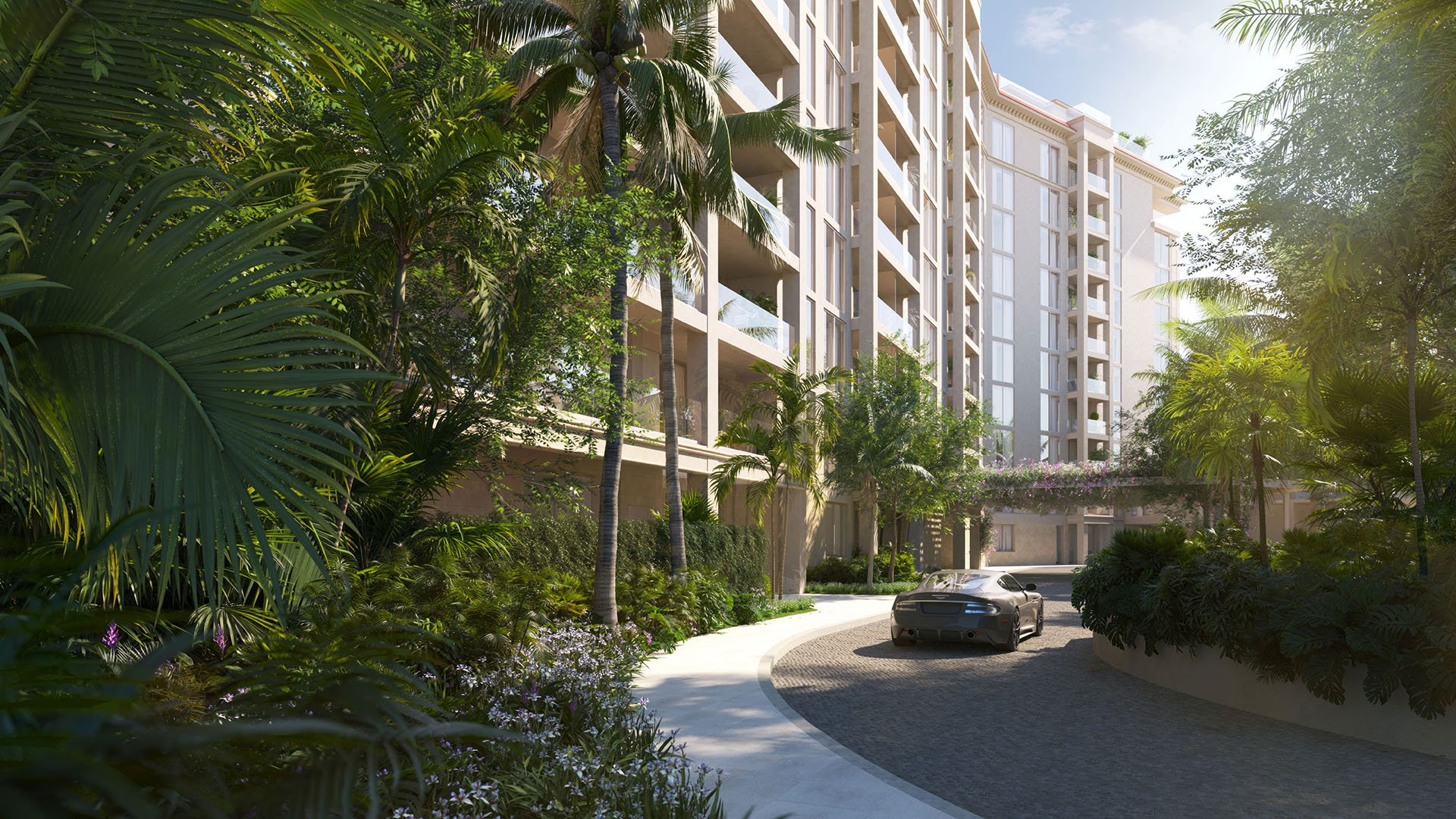
For a London buyer, acquiring a residence on Fisher Island is best approached as a residence strategy, not a simple property purchase. Accessible only by boat, this private Miami enclave combines a controlled setting with a private-club lifestyle, helping to establish it among the region's most expensive addresses. Scarcity reinforces that standing: at one recent point, just 18 homes were publicly listed for sale.
The competitive context is unusually cash-oriented. More than half of Miami homes priced above $1 million were bought with cash. In the first half of 2025, 83% of Miami condominium sales above $2,000 per square foot were all-cash, while volume in that category had risen 631% from 2019. Fisher Island luxury condominiums recorded a median of $2,004 per square foot in the first quarter of 2025.
Those figures do not mean every purchaser should liquidate a portfolio. They show that the contract must address what the seller values: certainty, speed and a low probability of failure. A credible cash purchase-or a transaction backed by credit that is not contingent on loan approval-can serve that objective.
The decisive advantage is often cash-like certainty, not permanent cash ownership.
An outright cash purchase is structurally clean. It generally closes faster than conventional financing and eliminates mortgage-approval and property-appraisal contingencies. For the seller, that reduces two central risks: a valuation below the agreed price and a buyer whose financing fails.
The trade-off is concentration. Cash committed to a residence is no longer liquid for other investments, family requirements or currency management. That can be material when the purchase forms part of a broader move from sterling assets into a dollar-denominated lifestyle.
A securities-backed line of credit, or SBLOC, may fund the closing without forcing the sale of securities. If the facility is fully arranged before the offer, the buyer may be able to present cash-equivalent execution while deciding later whether to retain, refinance or repay the borrowing. Luxury buyers have used both cash and favorable private financing, including around Fisher Island's upper market.
An SBLOC is not risk-free liquidity. Falling collateral values can reduce availability, prompt additional collateral requirements or lead to forced action under the facility. Interest expense can change, and the economics must be weighed alongside portfolio volatility and currency exposure. The lender, collateral account, borrowing base and wire mechanics should therefore be settled before bidding. Making the acquisition subject to approval of that facility would surrender much of the certainty the structure is designed to create.
For readers of MILLION Buyer's Guides, the governing distinction is simple: funding and contract presentation are related, but they are not identical. A buyer can preserve an investment portfolio while still giving the seller a firm contract, provided committed liquidity genuinely exists.
Waiving an appraisal contingency can strengthen an offer because the seller is no longer exposed to an independent valuation below the contract price. The buyer, however, becomes responsible for the entire gap. This matters in a thinly traded trophy market, where two exceptional residences may differ substantially despite sharing an island or even a building.
Valuation should emphasize recent transactions in the same building, unit line, exposure and condition. Island-wide averages and automated estimates are less persuasive for a singular penthouse, extensively renovated residence or waterfront estate. A $12 million closing at Oceanside Unit 7852 in June 2025 and a $21 million two-story mansion sale in December 2024 are useful market evidence, but neither is automatically comparable to another property.
Asking prices demand even greater restraint. A penthouse at The Residences at Six Fisher Island was marketed at $90 million, while other trophy offerings carried last asking prices of $42.5 million and $85 million. These figures illuminate seller expectations and the market's ceiling; they do not establish completed value.
A buyer unwilling to accept unlimited valuation risk can use a tightly drafted appraisal rider. The provision might activate only after a material shortfall, allowing a brief period for cancellation or renegotiation. The precise threshold and remedy should be negotiated with Florida counsel. This narrower form of protection can preserve more seller confidence than a broad financing contingency.
The residence search should separate product preference from financing pressure. A buyer considering The Residences at Six Fisher Island may be assessing new trophy inventory, while The Links Estates at Fisher Island presents another Fisher Island residential option. The objective is not to force unlike properties into a single price-per-square-foot formula, but to determine which evidence is genuinely relevant to the chosen asset.
Existing condominium options such as Palazzo del Sol and Palazzo della Luna can also inform the building-level review. Each candidate should be tested against recent same-building activity, physical condition, exposure, contractual terms and ownership costs. That discipline is particularly important in a resale negotiation, where improvements and seller expectations can create a meaningful spread between asking price and defensible value.
The market backdrop supports selectivity without implying softness. Miami-Dade recorded 29 single-family sales at $30 million or more in 2025, nearly twice the 15 recorded in 2024. At the same time, Fisher Island's limited publicly marketed inventory can make the best-fit residence difficult to replace. A strong offer should be decisive, but not indiscriminate.
Cross-border execution can become the hidden contingency. Sterling must be available in dollars on the required timetable, U.S. closing wires must clear, and banks may require know-your-client documentation before releasing substantial funds. Weekends, banking cutoffs and document reviews can disrupt an otherwise elegant closing plan.
Before contract, the buyer's U.K. and U.S. advisers should coordinate tax residence, ownership structure, presence rules and the treatment of credit interest. Qualified counsel should also confirm title and contract terms. If an entity or trust will acquire the property, its formation, authority and banking arrangements should not be deferred until the closing period.
Property diligence remains distinct from funding diligence. Review condominium financial statements, reserves, insurance, assessments, club obligations and membership conditions. A second-home decision can still carry full-scale governance, liquidity and operating implications. The residence, association and club should be evaluated as interconnected commitments.
First, define the maximum property exposure in both dollars and sterling. Second, compare outright cash with committed securities-backed credit under adverse portfolio and currency scenarios. Third, establish a valuation range using the closest available comparables. Fourth, decide in advance how much appraisal gap, if any, the buyer will absorb. Finally, align contract dates with banking, legal, tax and diligence workstreams.
This sequence avoids negotiating capital policy during the emotional final hours of a trophy acquisition. On Fisher Island, the composed buyer arrives with verified liquidity, ready documentation and predetermined risk limits. That preparation can make an offer appear simple to the seller, even when the private financial architecture behind it is sophisticated.
For discreet guidance on structuring your Fisher Island search and offer, connect with MILLION.
If branded residences are on your mind — as a home or as an allocation — we would be glad to share what we are seeing, privately.
Begin a quiet conversationThey reduce seller exposure to mortgage approval failure and appraisal-related delays. That certainty is valuable in a market where high-end cash purchasing is common.
Not necessarily. A prearranged securities-backed line may provide closing liquidity without selling securities, subject to lender terms and collateral risk.
Portfolio declines can reduce borrowing capacity or trigger demands for more collateral. Interest cost and potential forced action must also be evaluated.
Generally, yes. A committed facility helps preserve cash-equivalent positioning and avoids making the contract dependent on later financing approval.
The buyer assumes responsibility for any gap between appraised value and contract price. That exposure should be quantified before the offer is signed.
Yes. A carefully drafted rider can activate only after a material shortfall and provide a short cancellation or renegotiation period.
Prioritize recent transactions in the same building, unit line, exposure and condition. Broad island averages are less useful for singular trophy properties.
No. Asking prices show seller expectations, while completed transactions provide stronger evidence of market value.
Coordinate sterling-to-dollar funding, U.S. wires, banking cutoffs and KYC documents before signing. U.K. and U.S. professional advice should be aligned.
Review condominium finances, reserves, insurance, assessments, club obligations and membership conditions. These commitments affect both risk and ongoing ownership cost.