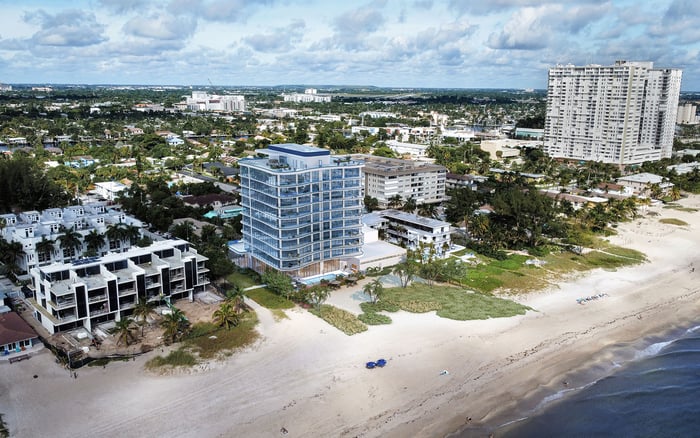
For Aspen sellers moving capital into Pompano Beach, a compelling cash offer begins with verified liquidity, documented securities-backed capacity, and precisely negotiated appraisal protection.

Leaving Aspen for Pompano Beach may appear to be a lifestyle decision, but the purchase also requires careful capital planning. Sale proceeds, an investment portfolio, closing dates, contract deposits, and valuation concerns can converge within a short period. A buyer who labels an offer “cash” should understand the obligations created by the signed agreement and how those obligations fit the broader wealth plan.
That distinction matters throughout Pompano Beach, whether the search includes Armani Casa Residences Pompano Beach or another oceanfront opportunity. A strong approach is not necessarily the one with the fewest protections. It is the one in which each negotiated term is supported by verified liquidity and a deliberate risk decision.
A cash offer is a contract position, not merely a description of net worth.
Buyers should determine whether the purchase can close with funds already available or depends on an event that has yet to occur. If proceeds from an Aspen sale are essential, the buyer can discuss closing alignment, bridge liquidity, or a suitable contractual condition with the appropriate advisors before signing. An informal plan to borrow later should not be treated as funds already available to close.
The agreement itself controls the buyer’s obligations and available protections. Florida counsel should review the actual financing, notice, default, deposit, and closing provisions rather than rely on a conversational description of the offer as cash.
This preparation is particularly important when comparing Ocean 580 Pompano Beach with resale or other opportunities that may use different deposit schedules or contract forms. The buyer’s funding plan should match the specific agreement under consideration.
A buyer considering securities-backed credit should confirm the structure directly with the financial institution. Eligible collateral, available capacity, permitted uses, pricing, documentation, and funding timing can vary. The relevant figure is not an informal estimate but the amount that is approved, documented, and expected to be accessible when the transaction requires it.
Borrowing against investments may provide liquidity without an immediate portfolio sale, but it also connects the real-estate purchase to the value and eligibility of the pledged assets. Changes in the portfolio or the institution’s requirements can affect the plan. A buyer should review those possibilities with financial, tax, and legal advisors before making a binding commitment.
For a buyer considering The Ritz-Carlton Residences® Pompano Beach, the focus should remain on documented and timely funding capacity. The buyer should also understand what would happen if the line changed before or after closing.
A disciplined liquidity plan should identify the funds allocated to the purchase, contractual deposits, closing obligations, any agreed valuation gap, and post-closing reserves. If securities-backed credit is involved, the plan should also account for possible changes in collateral value or borrowing availability.
Reserves should not depend entirely on the most optimistic sequence of events. The Aspen sale could close later than expected, the portfolio could change, or a valuation could differ from the contract price. Planning for those possibilities can preserve flexibility without assuming that any one outcome will occur.
For second-home buyers, this calculation remains part of the acquisition decision even when the residence is primarily for personal use. Liquidity should be measured against the obligations in the agreement, not solely against total net worth.
The funding structure and appraisal protection are separate negotiating decisions. A buyer who does not seek a financing condition can still ask counsel about language tied to valuation. Whether that protection is available, and how it operates, depends on the negotiated agreement.
An appraisal provision may address the valuation threshold, deadlines, notice requirements, supporting documentation, renegotiation rights, additional cash, or termination. The exact wording controls the result. Buyers should not assume that valuation protection exists unless it is clearly included and reviewed by counsel.
Without suitable protection, a valuation below the contract price could leave the buyer deciding whether to contribute more cash or face the consequences described in the agreement. Any decision to proceed without appraisal protection should follow a specific liquidity review.
This issue can be relevant when assessing W Pompano Beach Hotel & Residences or another distinctive luxury residence for which the buyer wants an independent valuation checkpoint.
An appraisal-gap clause can express a buyer’s willingness to cover a defined difference between the appraised value and the contract price. A cap may limit that commitment while showing the seller that the buyer is prepared to address a measured shortfall.
The clause should identify the buyer’s maximum contribution and explain what happens if the difference exceeds it. The agreement should also address how and when the appraisal is obtained, what notice is required, and which documents must accompany that notice. These details should be drafted or reviewed by Florida counsel.
A buyer considering a complete waiver of appraisal protection should first confirm that sufficient funds would remain available to perform under the agreement despite a lower valuation. That reserve should not rely on every funding source operating at its maximum expected capacity.
Securities-backed credit is not the only structure a well-capitalized buyer might discuss with advisors. Depending on the buyer’s circumstances and available programs, the planning conversation may include mortgage financing, bridge arrangements, portfolio-backed structures, or the sequencing of an existing property sale.
Each option can involve different documentation, timing, underwriting, tax, and risk considerations. A buyer should not assume that a financing alternative can be introduced after acceptance without affecting the ability to perform. The acquisition plan should remain workable under the agreement actually signed.
When reviewing Waldorf Astoria Residences Pompano Beach or another Broward residence, the funding structure should be evaluated before offer terms are finalized.
The buyer’s Florida real-estate attorney, financial advisor, lender, tax professional, and local real-estate advisor should work from the same proposed closing calendar and liquidity schedule. Counsel can review appraisal, financing, notice, default, and deposit language before protections are waived or an offer is presented as cash.
The final pre-offer review should answer several practical questions. Are the essential funds available or formally established? Can the purchase proceed if the Aspen sale is delayed? How much of a valuation gap is the buyer prepared to fund? What alternatives remain if pledged collateral changes? Clear answers can support decisive negotiation without confusing speed with avoidable exposure.
For discreet guidance on aligning a Pompano Beach property search with a carefully structured acquisition, connect with MILLION.
If branded residences are on your mind — as a home or as an allocation — we would be glad to share what we are seeing, privately.
Begin a quiet conversationYes. The buyer should confirm available funds, expected timing, and any dependence on sale proceeds or credit before signing.
No. The strategy should focus on funds available to satisfy the specific agreement and closing schedule.
Yes. Funding terms and appraisal protection can be addressed separately through negotiated contract language.
The buyer should verify approved capacity, eligible collateral, permitted uses, funding timing, and the effect of collateral changes.
Early confirmation helps the buyer avoid relying on an informal estimate after entering a binding agreement.
It should account for the purchase, deposits, closing obligations, potential valuation gaps, and appropriate reserves.
It can define the maximum valuation shortfall the buyer agrees to cover, subject to the contract’s full terms.
A Florida real-estate attorney should review the wording, deadlines, notice requirements, and available remedies.
The buyer should have evaluated closing alignment, alternative liquidity, or suitable contractual terms before committing.
The team may include a Florida real-estate attorney, financial advisor, lender, tax professional, and local real-estate advisor.