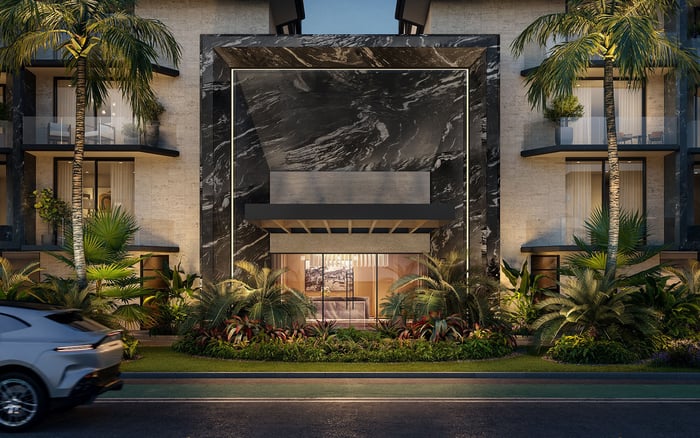
A luxury buyer’s guide to evaluating commercial-tenant noise risk at La Maré Bay Harbor Islands, with emphasis on privacy, terrace use, sleep quality, condo documents, acoustic performance, and resale perception.
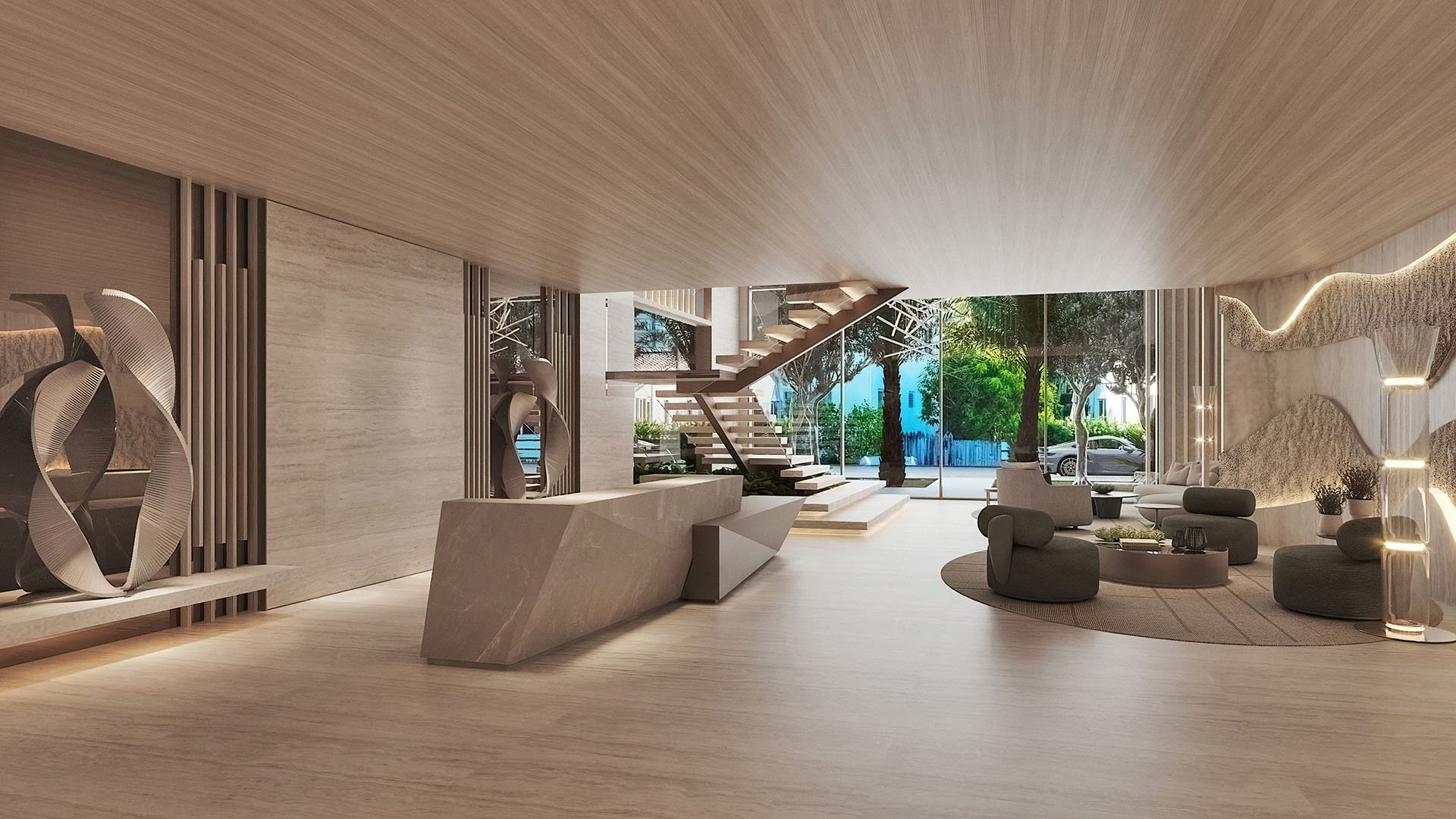
La Maré Bay Harbor Islands sits within one of South Florida’s most closely watched boutique-residential markets, where buyers evaluate a home through privacy, light, water orientation, arrival experience, and long-term discretion. In that context, sound is not a secondary detail. It is part of how a residence lives.
The point is not to suggest La Maré Bay Harbor Islands has a documented noise problem. A prudent buyer should not assume that. The more sophisticated question is narrower and more useful: if nearby commercial uses are present or introduced later, could their operating patterns affect how a particular residence feels at breakfast, at sunset, or late at night?
For a Bay Harbor buyer, this is not only about volume. It is about rhythm. A luxury condominium can feel serene at noon and entirely different during evening service, weekend arrivals, early-morning deliveries, or nearby valet activity. That is why commercial-tenant noise belongs in the same due-diligence file as view corridors, association budgets, rental rules, and construction quality.
The disciplined approach is to separate what is knowable from what is merely plausible. Buyers should not assume that La Maré Bay Harbor Islands includes ground-floor retail, restaurant space, marina-adjacent activity, or any other noise-generating use unless those details are confirmed in project documents, recorded instruments, association materials, or direct disclosures.
They should also avoid treating general market anecdotes as project-specific fact. Without confirmed tenant names, operating hours, lease restrictions, acoustic specifications, or decibel readings, any conclusion about actual noise exposure would be premature. The proper luxury posture is neither alarm nor indifference. It is verification.
That verification matters because the most expensive homes are often purchased for intangible qualities. A buyer may pay a premium for stillness, terrace privacy, a waterview, or an elegant transition between interior and exterior space. If nearby activity alters those qualities, even subtly, it can change the buyer’s perception of value.
Commercial sound can affect a residence in ways that are not always apparent during a polished showing. Music, kitchen exhaust equipment, truck deliveries, patron arrivals, door closures, staff movements, and late departures can each create a different sound signature. Some are low and constant. Others are intermittent but intrusive.
For the luxury buyer, the real issue is use of the home. Can the primary bedroom remain quiet at night? Does the terrace feel private during dining hours? Are sliding doors typically open or closed? Does the home invite outdoor entertaining, or does the buyer instinctively retreat inside?
This is why two residences in the same building can produce different decisions. A higher floor, a different exposure, a corner position, or a more protected line of sight may change the experience. Conversely, a lower residence facing an active edge may require closer evaluation. The question is not whether commercial life is inherently negative. In South Florida, walkable convenience and neighborhood energy can be desirable. The question is whether the specific residence delivers the lifestyle the buyer believes they are purchasing.
A single appointment rarely tells the full story. Buyers evaluating La Maré Bay Harbor Islands should consider visiting the immediate area at different times: weekday morning, late afternoon, evening, and weekend. The goal is not to search for flaws. It is to understand cadence.
During those visits, a buyer should stand where life will actually happen. Listen from the primary suite, the living room, and the terrace. If possible, experience the residence with doors open and closed. Notice whether sound rises vertically, reflects off neighboring surfaces, or becomes more apparent in otherwise quiet moments.
The same discipline applies outside the unit. Observe loading areas, service access, parking movements, pedestrian paths, and any nearby business activity that may be relevant. If a use is quiet during one visit, that does not mean it is always quiet. If it is active during another, that does not mean it is a permanent concern. Patterns matter more than snapshots.
For a high-value purchase, the paper trail can be as revealing as the view. Buyers should ask what the condominium documents say about permitted uses, nuisance standards, operating limitations, outdoor speakers, deliveries, waste handling, signage, and hours. If commercial spaces exist or could exist nearby, lease rules and association controls may shape the ownership experience.
Window and door performance should also be part of the conversation. Buyers can ask about glazing, seals, balcony-door systems, and any available acoustic information. Not every project will provide the same level of technical detail, but the question itself is appropriate. In a market where buyers scrutinize finishes and appliance packages, acoustic comfort deserves equal seriousness.
Resale should be considered carefully, without unsupported assumptions. A future buyer may ask the same questions. If the answers are clear, documented, and supported by lived experience, the concern may be manageable. If the answers are vague, the issue can become a negotiation point. That does not mean values are reduced. It means perception is part of liquidity.
At La Maré Bay Harbor Islands, the defensible takeaway is measured: commercial-tenant noise should be treated as a due-diligence topic, not as an established project condition. Buyers should confirm whether any relevant commercial use exists, how it is regulated, and how it may be experienced from the specific residence under consideration.
This is the difference between buying a beautiful condominium and buying the right daily life. In the ultra-premium segment, the decision often turns on subtle details: morning quiet, evening privacy, terrace usability, sleep quality, and confidence that the home will remain desirable to the next discerning owner.
Commercial activity can add convenience and energy to a neighborhood. It can also introduce questions that belong in the buyer’s review before contract deadlines, not after closing. The most elegant purchase is the one made with both aspiration and precision.
Does this mean La Maré Bay Harbor Islands has a confirmed noise issue? No. The appropriate conclusion is that commercial-tenant noise is a due-diligence topic buyers should evaluate before making a decision.
Should buyers assume there are commercial tenants at La Maré Bay Harbor Islands? No. Buyers should confirm any commercial, retail, restaurant, or service uses through documents and direct disclosures rather than assumptions.
Why does commercial noise matter in a luxury condominium? It can affect privacy, sleep, entertaining, terrace use, and the overall sense of calm that many luxury buyers prioritize.
When should a buyer visit the property area? A buyer should consider morning, evening, and weekend visits to understand how the setting changes across typical use periods.
What documents should be reviewed? Condo documents, rules, lease-related provisions, nuisance standards, delivery policies, and any operating restrictions can all be relevant.
Are decibel readings necessary? They can be useful, but many buyers begin with repeated site visits, document review, and questions about windows, doors, and acoustic performance.
Can nearby commercial activity ever be positive? Yes. Convenience and neighborhood energy can be appealing when the activity is compatible with the buyer’s expectations for privacy and quiet.
Does a waterview eliminate sound concerns? No. Views and sound travel differently, so a residence should be experienced directly rather than judged only by its outlook.
How does this affect resale? Future buyers may ask similar questions, so clear documentation and a comfortable lived experience can help reduce uncertainty.
What is the best way to shortlist comparable options for touring? Start with location fit, delivery status, and daily lifestyle priorities, then compare stacks and elevations to validate views and privacy.
For a confidential assessment and a building-by-building shortlist, connect with MILLION.
If branded residences are on your mind — as a home or as an allocation — we would be glad to share what we are seeing, privately.
Begin a quiet conversation