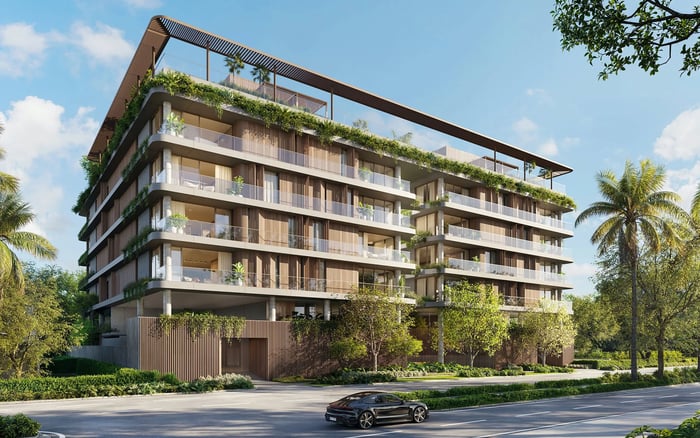
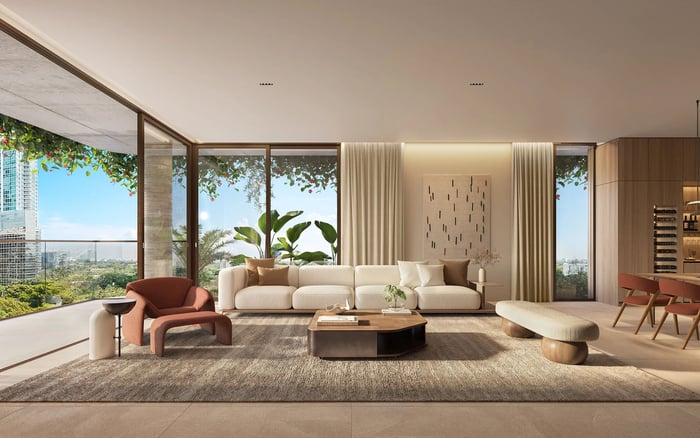
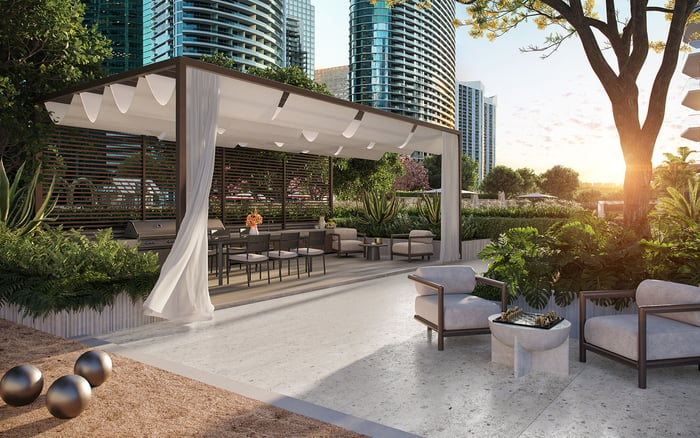
A private-driver arrival is more than a gracious convenience. In a trophy residence, it is a privacy system, a service stage, and a resale signal that should be examined with the same rigor as views, finishes, and floor plan.
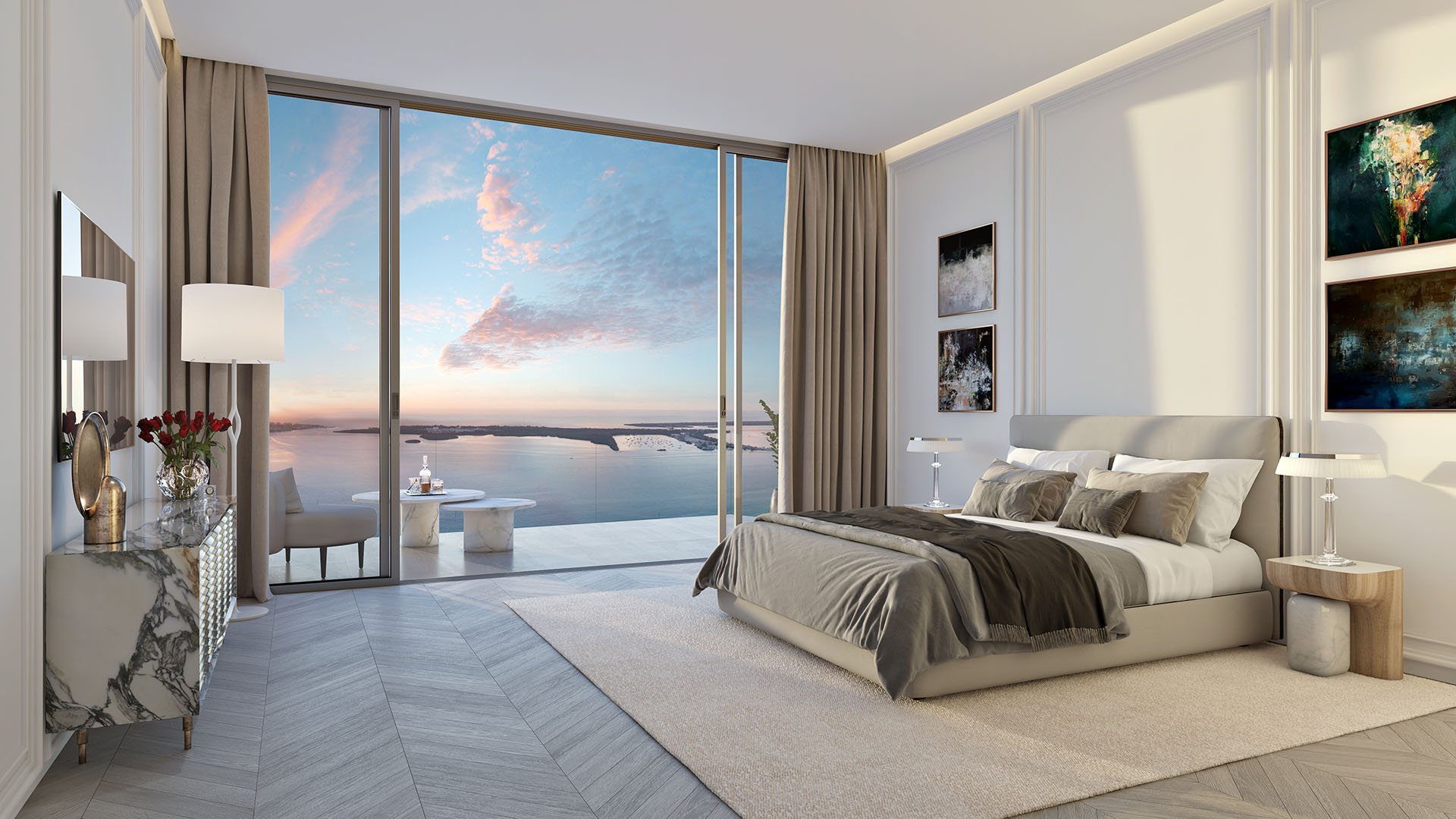
In South Florida’s trophy market, the first moment of ownership is often not the foyer, the terrace, or the elevator opening into a private vestibule. It is the arrival. The way a car approaches, pauses, unloads, and disappears says nearly everything about how a residence will function for an owner who values privacy, service, and control.
A private-driver arrival is not simply a covered driveway. It is a sequence. It begins at the street edge, continues through the curb cut or gate, moves into a protected drop-off zone, and resolves with the handoff between driver, resident, guest, security, valet, and building staff. When the sequence works, the owner feels unseen yet recognized. When it fails, even the most luxurious interior can feel exposed before the front door is reached.
For a Brickell tower, a gated-community estate, or a penthouse with waterview exposure and a large terrace, arrival quality should be evaluated as a daily operating feature, not a decorative amenity. Resale discipline begins with understanding whether the experience is truly private, merely polished, or only photogenic.
The strongest arrival experiences reduce exposure without making the property feel defensive. Begin with sight lines. Can someone standing across the street identify passengers as doors open? Are residents visible from neighboring lobbies, restaurant terraces, public sidewalks, ride-share queues, marina paths, or beach access points? Privacy is not achieved by a canopy alone. It is created through distance, angle, landscape, lighting, and staff choreography.
Next, examine timing. A trophy arrival should allow a car to pause without urgency. If a chauffeur must rush because other vehicles are stacking behind, the experience becomes operationally fragile. The question is not whether the residence has a porte cochere, but whether that porte cochere can absorb real life: multiple arrivals, luggage, security details, dinner guests, children, pets, rain, and deliveries.
Control matters as much as concealment. In a refined building or estate, the owner should be able to decide how visible the arrival becomes. Some evenings call for a formal guest reception. Others require a discreet, nearly silent transfer from vehicle to residence. The best properties accommodate both without improvisation.
Luxury service is often judged in the seconds when nothing dramatic happens. The car stops in the right place. The door opens without hesitation. Umbrellas appear before rain becomes a nuisance. Luggage moves without a public inventory of what the owner owns. The resident is greeted by name, not announced.
Ask how the arrival is staffed and supervised. Is there a consistent valet or attendant presence? Is the front desk visually connected to the drop-off point? Can security monitor the route without making the experience feel surveilled? Is there a clear distinction between guest arrival, resident arrival, service delivery, and ride-share activity?
The most elegant properties separate functions without overcomplicating life. Residents should not compete with moving trucks. Private drivers should not block guests. Staff should know whether to receive a guest formally, send them to a lounge, call upstairs, or guide them directly to a private elevator where applicable. A beautiful driveway with unclear protocol becomes a bottleneck.
For owners who entertain often, the arrival must scale. A dinner for eight, an art week reception, or a family holiday weekend changes the rhythm of the building. The question is whether the residence can remain composed when social life intensifies.
South Florida adds its own requirements. Arrival should be evaluated in bright sun, heavy rain, evening humidity, and peak traffic. A covered path is not always sufficient if wind pushes rain into the drop-off zone or if the covered area is too shallow for the vehicle type an owner actually uses.
Drainage is a quiet marker of quality. Look for whether water collects where passengers step out. Study the surface materials for grip, reflectivity, and heat. A glamorous stone arrival court may photograph beautifully, but if it becomes slippery or radiates heat, it will not feel luxurious in daily use.
Security should be discreet, layered, and calm. A residence may have cameras, controlled access, gatehouse procedures, or staffed entries, but the best systems preserve hospitality. Owners should feel protected, not processed. Guests should feel expected, not interrogated. Drivers should receive clear direction without overhearing private conversations or seeing more than necessary.
In waterfront and urban settings, the approach route also deserves attention. A private arrival can be compromised if the preceding block is congested, poorly lit, or lined with public activity that forces a slow, visible approach. Evaluate the full journey from the main road to the door, not merely the final twenty feet.
Resale value in the trophy segment is rarely about one feature in isolation. It is about the credibility of the whole ownership experience. A private-driver arrival supports that credibility because it signals scarcity, operational polish, and ease.
Future buyers may not articulate it immediately, but they feel the difference between a residence that stages arrival gracefully and one that asks the owner to adapt. The former creates emotional confidence. The latter introduces friction. In an ultra-premium negotiation, friction becomes a reason to pause, discount, or choose another property.
Arrival quality can also broaden appeal. International owners, executives, collectors, families with staff, security-conscious buyers, and frequent entertainers may all evaluate the same drop-off through different priorities. A well-designed arrival answers many of those priorities at once. It protects identity, simplifies logistics, flatters guests, and supports staff execution.
Do not confuse ornament with value. A grand entry that exposes occupants to public view may be less desirable than a more restrained arrival that works with discipline. The resale question is simple: will a future buyer instantly understand that life here is easier, more private, and better managed?
Arrive as an owner would, not as a tourist. If possible, approach at different times of day. Note whether the driver has a clear place to slow, enter, pause, and exit. Observe whether signage is discreet or confusing. Look for awkward turns, exposed waiting zones, narrow clearances, blind corners, and conflicts between pedestrians and vehicles.
Stand where staff would stand, then where a guest would stand. This reveals whether the sequence feels intuitive. Can a guest identify the correct entrance without wandering? Can a resident bypass social exposure when desired? Is the transition to lobby, elevator, or private vestibule immediate and dignified?
Ask practical questions in plain language. Where does a driver wait after drop-off? How are multiple cars handled? What happens during construction, deliveries, storms, or large gatherings? How are unknown vehicles screened? Can staff coordinate with a household manager or security team?
For condominium buyers, review whether policies match the promise. Rules around valet, guest access, private security, extended waiting, and service vehicles can dramatically affect the lived experience. For single-family buyers, examine gate placement, motor court depth, garage access, staff circulation, and whether arrival remains private when neighbors or maintenance crews are present.
The highest compliment for a trophy arrival is that it becomes quietly unmemorable. It should not require explanations. It should not demand choreography from the owner. It should not turn every return home into a visible event.
A strong private-driver arrival is quiet because it protects identity. It is fast because the sequence is legible and staffed correctly. It is unmemorable because every handoff feels natural. That is the standard to apply before assigning premium value.
When comparing residences, treat arrival as part of the architecture of privacy. The best examples create a gradual transition from public city to private life. The weakest examples reveal too much, too soon. For buyers at the top of the market, that distinction can determine not only daily satisfaction, but the property’s future desirability.
What is a private-driver arrival in a trophy residence? It is the planned sequence for chauffeur-driven entry, drop-off, guest handling, and vehicle departure. The best versions protect privacy while preserving hospitality.
Is a porte cochere enough to qualify as a private arrival? No. A porte cochere helps, but privacy depends on sight lines, staffing, circulation, security protocol, and how long a vehicle can pause comfortably.
Why does arrival matter for resale? It shapes a buyer’s first emotional impression of privacy and service. If the sequence feels effortless, it can support confidence in the broader ownership experience.
Should I test arrival during a showing? Yes. Arrive by car, observe the approach, and study how the vehicle stops, unloads, and exits under real conditions.
What is the biggest privacy mistake buyers overlook? They focus on the covered entry while ignoring who can see the passenger door open. Visibility from streets, neighboring buildings, and public areas is critical.
How should staff be involved in the arrival experience? Staff should be present, informed, and discreet. The goal is recognition without exposure and coordination without visible friction.
Does private-driver arrival matter more in condos or estates? It matters in both. Condos depend heavily on building protocol, while estates rely on gate placement, motor court design, and separation of service circulation.
What should frequent entertainers prioritize? They should look for arrival capacity, guest clarity, and the ability to handle multiple vehicles without congestion or confusion.
Can a beautiful entry still be a poor arrival experience? Yes. If it exposes occupants, creates delays, or mixes residents with deliveries, the visual drama may not translate into functional luxury.
What is the simplest standard for evaluation? Ask whether the arrival feels private, calm, and intuitive without special instructions. If it does, it is more likely to support daily life and future appeal.
For a confidential assessment and a building-by-building shortlist, connect with MILLION.
If branded residences are on your mind — as a home or as an allocation — we would be glad to share what we are seeing, privately.
Begin a quiet conversation